Cornus mas
L.
Cornelian cherry, Cornel
(c) Andreas Rockstein, some rights reserved (CC BY-SA)

(c) Hermann Falkner, some rights reserved (CC BY-NC)
(c) lucapassalacqua, some rights reserved (CC BY-NC)
What to Eat
Edible parts: Fruit, Herb, Flowers, Seeds - coffee
The fruit can be eaten raw, dried, or used in preserves. It is juicy with a pleasant acid flavour; fully ripe fruit develops a somewhat plum-like flavour and texture, though unripe fruit is rather astringent. The fruit is relatively low in pectin and is best combined with other fruit when making jam. Historically, the fruit was also preserved in brine and used like olives. Each fruit is a reasonable size, up to 15mm long, containing a single large seed. A small amount of edible oil can be extracted from the seeds. The seeds can also be roasted, ground into a powder, and used as a coffee substitute.
Where to Find It
It is a temperate plant. It is cold hardy. It grows best on chalky soils. It cannot grow on acid soils but will grow on most other soils. It can grow in full sun or light shade. It suits hardiness zones 5-8. Hobart Botanical Gardens. Arboretum Tasmania.
Albania, Armenia, Asia, Australia, Austria, Azerbaijan, Balkans, Belgium, Bosnia, Britain, Bulgaria, Canada, Caucasus, Central Asia, Croatia, Czech Republic, Dagestan, Europe*, France, Georgia, Germany, Greece, Hungary, Italy, Japan, Macedonia, Mediterranean, Moldova, North America, Norway, Romania, Russian Ciscaucasia, Scandinavia, Serbia, Slovakia, Slovenia, Switzerland, Tajikistan, Tasmania, Turkey, Türkiye, Ukraine, USA, Yugoslavia,
How to Identify
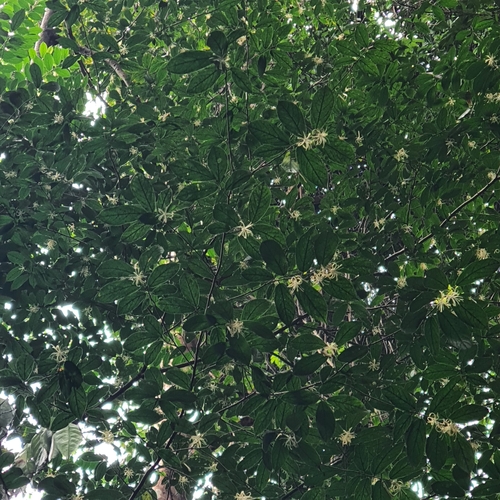
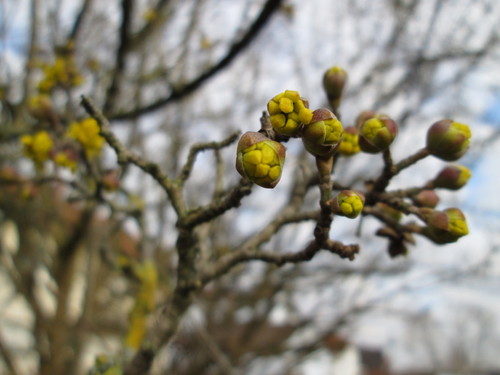
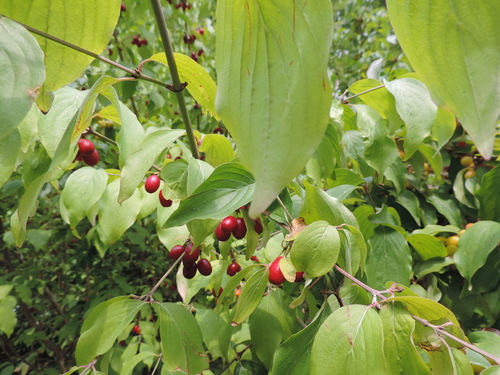
A very small tree. It has many branches. It grows 4.5-6 m tall. The leaves are opposite and pointed. The leaves are dark glossy green. They are 5-10 cm long and oval. There are 4-5 pairs of veins. Leaves are hairy on both surfaces. The buds are yellow. The flowers occur in small yellow clusters. There are 4 boat shaped flower bracts. The flowers develop on the leafless branches on short side shoots. Trees produce male flowers at first then female flowers later in their growth. The fruit are bright red and occur singly. They are oblong and 2 seeded. They are 15 mm long. They are edible. There are several named cultivated varieties.
Nutrition Score: 32/100
| Part | Moisture | kJ | kcal | Protein | Vit A | Vit C | Iron | Zinc |
|---|---|---|---|---|---|---|---|---|
| Fruit | 77 | 336 | 80 | 0.4 | — | 89 | — | — |
How to Grow
An easily grown plant, it succeeds in any soil of good or moderate fertility, ranging from acid to shallow chalk. Grows well in heavy clay soils. Prefers a moist soil and a sunny position but also succeeds in light shade. Plants are fairly wind resistant. Plants grow and crop well in pots. A very hardy plant, tolerating temperatures down to about -25°c. At one time the cornelian cherry was frequently cultivated for its edible fruit, though it has fallen into virtual disuse as a fruit crop in most areas. It is still being cultivated in parts of C. Europe and there are some named varieties. 'Macrocarpa' has larger fruits than the type. 'Nana' is a dwarf form, derived from a yellow-fruited clone. 'Variegata' has been seen on a number of occasions with very large crops of fruit, even in years when the type species has not fruited well. 'Jolico' has well-flavoured fruits 3 times larger than the species. There are also a number of cultivars with yellow, white and purplish fruit. Seedlings can take up to 20 years to come into fruit. Plants produced from cuttings come into fruit when much younger, though they do not live as long as the seedlings. A very ornamental plant it flowers quite early in the year and is a valuable early food for bees. Plants in this genus are notably resistant to honey fungus. In garden design, as well as the above-ground architecture of a plant, root structure considerations help in choosing plants that work together for their optimal soil requirements including nutrients and water.
Propagation: Seed is best sown as soon as it is ripe, either in a cold frame or an outdoor seedbed if sufficient seed is available. The seed must be separated from the fruit flesh, which contains germination inhibitors. Stored seed should be cold stratified for 3–4 months and sown as early in the year as possible. Scarification may also help, as may a period of warm stratification before the cold stratification. Germination, especially of stored seed, can be very slow, taking 18 months or more. Prick out cold-frame seedlings into individual pots once large enough to handle, grow on through their first winter under glass, and plant out in spring after the last expected frosts. Cuttings of half-ripe side shoots can be taken in July/August in a frame. Cuttings of mature wood of the current year's growth, taken with a heel if possible, can be taken in autumn in a cold frame, with a high success rate. Layering of new growth in June/July takes around 9 months to root.
Medicinal Uses
The bark and fruit are astringent, febrifuge, and nutritive. The astringent fruit is used to treat bowel complaints and fevers, and also in the treatment of cholera. The flowers are used in the treatment of diarrhoea.
Other Uses
An oil is obtained from the seed. A dye is obtained from the bark, and a red dye is also reported from the plant, though the specific part is not detailed. The leaves are a good source of tannin. The wood is very hard, heavier than water and does not float; it is highly valued by turners and used for tools, machine parts, and similar items. The plant can also be used as a hedge.
Wikipedia
Source ↗Cornelian cherry (Cornus mas), also known as the European cornel, is a species of shrub or small tree in the dogwood family Cornaceae native to Western Europe, Southern Europe, and Southwestern Asia.
Production
Trees can take 12 years to start producing fruit.
Other Information
The fruit are sold in some local markets. They are harvested in large amounts in Georgia. It is cultivated.
Notes
There are about 45 Cornus species.
Names & Synonyms
Cor, Corn, Cornel dogwood, Corniolo, Crognolo, Curnal', Cuorne, Dren, Drenka, Drenjina, Drienky, Drijen, Drinina, Drinjina, Drjen, Dryan, Hon, Kizilcik, Kizileik, Kuren, Rumeni dren, Shvindi, Som, Sum, Sorbet, Thana, Thane, Thona
References (72)
- Abbet, C., et al, 2014, Ethnobotanical survey on wild alpine food plants in Lower and Central Valais (Switzerland). Journal of Ethnopharmacology 151 (2014) 624–634
- Arora, R. K., 2014, Diversity in Underutilized Plant Species - An Asia-Pacific Perspective. Bioversity International. p 75 (As Macrocarpium mas)
- Bianchini, F., Corbetta, F., and Pistoia, M., 1975, Fruits of the Earth. Cassell. p 164
- Blamey, M and Grey-Wilson, C., 2005, Wild flowers of the Mediterranean. A & C Black London. p 153
- Bodkin, F., 1991, Encyclopedia Botanica. Cornstalk publishing, p 282
- Brickell, C. (Ed.), 1999, The Royal Horticultural Society A-Z Encyclopedia of Garden Plants. Convent Garden Books. p 299
- Bussman, R. W., et al, 2016, A comparative ethnobotany of Khevsureti, Samtskhe-Javakheti, Tusheti, Svaneti, and Racha-Lechkhumi, Republic of Georgia (Sakartvelo), Caucasus. Journal of Ethnobiology and Ethnomedicine (2016) 12:4
- Bussman, R. W. et al, 2017, Ethnobotany of Samtskhe-Javakheti, Sakartvelo (Republic of Georgia), Caucasus. Indian Journal of Traditional Knowledge Vol. 16(1) pp 7-24
- Bussman, R. W., et al, 2021, Unity in diversity—food plants and fungi of Sakartvelo (Republic of Georgia), Caucasus. Journal of Ethnobiology and Ethnomedicine (2021) 17:72 p 8
- Cerne, M., 1992, Wild Plants from Slovenia used as Vegetables. Acta Horticulturae 318
- Cundall, P., (ed.), 2004, Gardening Australia: flora: the gardener's bible. ABC Books. p 416
- Denes, A., et al, 2012, Wild plants used for food by Hungarian ethnic groups living in the Carpathian Basin. Acta Societatis Botanicorum Poloniae 81 (4): 381-396
- Dogan, Y., et al, 2004, The Use of Wild Edible Plants in Western and Central Anatolia (Turkey). Economic Botany 58(4) pp. 684-690
- Dogan, Y. et al, 2013, Wild Edible Plants sold in the Local Markets of Izmir, Turkey. Pak. J. Bot. 45(S1): 177-184
- Dogan, Y., & Nedelcheva, A., 2015, Wild plants from open markets on both sides of the Bulgarian-Turkish border. Indian Journal of Traditional Knowledge. Vol. 14(3): 351-358
- Dolina, K. & Luczaj, L., 2014, Wild food plants used on the Dubrovnik coast (south-eastern Croatia) Acta Soc Bot Pol 83(3):175–181
- Ertug, F, Yenen Bitkiler. Resimli Türkiye Florası -I- Flora of Turkey - Ethnobotany supplement
- Etherington, K., & Imwold, D., (Eds), 2001, Botanica's Trees & Shrubs. The illustrated A-Z of over 8500 trees and shrubs. Random House, Australia. p 228
- Facciola, S., 1998, Cornucopia 2: a Source Book of Edible Plants. Kampong Publications, p 81
- Farrar, J.L., 1995, Trees of the Northern United States and Canada. Iowa State University press/Ames p 186
- Flowerdew, B., 2000, Complete Fruit Book. Kyle Cathie Ltd., London. p 176
- Food Composition Tables for the Near East. http://www/fao.org/docrep No. 461 (As Macrocarpium mas)
- Gunes, S. et al, 2018, Survey of wild food plants for human consumption in Karaisali (Adana-Turkey). Indian Journal of Traditional Knowledge. Vol. 17(2), April 2018, pp 290-298
- Hancer, C. K., et al, 2020, Traditional Knowledge of Wild Edible Plants of Biga (Çanakkale), Turkey. Acta Societatis Botanicorum Poloniae / 2020 / Volume 89 / Issue 1 / Article 8914
- Harris, E & J., 1983, Field Guide to the Trees and Shrubs of Britain. Reader's Digest. p 63
- Hedrick, U.P., 1919, (Ed.), Sturtevant's edible plants of the world. p 219
- Janaćković, P. et al, 2019, Traditional knowledge on plant use from Negotin Krajina (Eastern Serbia): An ethnobotanical study. Indian Journal of Traditional Knowledge Vol 18 (1), pp 25-33
- Joyce, D., 1998, The Garden Plant Selector. Ryland, Peters and Small. p 109
- Kayabasi, N. P., et al, 2018, Wild edible plants and their traditional use in the human nutrition in Manyas (Turkey). Indian Journal of Traditional Knowledge. Vol. 17(2), April 2018, pp 299-306
- Kiple, K.F. & Ornelas, K.C., (eds), 2000, The Cambridge World History of Food. CUP p 1762
- Kremer, B.P., 1995, Shrubs in the Wild and in Gardens. Barrons. p 65
- Kybal, J., 1980, Herbs and Spices, A Hamlyn Colour Guide, Hamlyn Sydney p 84
- John, L., & Stevenson, V., 1979, The Complete Book of Fruit. Angus & Robertson p 118
- Kizilarslan, C. & Ozhatay, N., 2012, An ethnobotanical study of the useful and edible plants of İzmit. Marmara Pharmaceutical Journal 16: 134-140, 2012.
- Lord, E.E., & Willis, J.H., 1999, Shrubs and Trees for Australian gardens. Lothian. p 218
- Luczaj, L., 2012, Ethnobotanical review of wild edible plants of Slovakia. Acta Societatis Botanicorum Poloniae 81(4):245-255
- Luczaj, L. et al, 2013, Wild food plants used in the villages of the Lake Vrana Nature Park (northern Dalmatia, Croatia). Acta Societatis Botanicorum Poloniae, 82(4): 275-281
- Luczaj, L., et al, 2015, Wild food plants and fungi used by Ukrainians in the western part of the Maramureş region in Romania. Acta Soc Bot Pol 84(3):339–346
- Lyle, S., 2006, Discovering fruit and nuts. Land Links. p 154
- Maghradze, D. et al, 2012, Minor and Underutilized Fruits in Georgia and Their Wild Relatives. In Acta Horticulturae Number 948 p 41-47
- Miskoska-Milevska, E. et al, 2020, Traditional uses of wild edible plants in the Republic of North Macedonia. PHYTOLOGIA BALCANICA 26(1): 155–162, Sofia, 2020 p 158
- Nanagulyan, S., et al, 2020, Wild plants and fungi sold in the markets of Yerevan (Armenia). Journal of Ethnobiology and Ethnomedicine 16:26
- Nedelcheva A., 2013, An ethnobotanical study of wild edible plants in Bulgaria. EurAsian Journal of BioSciences 7, 77-94
- Özdemir, E. and Kültür, S., 2017, Wild Edible Plants of Savaştepe District (Balıkesir, Turkey), Marmara Pharm J 21/3: 578-589
- Pieroni, A., 1999, Gathered wild food plants in the Upper Valley of the Serchio River (Garfagnana), Central Italy. Economic Botany 53(3) pp 327-341
- Pieroni, A., et al, 2005, Food for two seasons: Culinary uses of non-cultivated local vegetables and mushrooms in a south Italian village. International Journal of Food Sciences and Nutrition, 56(4): 245-272
- Pieroni, A., 2008, Local plant resources in the ethnobotany of Theth, a village in the Northern Albanian Alps. Genet Resour Crop Evol (2008) 55:1197–1214
- Pieroni, A., et al, 2012, "We are Italians!": The Hybrid Ethnobotany of a Venetian Diaspora in Eastern Romania. Human Ecology 40:435-451
- Pieroni, A., 2017, Traditional uses of wild food plants, medicinal plants, and domestic remedies in Albanian, Aromanian and Macedonian villages in South-Eastern Albania. Journal of Herbal Medicine Volume 9, September 2017, Pages 81-90
- Pieroni, A. & Soukand, R., 2017, The disappearing wild food and medicinal plant knowledge in a few mountain villages of North-Eastern Albania. Journal of Applied Botany and Food Quality 90, 58 - 67
- Plants for a Future database, The Field, Penpol, Lostwithiel, Cornwall, PL22 0NG, UK. http://www.scs.leeds.ac.uk/pfaf/
- Postman, J. D., et al, 2012, Recent NPGS Coordinated Expeditions in the Trans-Caucasus Region to Collect Wild Relatives of Temperate Fruit and Nut Crops. In Acta Horticulturae Number 948 p 191-198
- Redzic, S. J., 2006, Wild Edible Plants and their Traditional Use in the Human Nutrition in Bosnia-Herzegovina. Ecology of Food and Nutrition, 45:189-232
- Rexhepi, B., et al, 2018, Ethnobotanical Study of Wild Edible Plants in Pelagonia Region (Southwestern Macedonia) International Journal of Advances in Science Engineering and Technology, Vol. 6 (1) p 57
- Rivera, D. et al, 2006, Gathered Mediterranean Food Plants - Ethnobotanical Investigations and Historical Development, in Heinrich M, Müller WE, Galli C (eds): Local Mediterranean Food Plants and Nutraceuticals. Forum Nutr. Basel, Karger, 2006, vol 59, pp 18–74
- Ryan, S., 2008, Dicksonia. Rare Plants Manual. Hyland House. p 17
- Salvi, J. et al, 2016, A review: Underutilized wild edible plants as a potential source of alternative nutrition. International Journal of Botany Studies. Volume 1; Issue 4; May 2016; Page No. 32-36
- Sansanelli, S., et al, 2014, Wild food plants traditionall consumed in the area of Bologna (Emilia Romagna region, Italy). Journal of Ethnobiology and Ethnomedicine 10:69
- Sansanelli, S., et al, 2017, Ethnobotanical survey of wild food plants traditionally collected and consumed in the Middle Agri Valley (Basilicata region, southern Italy). Journal of Ethnobiology and Ethnomedicine (2017) 13:50
- Seeram, N. P., et al, 2002, Characterization, Quantification and Bioactivities of Anthocynans in Cornus Species. Journal of Agricultural and Food Chemistry. 50:2519-2523
- Self, M., 199, Phoenix Seeds catalogue. p 15
- Sfikas, G., 1984, Trees and shrubs of Greece. Efstathiadis Group. Athens. p 130
- Simkova, K. et al, 2014, Ethnobotanical review of wild edible plants used in the Czech Republic. Journal of Applied Botany and Food Quality 88, 49-67
- Slocum, P.D. & Robinson, P., 1999, Water Gardening. Water Lilies and Lotuses. Timber Press. p 114
- Sp. pl. 1:117. 1753
- Svanberg, I. et al, 2012, Uses of tree saps in northern and eastern parts of Europe. Acta Societatis Botanicorum Poloniae 81 (4): 343-357
- USDA, ARS, National Genetic Resources Program. Germplasm Resources Information Network - (GRIN). [Online Database] National Germplasm Resources Laboratory, Beltsville, Maryland. Available: www.ars-grin.gov/cgi-bin/npgs/html/econ.pl (10 April 2000)
- Vari, A., et al, 2020, Berries, greens, and medicinal herbs—mapping and assessing wild plants as an ecosystem service in Transylvania (Romania). Journal of Ethnobiology and Ethnomedicine (2020) 16:13
- Wiersema, J. H. & Leon, B., 2013, World Economic Plants. A Standard Reference CRC Press. 2nd Ed. p 201
- World Checklist of Useful Plant Species 2020. Royal Botanic Gardens, Kew
- Young, J., (Ed.), 2001, Botanica's Pocket Trees and Shrubs. Random House. p 272
- Zeven, A. C. & de West, J. M. J., 1982, Dictionary of cultivated plants and their regions of diversity. Wageningen. p 89