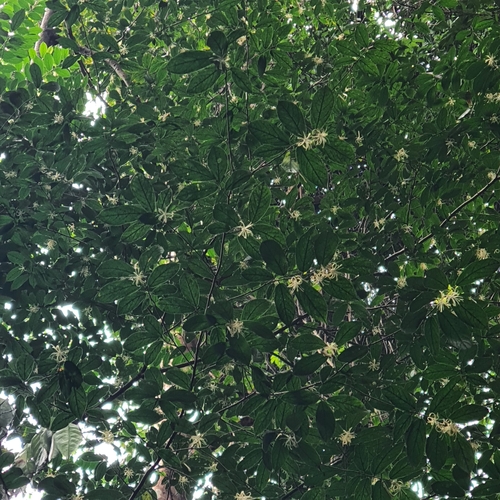
Cornus sericea subsp. occidentalis
(Torr. & A. Gray) Coville
Western dogwood

(c) cwtw, some rights reserved (CC BY-NC), uploaded by cwtw

(c) odinbriem0, some rights reserved (CC BY-NC)

(c) freejinn, some rights reserved (CC BY-NC), uploaded by freejinn
What to Eat
Edible parts: Fruit
The fruit is edible.
Where to Find It
Temperate. It grows from sea level to 2,600 m above sea level.
North America, USA,
How to Identify
A deciduous shrub in the Cornaceae family that grows up to 5 m tall and is found in temperate regions from sea level to 2,600 m altitude.
Medicinal Uses
Cornus sericea is frequently used for waterway bank erosion protection and restoration in the United States and Canada. Its root system provides excellent soil retention, it is hardy and provides an attractive shrub even when bare in winter, and its ability to be reproduced by cuttings makes it a low-cost solution for large-scale plantings. Some Plateau Indigenous tribes ate the berries to treat colds and to slow bleeding. Known as čhaŋšáša in Lakota, the inner bark was also used by the Lakota and other Native Americans as "traditional tobacco", either by itself or in a mixture with other plant materials. Among the Algonquian peoples such as the Ojibwe, the smoking mixtures, known as kinnikinnick, blended the inner bark with tobacco, while more western tribes added it to the bearberry leaf to improve the taste. The Ojibwe used red-osier dogwood bark as a dye by taking the inner bark and mixing it with other bloodroot and wild plum to make yellow dye. There are several red dye formulas such as white birch, red osier dogwood, outer and inner bark, oak, Ashes from cedar bark and hot water. Red osier dogwood, alder and hot water used to dye blankets makes a light red dye which isn't very color fast. Bloodroot, wild plum, red osier dogwood, alder were used to dye porcupine quills red. In addition, it was used to make a black dye using alder, red osier dogwood, oak, grindstone dust or black earth, hot water. The withies, or osiers, are used in basketry.
Wikipedia
Source ↗Cornus sericea, the red osier or red-osier dogwood, is a species of flowering plant in the family Cornaceae, native to much of North America. It has sometimes been considered a synonym of the Asian species Cornus alba. Other names include red brush, red willow, redstem dogwood, redtwig dogwood, red-rood, American dogwood, creek dogwood, and western dogwood.
Notes
There are about 45 Cornus species.
References (3)
- Contr. U.S. Natl. Herb. 4:117. 1893
- Plants for a Future database, The Field, Penpol, Lostwithiel, Cornwall, PL22 0NG, UK. http://www.scs.leeds.ac.uk/pfaf/
- USDA plants