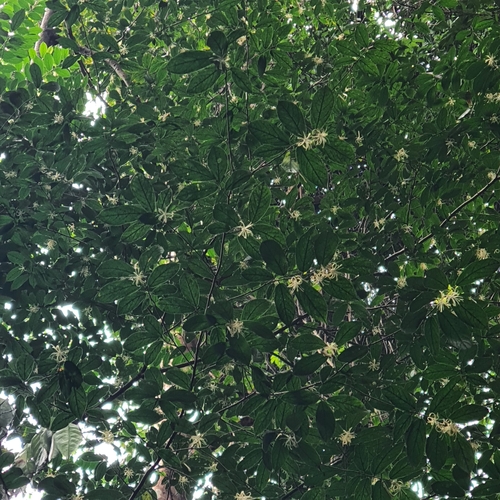
Cornus suecica
L.
Swedish bunchberry, Swedish dogwood, Dwarf cornel, Dwarf cornelian cherry

(c) Alexander Yakovlev, some rights reserved (CC BY-NC), uploaded by Alexander Yakovlev
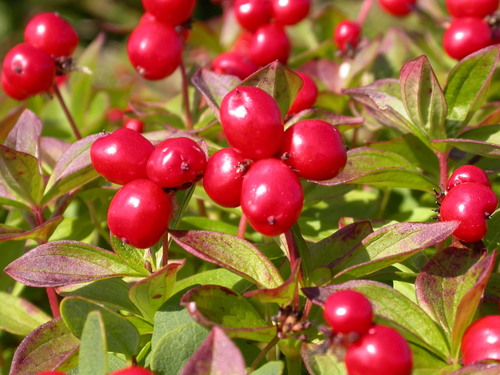
(c) Andrei, some rights reserved (CC BY-NC), uploaded by Andrei

(c) Jurga Motiejūnaitė, some rights reserved (CC BY-NC), uploaded by Jurga Motiejūnaitė
What to Eat
Edible parts: Fruit
The fruit can be eaten raw or cooked, though it is bitter and unpalatable and is usually mixed with other berries. It is rich in pectin.
Where to Find It
Temperate. It grows on dry and rocky sites in the Arctic in Asia and Europe. It grows best in moist acidic soils.
Alaska, Arctic, Britain, Canada, Denmark, Europe*, Faroe Islands, Finland, Germany, Greenland, Japan, Myanmar, North America, Scandinavia, Sweden, USA,
How to Identify
A shrubby plant. It keeps growing from year to year. It has an underground rhizome that sends out suckers. The stems grow from this. It grows 30 cm high. There are 3-6 pairs of pale green rounded leaves. The flowers have 4 white bracts with a small purplish black flower in the centre. There are 3-10 bright red berries at the top. They are about 1 cm across.
How to Grow
It is usually grown by dividing the plant removing suckers.
Propagation: Seed is best sown as soon as it is ripe in a cold frame or an outdoor seedbed if sufficient seed is available. The seed must be separated from the fruit flesh, which contains germination inhibitors. Stored seed should be cold stratified for 3–4 months and sown as early in the year as possible. Scarification may help, as may a period of warm stratification before cold stratification. Germination, especially of stored seed, can be very slow, taking 18 months or more. Prick out cold-frame seedlings into individual pots once large enough to handle, overwinter in a greenhouse, and plant out in spring after the last expected frosts. Division can be done in spring, though this plant can be temperamental when divided. It is best to tease out small divisions from the sides of the clump rather than digging up the whole plant, ensuring each division has already produced some roots. Pot divisions in light shade in a greenhouse and do not allow them to dry out. Once rooting and growing well — which may take up to 12 months — they can be planted into their permanent positions.
Medicinal Uses
The fruit is considered a good tonic for the appetite.
Other Uses
The fruit is rich in pectin and has potential uses related to that quality. The plant also makes a good ground cover, growing successfully under trees and shrubs.
Wikipedia
Source ↗Cornus suecica, the dwarf cornel or bunchberry, is a species of flowering plant in the dogwood family Cornaceae, native to cool temperate and subarctic regions of Europe, Asia, and North America.
Other Information
The fruit are especially eaten by children.
Notes
There are about 45 Cornus species.
Names & Synonyms
Cengqullektat, Cingqullektaq, Cingqullkitag
References (18)
- Ager, T. A. & Ager, L. P., 1980, Ethnobotany of the eskimos of Nelson Island, Alaska. Arctic Anthropology Vol 17. No. 1 pp 26-48
- Elias, T.S. & Dykeman P.A., 1990, Edible Wild Plants. A North American Field guide. Sterling, New York p 143
- Flowerdew, B., 2000, Complete Fruit Book. Kyle Cathie Ltd., London. p 176
- Hedrick, U.P., 1919, (Ed.), Sturtevant's edible plants of the world. p 220
- Hibbert, M., 2002, The Aussie Plant Finder 2002, Florilegium. p 65,
- Jernigan, K. (Ed.), 2012, A Guide to the Ethnobotany of the Yukon-Kuskokwim Region. Draft.
- Johansson, A. et al, 1997, Characterization of seed oils of wild, edible Finnish berries. Zeitschrift für Lebensmitteluntersuchung und -Forschung A, Volume 204, Number 4 (As Chamaepericlymenum suecicum)
- Johansson, A., Laakso, P. and Kallio, H., 1997, Characterization of seed oils of wild, edible Finnish berries. Food Chemistry 204:300-307
- Jones, A., 2010, Plants that we eat. University of Alaska Press. p 137
- Kremer, B.P., 1995, Shrubs in the Wild and in Gardens. Barrons. p 66 (Says fruit inedible)
- Lyle, S., 2006, Discovering fruit and nuts. Land Links. p 156
- Mabey, R., 1973, Food for Free. A Guide to the edible wild plants of Britain, Collins. p 181 (As Chamaepericlymenum suecicum)
- Morley, B. & Everard, B., 1970, Wild Flowers of the World. Ebury press. Plate 3
- Plants for a Future database, The Field, Penpol, Lostwithiel, Cornwall, PL22 0NG, UK. http://www.scs.leeds.ac.uk/pfaf/
- Soepadmo, E. and Wong, K. M., 1995, Tree Flora of Sabah and Sarawak. Forestry Malaysia. Volume One. p 199 (Mention only as Chamaepericlymenum suecicum)
- Sp. pl. 1:118. 1753
- Svanberg, I., et al, 2012, Edible wild plant use in the Faroe Islands and Iceland. Acta Societatis Botanicorum Poloniae 81(4): 233-238
- Svanberg, I., 2012, The use of wild plants as food in pre-industrial Sweden. Acta Societatis Botanicorum Poloniae 81(4): 317-327