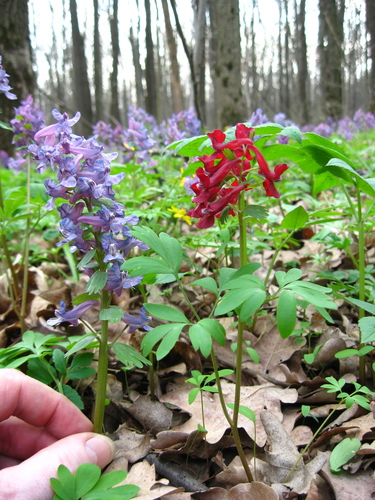
Corydalis ambigua
Cham. & Schltdl.
(c) Ольга Курякова, some rights reserved (CC BY-NC), uploaded by Ольга Курякова

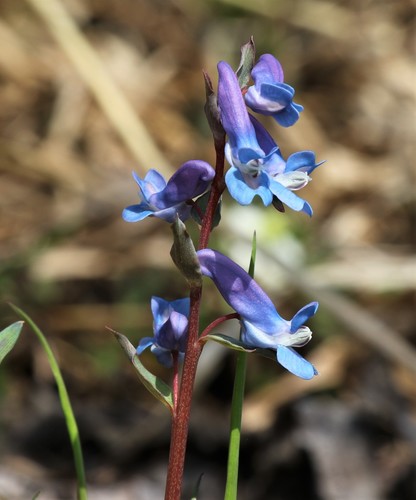
(c) Serge Gorin, some rights reserved (CC BY-NC), uploaded by Serge Gorin

(c) Serge Gorin, some rights reserved (CC BY-NC), uploaded by Serge Gorin
What to Eat
Edible parts: Root, Tuber, Caution, Leaves
The root is edible when cooked.
Known Hazards
Where to Find It
It is a temperate plant.
Asia, China, Japan, Korea,
How to Identify
A low perennial reaching 20cm tall and 10cm wide. Hardy to UK zone 6 and frost hardy. Foliage present from March to June with seeds ripening May to June. Blooms are pollinated by bees and the plant is self-fertile. Grows in light sandy or medium loamy well-drained soils with mildly acid, neutral, or basic alkaline pH. Tolerates semi-shade conditions in light woodland settings and prefers moist soil.
How to Grow
Prefers a moist, well-drained rather light soil, thriving in semi-shade. Grows well in a woodland garden or peat bed. This species is very closely related to and probably part of C. fumariifolia. It is probably not really worthy of specific status and is best treated as a cultivar, C. 'Ambigua'. Plants seem to be immune to the predations of rabbits.
Propagation: Seed is best sown as soon as it is ripe, as it rapidly loses viability if allowed to dry out. Surface sow and keep moist; germination usually occurs in 1–3 months at 15°C, though one report indicates germination in spring. Two months of warm stratification followed by cold stratification improves germination of stored seed. Sow thinly so seedlings can remain undisturbed in the pot for their first year, and apply liquid feed at intervals during the growing season. Seedlings produce only one leaf in their first year and are very prone to damping off. Once dormant, divide seedlings into individual pots and grow on in a partially shaded area of a greenhouse for at least another year before planting out into permanent positions while dormant. Division can also be done in spring after flowering: once plants are dying down, dig up the clump and divide the tubers, planting them directly into their permanent positions if desired.
Medicinal Uses
The root is alterative, antiperiodic, astringent, deobstruent, diuretic, emmenagogue, sedative, and tonic. It is also analgesic, antispasmodic, and sedative, with over a thousand years of documented use in pain relief. This species ranked 10th in a test of 250 potential antifertility drugs.
Other Uses
None known.
Wikipedia
Source ↗Corydalis ambigua is a tuberous early flowering east Asian flowering plant species in the poppy family Papaveraceae. Its exact native range is obscure due to taxonomic confusion. It is one of the sources of the drug tetrahydropalmatine.
Other Information
It is an important food amongst the Ainu in Japan.
Notes
There are about 320 Corydalis species. They are mostly north temperate. The tuber contains many alkaloids.
Names & Synonyms
Itopenra, Toma, Tomara
References (3)
- Linnaea 1:558. 1826
- Plants for a Future database, The Field, Penpol, Lostwithiel, Cornwall, PL22 0NG, UK. http://www.scs.leeds.ac.uk/pfaf/
- Williams, D., 2017, Ainu Ethnobiology. Contributions in Ethnobiology. Society of Ethnobiology.