Berberis glaucocarpa
Stapf
BerberidaceaeFruit
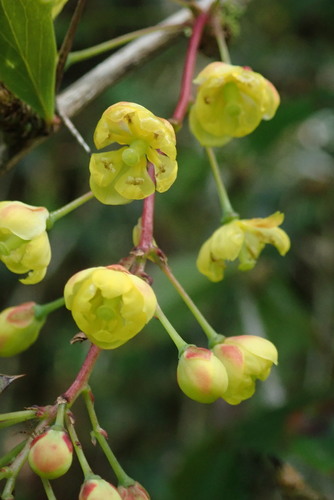
iNaturalist · cc-by-nc-sa
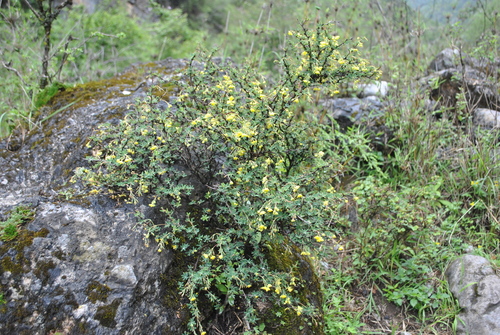
(c) Marley Ford, some rights reserved (CC BY-NC-SA), uploaded by Marley Ford
(c) Marley Ford, some rights reserved (CC BY-NC-SA), uploaded by Marley Ford

iNaturalist · cc-by-nc
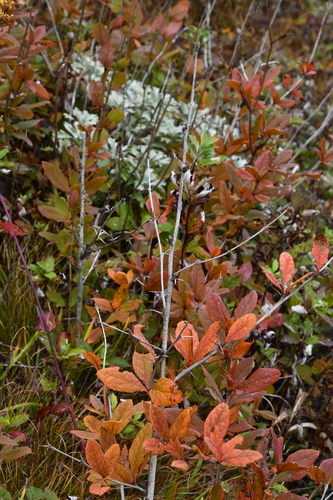
(c) Brian Cutting, some rights reserved (CC BY-NC), uploaded by Brian Cutting
(c) Brian Cutting, some rights reserved (CC BY-NC), uploaded by Brian Cutting

iNaturalist · cc0
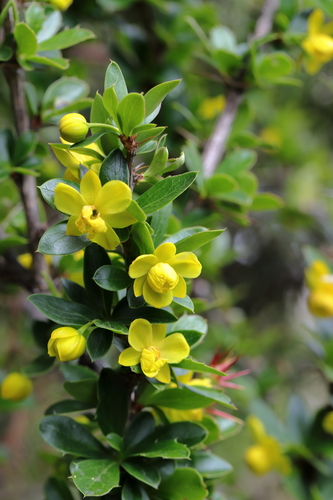
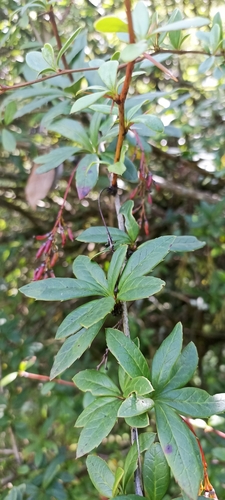
no rights reserved, uploaded by fyodor
no rights reserved, uploaded by fyodor
What to Eat
Edible parts: Fruit
The fruit are eaten.
Where to Find It
It is a temperate plant.
Asia, India,
Countries: United Arab Emirates, Afghanistan, Armenia, Azerbaijan, Bangladesh, Bahrain, Brunei, Bhutan, China, Georgia, Indonesia, Israel, India, Iraq, Iran, Jordan, Japan, Kyrgyzstan, Cambodia, North Korea, South Korea, Kuwait, Kazakhstan, Laos, Lebanon, Sri Lanka, Myanmar, Mongolia, Maldives, Malaysia, Nepal, Oman, Philippines, Pakistan, Qatar, Saudi Arabia, Singapore, Syria, Thailand, Tajikistan, Timor-Leste, Turkmenistan, Turkey, Taiwan, Uzbekistan, Vietnam, Yemen
How to Identify
A temperate shrub in the Berberidaceae family with edible fruit.
Wikipedia
Source ↗Berberis glaucocarpa, sometimes called common barberry or simply barberry, is a species of flowering plant, a barberry, native to the western Himalaya in central Asia, to west central Nepal. It is considered invasive in New Zealand, where it is found in the North and South Island. It has also been introduced to Great Britain. The species is listed as banned in South Africa.
Names & Synonyms
Chawa, Chutrum
References (1)
- Negi, P. S. & Subramani, S. P., 2015, Wild Edible Plant Genetic Resources for Sustainable Food Security and Livelihood of Kinnaur District, Himachal Pradesh, India, International Journal of Conservation Science. 6 (4): 657-668