Melaleuca ericifolia
Sm.
Red honey-myrtle, Swamp paperbark
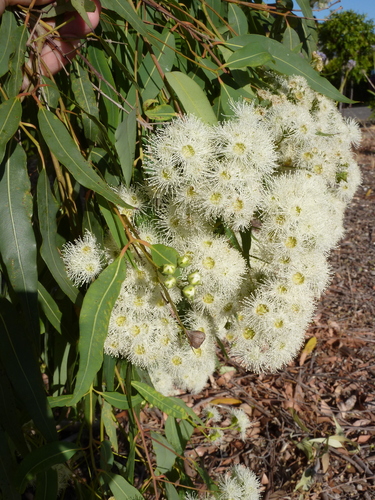
(c) Michael Keogh, some rights reserved (CC BY-NC-SA), uploaded by Michael Keogh
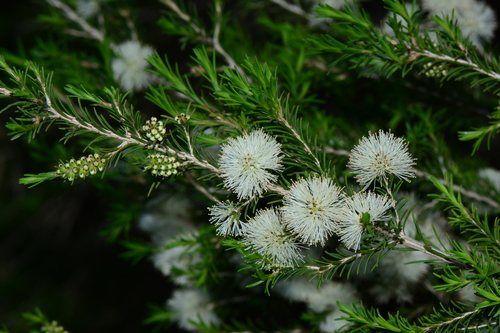
(c) Jesse de Vries, some rights reserved (CC BY), uploaded by Jesse de Vries

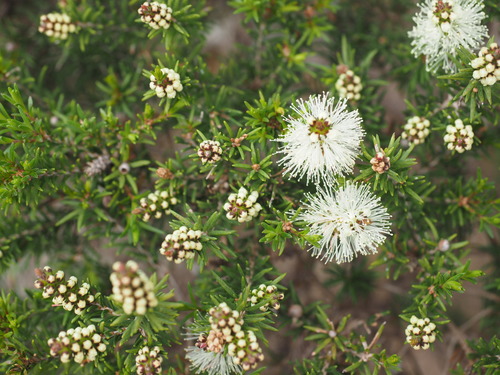
(c) Greg Holland, some rights reserved (CC BY-ND), uploaded by Greg Holland
What to Eat
Edible parts: Nectar
The flowers are soaked in water to make a drink from the nectar.
Where to Find It
It is a temperate plant. It grows in wet coastal lagoons and swamps. Arboretum Tasmania.
Australia*, Tasmania*,
How to Identify
A tall shrub or tree. It grows 2-9 m tall. The bark is pale and papery. The leaves are small and narrow. They are alternate and crowded along the stems. They are 8-15 mm long by 1 mm wide. The flowers are in short spikes 2 cm long. The stamens are white. The fruit are rounded capsules 3-4 mm across.
Wikipedia
Source ↗Melaleuca ericifolia, commonly known as swamp paperbark, is a plant in the myrtle family, Myrtaceae and the genus Melaleuca, native to south-eastern Australia. It is a rather variable species and some specimens resemble Melaleuca armillaris but its papery bark and smaller, more prolific flower heads distinguish it from that species. It often grows in swampy areas and the draining and clearing of these has reduced the numbers of the species, especially around Port Philip Bay near Melbourne. It is also similar to Melaleuca pustulata, a Tasmanian endemic, but that species only grows in dry heath.
Names & Synonyms
Barlan
References (2)
- Caton, J.M. & Hardwick, R. J., 2016, Field Guide to Useful Native Plants from Temperate Australia. Harbour Publishing House. p 52
- Hastings Advance Community College, 2017, Uses for Native Plants of the Mornington Peninsula. 86pp. p 54