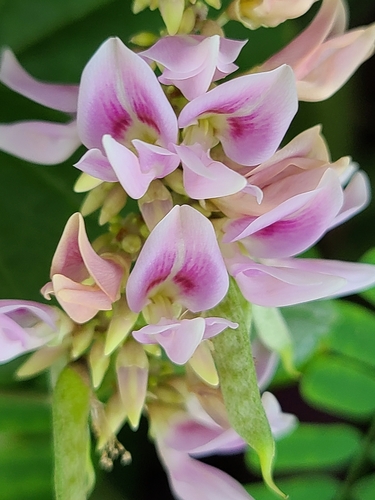
Callerya speciosa
(Champ. ex Benth.) Schot.

iNaturalist · cc-by
(c) Toby Y, some rights reserved (CC BY)
(c) Toby Y, some rights reserved (CC BY)

iNaturalist · cc-by
(c) Toby Y, some rights reserved (CC BY)
(c) Toby Y, some rights reserved (CC BY)

iNaturalist · cc-by
(c) Toby Y, some rights reserved (CC BY)
(c) Toby Y, some rights reserved (CC BY)
What to Eat
Edible parts: Stem - tea, Medicine
The stem is used to prepare herbal tea.
Where to Find It
It is a subtropical plant.
Asia, China,
Countries: United Arab Emirates, Afghanistan, Armenia, Azerbaijan, Bangladesh, Bahrain, Brunei, Bhutan, China, Georgia, Indonesia, Israel, India, Iraq, Iran, Jordan, Japan, Kyrgyzstan, Cambodia, North Korea, South Korea, Kuwait, Kazakhstan, Laos, Lebanon, Sri Lanka, Myanmar, Mongolia, Maldives, Malaysia, Nepal, Oman, Philippines, Pakistan, Qatar, Saudi Arabia, Singapore, Syria, Thailand, Tajikistan, Timor-Leste, Turkmenistan, Turkey, Taiwan, Uzbekistan, Vietnam, Yemen
How to Identify
A subtropical vine of the Fabaceae family grown and sold in local markets in China.
How to Grow
Species in this genus generally grow best in a sunny position in a fertile, moisture-retentive but well-drained soil. The flowers are fragrant. This species has a symbiotic relationship with certain soil bacteria, these bacteria form nodules on the roots and fix atmospheric nitrogen. Some of this nitrogen is utilized by the growing plant but some can also be used by other plants growing nearby.
Medicinal Uses
The stem has medicinal applications.
Other Information
It is sold in local markets in China.
Names & Synonyms
Niu da li
Milletia speciosa Benth.Phaseolodes speciosum (Champ. ex Benth.) Kuntze
References (1)
- Li, D. et al, 2017, Ethnobotanical survey of herbal tea plants from the traditional markets in Chaoshan, China. Journal of Ethnopharmacology. 205 (2017) 195-206