Dichondra micrantha
Urb.
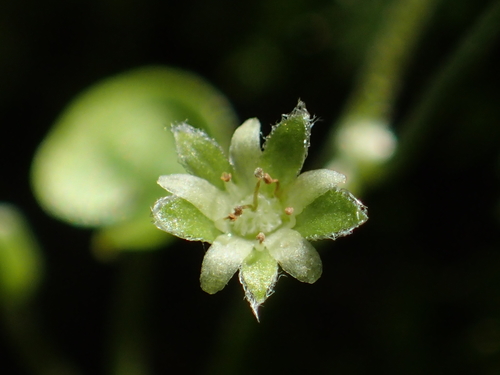
no rights reserved, uploaded by 葉子
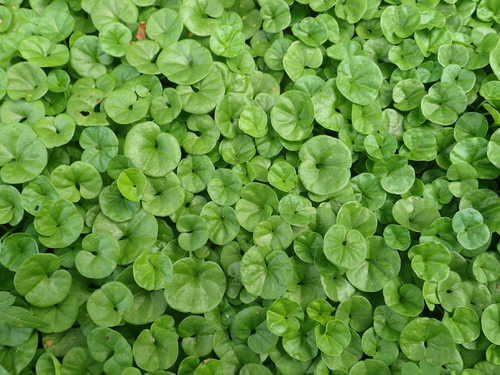
no rights reserved, uploaded by 葉子

(c) Alice Shanks, some rights reserved (CC BY-NC), uploaded by Alice Shanks
What to Eat
Edible parts: Leaves - tea
No edible uses are known for this plant.
Where to Find It
It is a subtropical plant.
Asia, China, Korea,
How to Identify
A low-growing perennial reaching just 0.1 m tall but spreading 1 m wide. Blooms March to May and is hermaphroditic. Adapts to light sandy, medium loamy, and heavy clay soils across mildly acid to basic pH ranges. Grows in semi-shade to full sun with preference for consistently moist soil.
How to Grow
We have very little information on this species and do not know if it will be hardy in Britain, though judging by its native range it could succeed outdoors at least in the mildest areas of the country. This species has at times mistakenly been called Dichondra repens, a plant that is confined to New Zealand and Australia.
Propagation: Propagated by seed, though no further details are available.
Medicinal Uses
The whole plant is diuretic, febrifuge, and styptic, and is used in the treatment of diarrhoea.
Other Uses
No other uses are known for this plant.
Wikipedia
Source ↗Dichondra micrantha, the Asian ponysfoot or lawnleaf, is a species of flowering plant in the family Convolvulaceae. It is native to Texas, Mexico, and the Caribbean, and it has been introduced worldwide. A prostrate perennial reaching 10 cm (4 in), it prefers wetter soils. In the past it was recommended as a grass substitute in lawns due to its easy maintenance requirements, but proved vulnerable to flea beetles.
Other Information
It is sold in local markets in China. It is cultivated.
Names & Synonyms
Xian ke cao
References (1)
- Li, D. et al, 2017, Ethnobotanical survey of herbal tea plants from the traditional markets in Chaoshan, China. Journal of Ethnopharmacology. 205 (2017) 195-206


