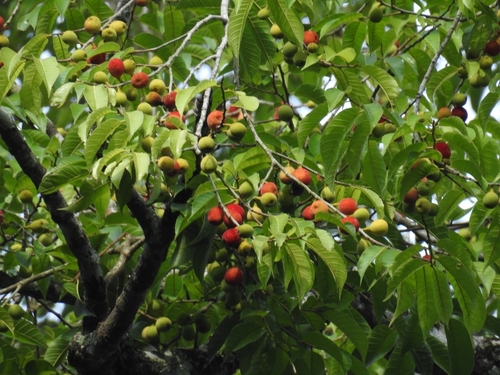
Ficus pandurata
Hance

iNaturalist · cc-by-nc
(c) Stargazer, some rights reserved (CC BY-NC), uploaded by Stargazer
(c) Stargazer, some rights reserved (CC BY-NC), uploaded by Stargazer
iNaturalist · cc-by-nc
(c) Stargazer, some rights reserved (CC BY-NC), uploaded by Stargazer
(c) Stargazer, some rights reserved (CC BY-NC), uploaded by Stargazer
iNaturalist · cc-by-nc
(c) Stargazer, some rights reserved (CC BY-NC), uploaded by Stargazer
(c) Stargazer, some rights reserved (CC BY-NC), uploaded by Stargazer
What to Eat
Edible parts: Stems - tea, Fruit, Seedsm
The ripe fruit are eaten raw, and the seeds are roasted and eaten. Stems can be used to make tea.
Where to Find It
It is a subtropical plant.
Asia, China,
Countries: United Arab Emirates, Afghanistan, Armenia, Azerbaijan, Bangladesh, Bahrain, Brunei, Bhutan, China, Georgia, Indonesia, Israel, India, Iraq, Iran, Jordan, Japan, Kyrgyzstan, Cambodia, North Korea, South Korea, Kuwait, Kazakhstan, Laos, Lebanon, Sri Lanka, Myanmar, Mongolia, Maldives, Malaysia, Nepal, Oman, Philippines, Pakistan, Qatar, Saudi Arabia, Singapore, Syria, Thailand, Tajikistan, Timor-Leste, Turkmenistan, Turkey, Taiwan, Uzbekistan, Vietnam, Yemen
How to Identify
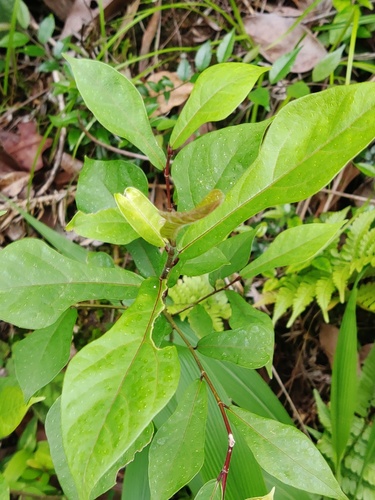
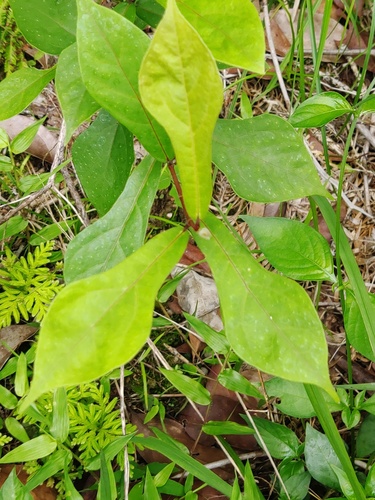
A shrub. It grows 1-2 m tall. The small branches are reddish-brown. They are hairy while young.
Wikipedia
Source ↗Ficus pandurata is a fig species in the family Moraceae. No subspecies are recorded and the native range of this species is southern China and Indo-China. The species can be found in Vietnam: where it may be called sung tì bà.
Other Information
It is sold in local markets in China.
Names & Synonyms
Niu ru shu
Ficus formosana var. angustissima W. C. Koand others
References (2)
- Li, D. et al, 2017, Ethnobotanical survey of herbal tea plants from the traditional markets in Chaoshan, China. Journal of Ethnopharmacology. 205 (2017) 195-206
- Luo, B., et al, 2019, Wild edible plants collected by Hani from terraced rice paddy agroecosystem in Honghe Prefecture, Yunnan, China. Journal of Ethnobiology and Ethnomedicine 15:56