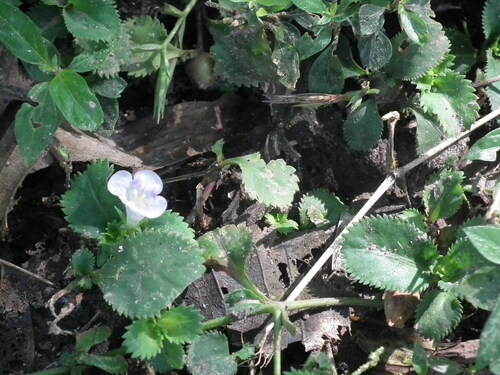
Lindernia anagallis
(Burm.f.) Pennell
LinderniaceaeSpice/Beverage

iNaturalist · cc-by-nc
(c) MP Zhou, some rights reserved (CC BY-NC)
(c) MP Zhou, some rights reserved (CC BY-NC)

iNaturalist · cc-by-nc
(c) MP Zhou, some rights reserved (CC BY-NC)
(c) MP Zhou, some rights reserved (CC BY-NC)

iNaturalist · cc-by-nc
(c) MP Zhou, some rights reserved (CC BY-NC)
(c) MP Zhou, some rights reserved (CC BY-NC)
What to Eat
Edible parts: Plant - tea
The whole plant is brewed as herbal tea.
Where to Find It
It is a tropical plant.
Asia, China,
Countries: United Arab Emirates, Afghanistan, Armenia, Azerbaijan, Bangladesh, Bahrain, Brunei, Bhutan, China, Georgia, Indonesia, Israel, India, Iraq, Iran, Jordan, Japan, Kyrgyzstan, Cambodia, North Korea, South Korea, Kuwait, Kazakhstan, Laos, Lebanon, Sri Lanka, Myanmar, Mongolia, Maldives, Malaysia, Nepal, Oman, Philippines, Pakistan, Qatar, Saudi Arabia, Singapore, Syria, Thailand, Tajikistan, Timor-Leste, Turkmenistan, Turkey, Taiwan, Uzbekistan, Vietnam, Yemen
How to Identify
A herb that grows each year from seed. It grows 10-40 cm tall. The stems are creeping.
How to Grow
The plant is a weed in irrigated and rainfed rice fields.
Medicinal Uses
Used traditionally as a herbal tea for medicinal purposes.
Other Information
It is sold in local markets in China.
Notes
Medicine.
Names & Synonyms
Tian bin lang
Gratiola cordifolia Colsm.Ruellia anagallis Burm.f.Vandellia anagallis (Burm.f.) T. Yamaz.and others
References (1)
- Li, D. et al, 2017, Ethnobotanical survey of herbal tea plants from the traditional markets in Chaoshan, China. Journal of Ethnopharmacology. 205 (2017) 195-206