Lindernia ruellioides
(Colsm.) Pennell
LinderniaceaeSpice/Beverage
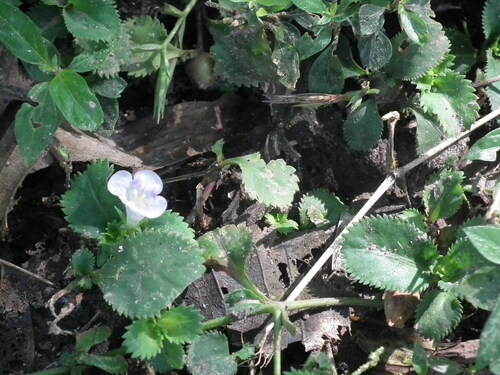
iNaturalist · cc-by-nc
(c) Charles, some rights reserved (CC BY-NC)
(c) Charles, some rights reserved (CC BY-NC)
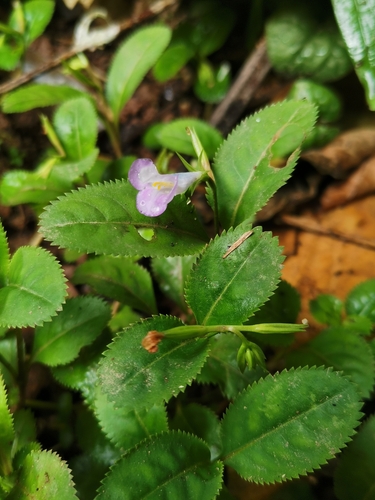
iNaturalist · cc-by-nc
(c) guanhong, some rights reserved (CC BY-NC)
(c) guanhong, some rights reserved (CC BY-NC)
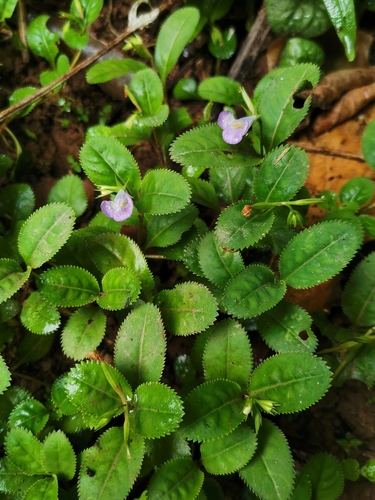
iNaturalist · cc-by-nc
(c) guanhong, some rights reserved (CC BY-NC)
(c) guanhong, some rights reserved (CC BY-NC)
What to Eat
Edible parts: Plant - tea
The whole plant is brewed as herbal tea.
Where to Find It
It is a subtropical plant.
Asia, China,
Countries: United Arab Emirates, Afghanistan, Armenia, Azerbaijan, Bangladesh, Bahrain, Brunei, Bhutan, China, Georgia, Indonesia, Israel, India, Iraq, Iran, Jordan, Japan, Kyrgyzstan, Cambodia, North Korea, South Korea, Kuwait, Kazakhstan, Laos, Lebanon, Sri Lanka, Myanmar, Mongolia, Maldives, Malaysia, Nepal, Oman, Philippines, Pakistan, Qatar, Saudi Arabia, Singapore, Syria, Thailand, Tajikistan, Timor-Leste, Turkmenistan, Turkey, Taiwan, Uzbekistan, Vietnam, Yemen
How to Identify
A herb. It grows 10-15 cm tall. It has runners 30 cm long. These form roots at the nodes.
Medicinal Uses
Used traditionally as a herbal tea for medicinal purposes.
Other Information
It is sold in local markets in China.
Notes
Medicine.
Names & Synonyms
Ilsanthes ruellioides (Colsm.) Kuntze
References (1)
- Li, D. et al, 2017, Ethnobotanical survey of herbal tea plants from the traditional markets in Chaoshan, China. Journal of Ethnopharmacology. 205 (2017) 195-206


