Murdannia bracteata
(C. B. Clarke) J. K. Morton ex Hong
CommelinaceaeSpice/Beverage

iNaturalist · cc0
no rights reserved, uploaded by 葉子
no rights reserved, uploaded by 葉子
iNaturalist · cc-by-nc
(c) ganlin, some rights reserved (CC BY-NC)
(c) ganlin, some rights reserved (CC BY-NC)
What to Eat
Edible parts: Medicine, Plant - tea
The plant is used as a herbal tea.
Where to Find It
It is a tropical plant.
Asia, China, Malaysia, SE Asia,
Countries: United Arab Emirates, Afghanistan, Armenia, Azerbaijan, Bangladesh, Bahrain, Brunei, Bhutan, China, Georgia, Indonesia, Israel, India, Iraq, Iran, Jordan, Japan, Kyrgyzstan, Cambodia, North Korea, South Korea, Kuwait, Kazakhstan, Laos, Lebanon, Sri Lanka, Myanmar, Mongolia, Maldives, Malaysia, Nepal, Oman, Philippines, Pakistan, Qatar, Saudi Arabia, Singapore, Syria, Thailand, Tajikistan, Timor-Leste, Turkmenistan, Turkey, Taiwan, Uzbekistan, Vietnam, Yemen
How to Identify
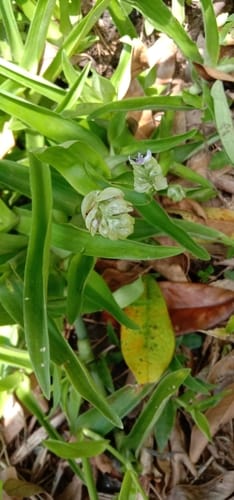
A herb. The main stem is very short. The leaves are in a ring. Usually 2 fertile stems 20-60 cm long develop from this ring and are creeping. The leaves at the base are 20-30 cm long by 1.2-1.8 cm wide.
Other Information
It is a cultivated plant. It is sold in local markets in China.
Notes
Medicine.
Names & Synonyms
Yan huo cao
Aneilema bracteatum (C.B.Clarke) KuntzeAneilema kuntzei C.B.Clarke ex KuntzeMurdannia bracteata (C.B.Clarke) Kuntze ex J.K.Morton
References (1)
- Li, D. et al, 2017, Ethnobotanical survey of herbal tea plants from the traditional markets in Chaoshan, China. Journal of Ethnopharmacology. 205 (2017) 195-206


