Coryphantha vivipara
(Nutt.) Engelm.
Nipple cactus

(c) Mike Hoogendyk, some rights reserved (CC BY-NC)
(c) jmbearce, some rights reserved (CC BY-NC)

(c) Amy Rager, some rights reserved (CC BY-NC)
What to Eat
Edible parts: Fruit
The fruit is dried in the sun and eaten like dried currants.
Where to Find It
It needs bright light. It needs a temperature above 7°C to grow. Some varieties can stand temperatures down to -23°C, especially under snow.
Canada, Central America, Mexico, North America, USA,
How to Identify
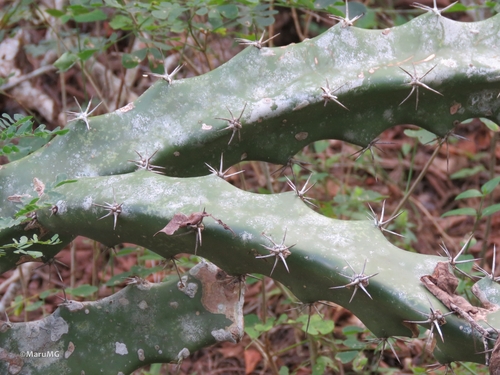
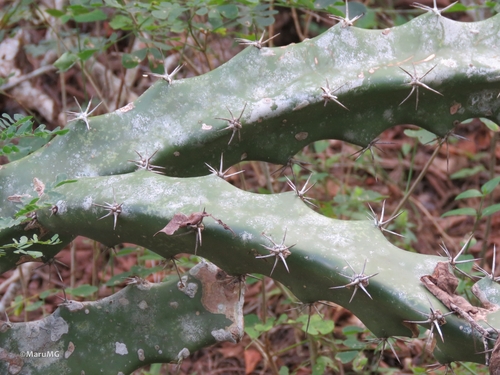
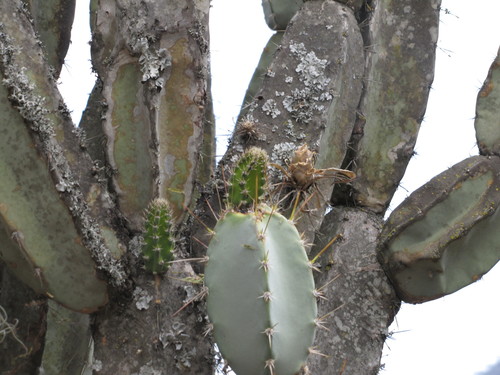
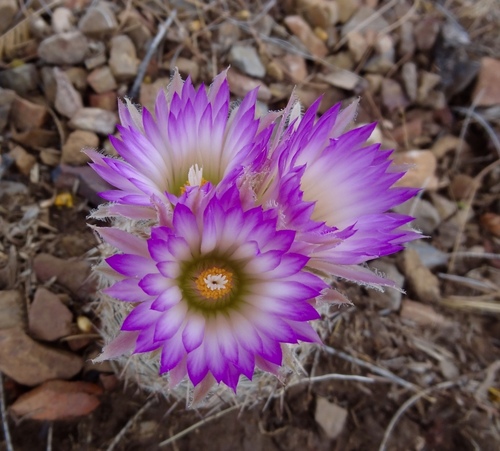
A small cactus. It is round or like a cylinder. It can be 13 cm high. The stems are 6 cm wide. It produces offsets to form clusters. There are about 16 spines which radiate out. There are 1-6 brown spines in the centre. They are all about 2 cm long. The flowers are pink or pale reddish-purple. They are 4 cm across. The fruit are berry like and red.
How to Grow
Plants are grown from seed.
Notes
There are about 45 Coryphantha species. Fruit are used in medicine.
Names & Synonyms
References (8)
- Anderson, M., 2002, The World Encyclopedia of Cacti and Succulents. Hermes House, New York. p 76 (As Escobaria vivipara)
- Beckstrom-Sternberg, Stephen M., and James A. Duke. "The Foodplant Database." http://probe.nalusda.gov:8300/cgi-bin/browse/foodplantdb.(ACEDB version 4.0 - data version July 1994)
- Benson, L., 1969, The Native Cacti of California. Stanford University Press. p 211
- Brickell, C. (Ed.), 1999, The Royal Horticultural Society A-Z Encyclopedia of Garden Plants. Convent Garden Books. p 421 (As Escobaria vivipara)
- Chapman, P and Martin, M., 1989, Exotic Cacti, HP Books p 58
- Etkin, N.L. (Ed.), 1994, Eating on the Wild Side, Univ. of Arizona. p 72
- Facciola, S., 1998, Cornucopia 2: a Source Book of Edible Plants. Kampong Publications, p 63 (var. arizonica)
- Innes, C. and Glass, C., 1997, The Illustrated Encyclopedia of Cacti. Sandstone Books. p 58