Atriplex griffithii
Moq.
AmaranthaceaeSeeds/Nuts
iNaturalist · cc-by-nc
(c) Alexey P. Seregin, some rights reserved (CC BY-NC)
(c) Alexey P. Seregin, some rights reserved (CC BY-NC)

iNaturalist · cc-by-nc
(c) Alexey P. Seregin, some rights reserved (CC BY-NC)
(c) Alexey P. Seregin, some rights reserved (CC BY-NC)

iNaturalist · cc-by-nc
(c) Alexey P. Seregin, some rights reserved (CC BY-NC)
(c) Alexey P. Seregin, some rights reserved (CC BY-NC)
What to Eat
Edible parts: Seeds - oil
Seeds are used for oil.
Where to Find It
It is a temperate plant. It can grow in salty and arid places.
Afghanistan, Iran, Middle East, Pakistan,
Countries: United Arab Emirates, Afghanistan, Bahrain, Israel, Iraq, Iran, Jordan, Kuwait, Lebanon, Oman, Pakistan, Qatar, Saudi Arabia, Syria, Yemen
How to Identify
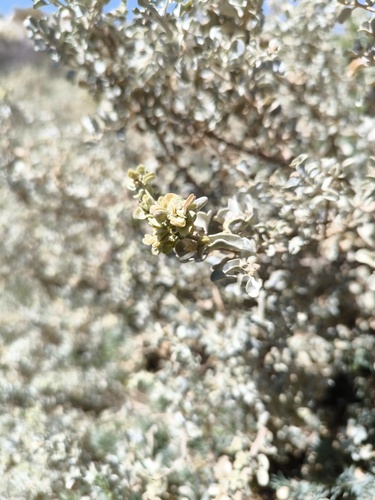
A branched shrub. It is covered with greyish white scales. The stems are 20-80 cm. The seeds are 1.5-2 mm long.
Names & Synonyms
Atriplex persica Boiss.Atriplex wendelboi Aellen
References (1)
- Roshandel, P. & Shamsi, F., 2015, Analysis of oilseed of Halophytic species: Atriplex griffithii, Haloxylon ammodendron, Salicornia europaea, Salsola yazdiana. Journal of Advanced Laboratory Research in Biology. Volume 6, Issue 3; pp 83-88