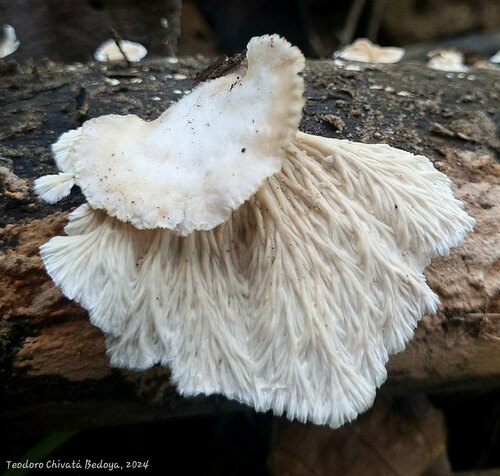
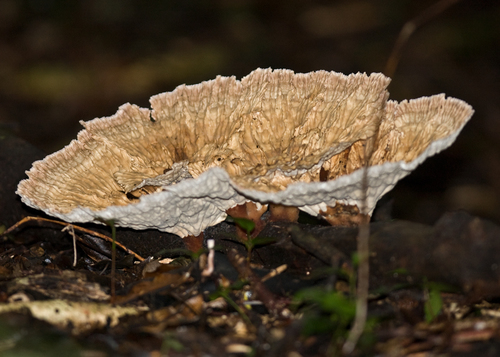
Laetiporus cincinnatus
(Morgan) Burdsall, Banik & T. J. Volk

iNaturalist · cc-by-nc
(c) Nate Swick, some rights reserved (CC BY-NC), uploaded by Nate Swick
(c) Nate Swick, some rights reserved (CC BY-NC), uploaded by Nate Swick

iNaturalist · cc-by
(c) Sean Bloom, some rights reserved (CC BY), uploaded by Sean Bloom
(c) Sean Bloom, some rights reserved (CC BY), uploaded by Sean Bloom
What to Eat
Edible parts: Mushroom, Fungus
The mushroom/fungus is edible.
Known Hazards
Where to Find It
It is a temperate plant.
North America, USA,
Countries: Antigua & Barbuda, Barbados, Bahamas, Belize, Canada, Costa Rica, Cuba, Dominica, Dominican Republic, Grenada, Guatemala, Honduras, Haiti, Jamaica, St Kitts & Nevis, St Lucia, Mexico, Nicaragua, Panama, Puerto Rico, El Salvador, Trinidad & Tobago, United States, St Vincent
How to Identify
A bracket fungus in the family Polyporaceae (probably now Fomitopsidaceae) that grows attached to trees, especially oak.
Notes
Probably now in family Fomitopsidaceae.
References (1)
- The Mushroom Farm themushroomfarm.com