Lepisorus contortus
(Christ) Ching
PolypodiaceaeLeaves

iNaturalist · cc-by-nc
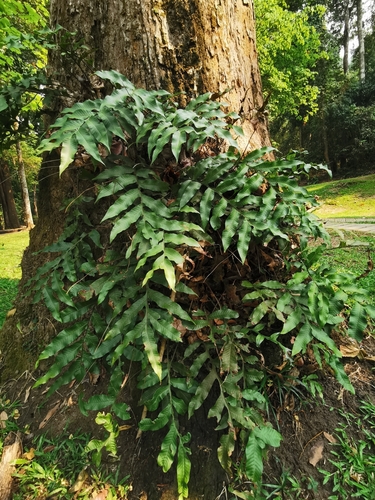
(c) lecanorchis, some rights reserved (CC BY-NC)
(c) lecanorchis, some rights reserved (CC BY-NC)

iNaturalist · cc-by-nc
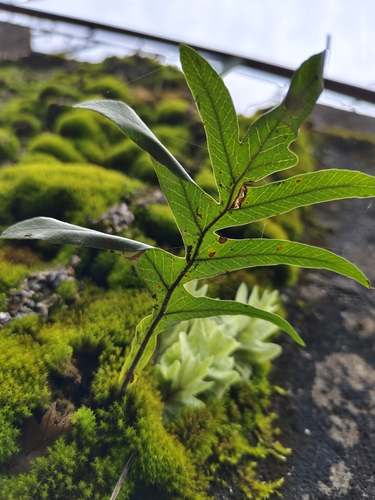
(c) yii, some rights reserved (CC BY-NC)
(c) yii, some rights reserved (CC BY-NC)
What to Eat
Edible parts: Leaves
The leaves are eaten.
Where to Find It
It is a subtropical plant.
Asia, Bhutan, China, Himalayas,
Countries: United Arab Emirates, Afghanistan, Armenia, Azerbaijan, Bangladesh, Bahrain, Brunei, Bhutan, China, Georgia, Indonesia, Israel, India, Iraq, Iran, Jordan, Japan, Kyrgyzstan, Cambodia, North Korea, South Korea, Kuwait, Kazakhstan, Laos, Lebanon, Sri Lanka, Myanmar, Mongolia, Maldives, Malaysia, Nepal, Oman, Philippines, Pakistan, Qatar, Saudi Arabia, Singapore, Syria, Thailand, Tajikistan, Timor-Leste, Turkmenistan, Turkey, Taiwan, Uzbekistan, Vietnam, Yemen
How to Identify
A herb. It grows 10-25 cm tall. The rhizomes are long and creeping. They are scaly when young. The fronds are 1-2 cm apart. The blades are 15-25 cm long by 0.4-1.5 cm wide. There can be teeth along the edge.
Names & Synonyms
Lepisorus jinfoshanensis ChingPleopeltis contorta (Christ) Alston & BinnerPolypodium contortum (Christ) ChristPolypodium lineare f. contortum (Christ) TakedaPolypodium lineare var. contortum Christ
References (1)
- Yeshi, K. et al, 2017, Taxonomical Identification of Himalayan Edible Medicinal Plants in Bhutan and the Phenolic Contents and Antioxidant Activity of Selected Plants. TBAP 7 (2) 2017 pp 89 - 106