Cotoneaster ellipticus
(Lindl.) Loudon
RosaceaeFruit
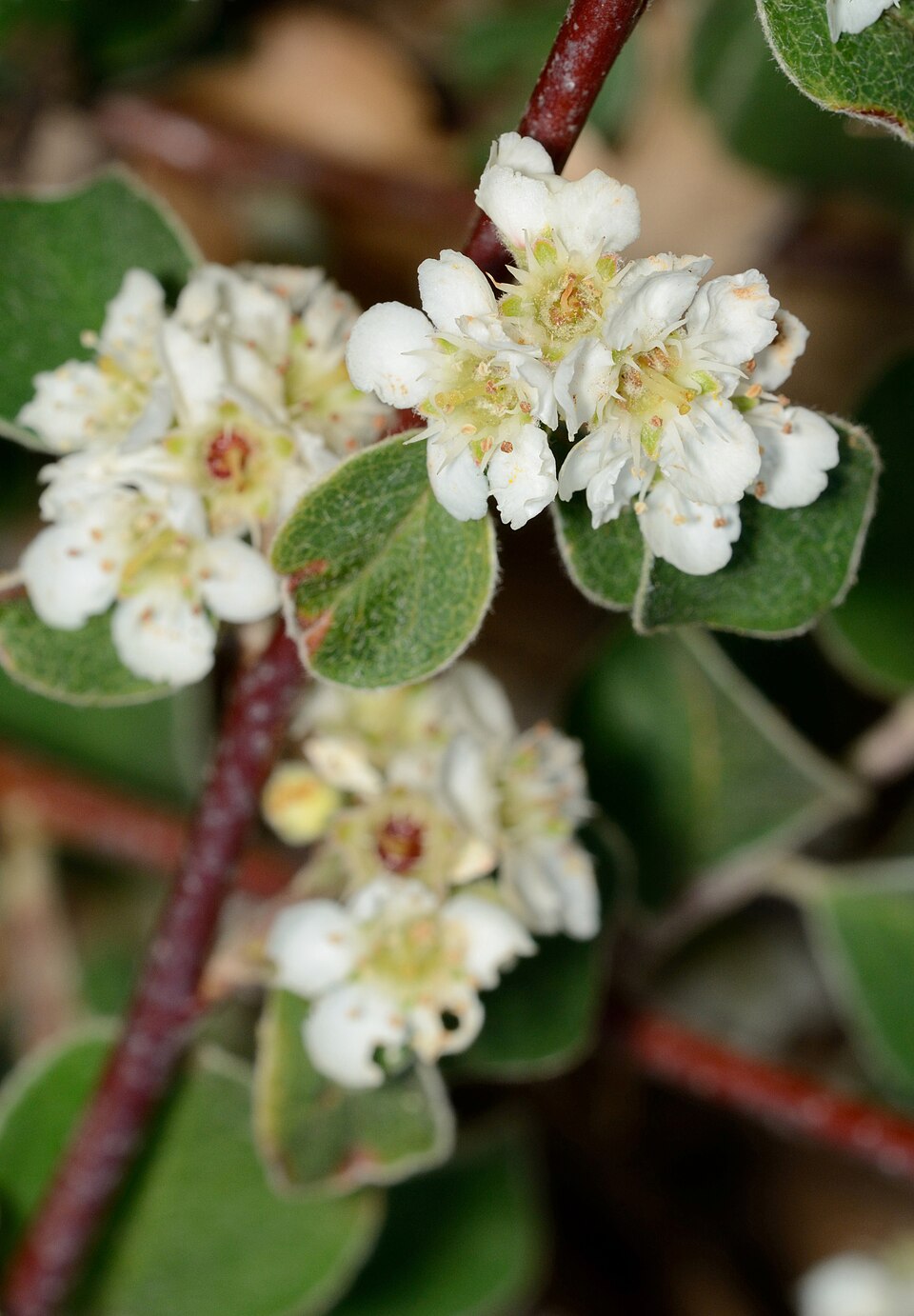
wikimedia · cc-by
Wikimedia Commons - Gideon Pisanty (Gidip) גדעון פיזנטי
Wikimedia Commons - Gideon Pisanty (Gidip) גדעון פיזנטי
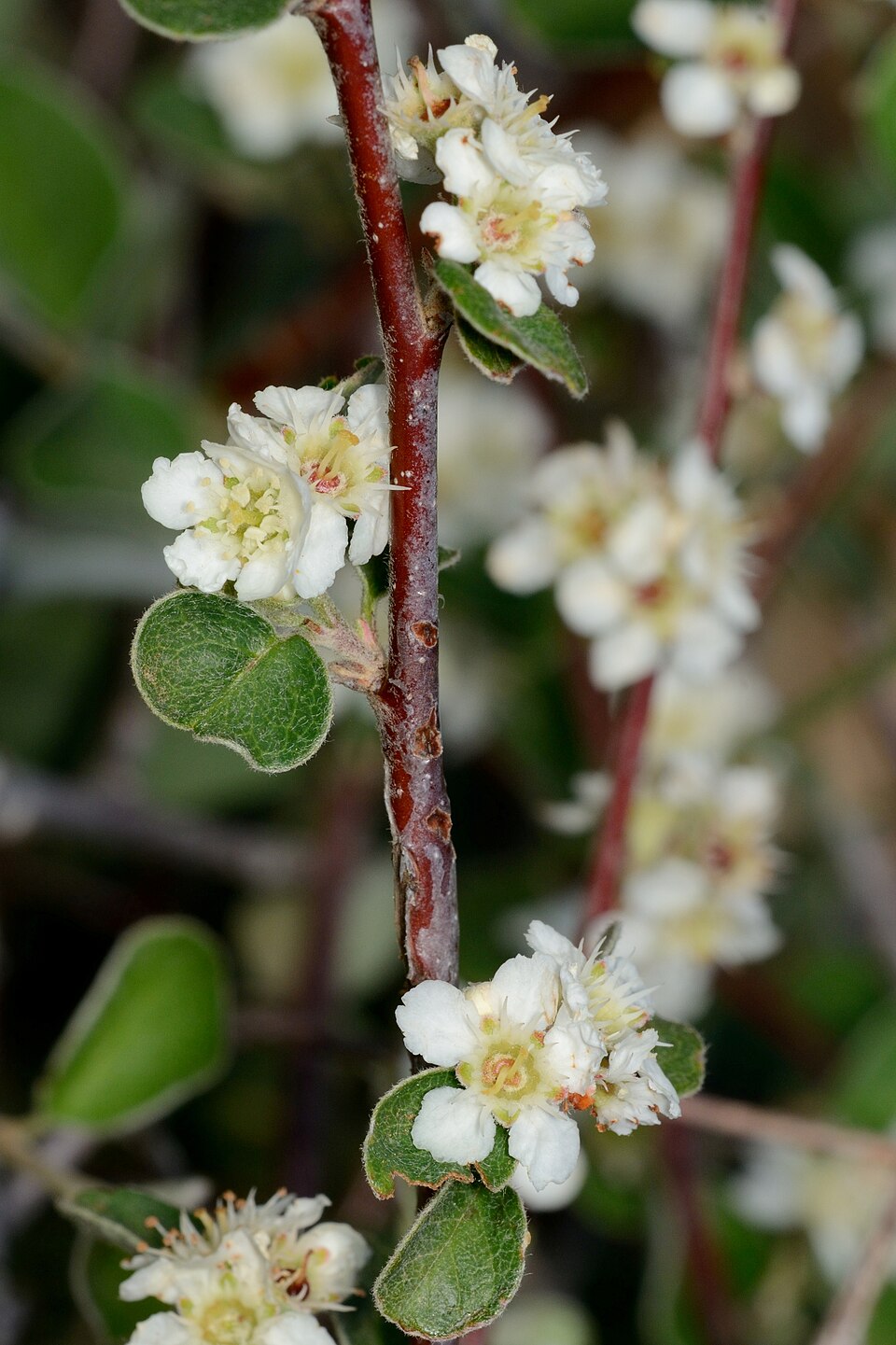
wikimedia · cc-by
Wikimedia Commons - Gideon Pisanty (Gidip) גדעון פיזנטי
Wikimedia Commons - Gideon Pisanty (Gidip) גדעון פיזנטי
What to Eat
Edible parts: Fruit
The fruit is eaten.
Where to Find It
It is a temperate plant. It grows between 2,400-3,000 m above sea level in the Himalayas.
Asia, China, Himalayas, India,
Countries: United Arab Emirates, Afghanistan, Armenia, Azerbaijan, Bangladesh, Bahrain, Brunei, Bhutan, China, Georgia, Indonesia, Israel, India, Iraq, Iran, Jordan, Japan, Kyrgyzstan, Cambodia, North Korea, South Korea, Kuwait, Kazakhstan, Laos, Lebanon, Sri Lanka, Myanmar, Mongolia, Maldives, Malaysia, Nepal, Oman, Philippines, Pakistan, Qatar, Saudi Arabia, Singapore, Syria, Thailand, Tajikistan, Timor-Leste, Turkmenistan, Turkey, Taiwan, Uzbekistan, Vietnam, Yemen
How to Identify
A straggling shrub. It can lie along the ground. The leaves are broadly oval to round and smooth above but with a coating underneath. The flowers are white and in small groups. The fruit are small oval, shiny and black.
Names & Synonyms
Dhuis
Cotoneaster lindleyi Steud.Cotoneaster nummularius Lindl.Eriobotyra elliptica Lindl.
References (1)
- Upreti, K., et al, 2010, Diversity and Distribution of Wild Edible Fruit Plants of Uttarakhand. Bioversity Potentials of the Himalaya. p 167 (As Cotoneaster lindleyi Steud.)
More from Rosaceae

Acaena anserinifolia
Bidgee widgee, Buzzy, New Zealand Bur
No photo
Acaenia anserinifolia - (J.R.Forst.&G.Forst.)Druce.
Pirri-Pirri Bur

Adenostoma sparsifolium
Red shanks, Ribbonwood

Agrimonia eupatoria
Agrimony, Salt and Pepper

Agrimonia odorata
Adour agrimony, Liver-wort

Agrimonia pilosa
Indian chestnut, Agrimony