Rubus wallichianus
Wight & Arn.
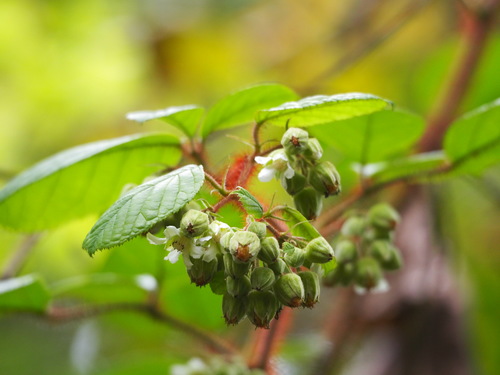
no rights reserved, uploaded by 葉子
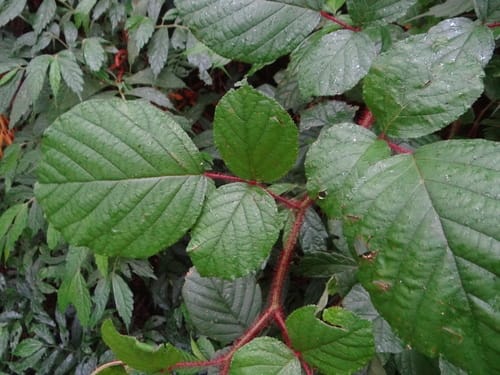
(c) 呂一起(Lu i-chi), some rights reserved (CC BY)
What to Eat
Edible parts: Fruit
The fruit are eaten raw.
Dangerous Lookalikes
This plant can be confused with the following toxic species. Always verify identification carefully before consuming any wild plant.


Red Baneberry: Short herbaceous plant (no thorns), berries on thick red stems, each berry has a single seed, compound sharply-toothed leaves.
Rubus wallichianus: Thorny woody canes (brambles), aggregate berry made of many drupelets, berries pull easily from receptacle.
Where to Find It
It is a subtropical plant. In the Himalayas it grows in shady places along valleys between 2,000-2,600 m above sea level.
Asia, China, Himalayas, India,
How to Identify
A climbing shrub. It grows 1-2 m tall. The small branches are reddish brown. They are angled and hairy with curved prickles. The leaves have leaflets along the stalk. There are usually 3 leaflets. The end leaflet is 2-3 cm long. The flowers are white and in groups near the ends of branches. The fruit is golden or reddish-yellow.
Names & Synonyms
Hissalu
References (3)
- Cheng, Z., et al, 2022, Ethnobotanical study on wild edible plants used by Dulong people in northwestern Yunnan, China. Journal of Ethnobiology and Ethnomedicine (2022) 18:3
- Upreti, K., et al, 2010, Diversity and Distribution of Wild Edible Fruit Plants of Uttarakhand. Bioversity Potentials of the Himalaya. p 185 (As Rubus fasciculatus)
- Wang, J., et al, 2020, An ethnobotanical survey of wild edible plants used by the Yi people of Liangshan Prefecture, Sichuan Province, China. Journal of Ethnobiology and Ethnomedicine 16:10 p 9
More from Rosaceae


