Ipomoea hederifolia
L.

(c) Jason Sharp, some rights reserved (CC BY-NC-SA), uploaded by Jason Sharp

(c) Scott Sutherland, some rights reserved (CC BY-NC), uploaded by Scott Sutherland
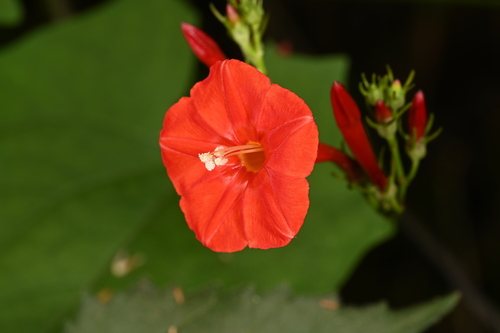
(c) Yuwaraj Gurjar, some rights reserved (CC BY-NC), uploaded by Yuwaraj Gurjar
What to Eat
Edible parts: Leaves, Tubers, Roots
The leaves are cooked and eaten as a vegetable. The tubers and roots are also edible.
Where to Find It
It is a subtropical plant.
Africa, Angola, Argentina, Asia, Australia, Bahamas, Bangladesh, Belize, Bolivia, Brazil, Burundi, Cameroon, Central African Republic, CAR, Central America, China, Christmas Island, Colombia, Comoros, Congo DR, Costa Rica, Cuba, Dominican Republic, Ecuador, El Salvador, Equatorial Guinea, Fiji, French Guiana, Ghana, Guatemala, Guyana, Haiti, Hawaii, Himalayas, Honduras, India, Ivory Coast, Jamaica, Kenya, Korea, Leeward Is., Madagascar, Malawi, Malaysia, Mauritius, Mexico, Mozambique, Myanmar, Nauru, Nepal, New Caledonia, Nicaragua, Nigeria, North America, Northeastern India, Pakistan, Panama, Paraguay, Peru, Puerto Rico, Reunion, Senegal, Seychelles, Sierra Leone, South America*, Sri Lanka, Sudan, Suriname, Tanzania, Thailand, Togo, Tonga, Trinidad-Tobago, Uganda, USA, Vanuatu, Venezuela, Vietnam, Zambia, Zimbabwe,
How to Identify
A creeping herb in the morning glory family (Convolvulaceae), found in subtropical regions. It produces edible leaves, tubers, and roots.
Wikipedia
Source ↗Ipomoea hederifolia is a species of herbaceous annual vine native to the Americas. It was first described by Linnaeus in 1759. It is commonly known as scarlet morning glory, scarlet creeper, star ipomoea, trompillo or ivy-leaved morning glory (which otherwise refers to I. hederacea).
Names & Synonyms
Ajuntai inchi, Ganeshvel
References (2)
- Kew Plants of the World Online
- Kuvar, S. D. & Shinde, R. D., 2019, Wild Edible Plants used by Kokni Tribe of Nasik District, Maharashtra. Journal of Global Biosciences. Volume 8, Number 2, 2019, pp. 5936-5945


