Musa aurantiaca
G. Mann. ex Baker
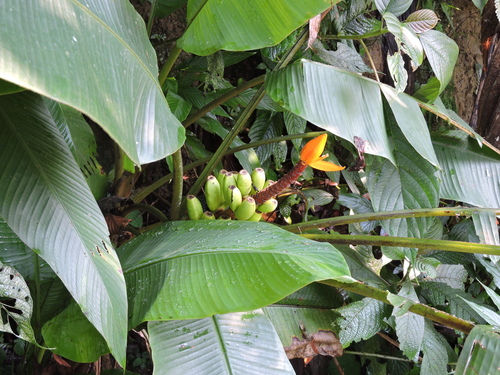
iNaturalist · cc-by-nc-nd
(c) Subhajit Roy, some rights reserved (CC BY-NC-ND), uploaded by Subhajit Roy
(c) Subhajit Roy, some rights reserved (CC BY-NC-ND), uploaded by Subhajit Roy
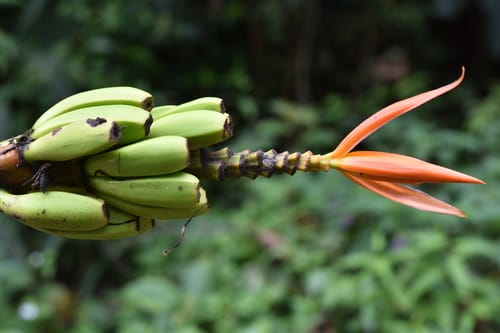
iNaturalist · cc-by-nc
(c) liangfern, some rights reserved (CC BY-NC)
(c) liangfern, some rights reserved (CC BY-NC)
What to Eat
Edible parts: Flower shoot, Fruit
The flowering shoots are cooked and eaten, and the ripe fruit are eaten raw.
Where to Find It
It is a subtropical plant.
Asia, India, Northeastern India,
Countries: United Arab Emirates, Afghanistan, Armenia, Azerbaijan, Bangladesh, Bahrain, Brunei, Bhutan, China, Georgia, Indonesia, Israel, India, Iraq, Iran, Jordan, Japan, Kyrgyzstan, Cambodia, North Korea, South Korea, Kuwait, Kazakhstan, Laos, Lebanon, Sri Lanka, Myanmar, Mongolia, Maldives, Malaysia, Nepal, Oman, Philippines, Pakistan, Qatar, Saudi Arabia, Singapore, Syria, Thailand, Tajikistan, Timor-Leste, Turkmenistan, Turkey, Taiwan, Uzbekistan, Vietnam, Yemen
How to Identify
A subtropical banana family plant. The flowering shoots and ripe fruit are both eaten.
Wikipedia
Source ↗Musa aurantiaca is a species of wild banana (genus Musa), native to Tibet, Arunachal Pradesh, the Assam region and Myanmar.
Names & Synonyms
Dumji, Nyaprom
References (2)
- Lungphi, P., Wangpan, T. & Tangjang, S., 2018, Wild edible plants and their additional uses by the Tangsa community living in the Changlang district of Arunachal Pradesh, India. Pleione 12(2): 151 - 164. 2018.
- Taram, M., et al, 2018, Wild Food Plant Resources of Komkar Adi Tribe of Upper Siang District in Arunachal Pradesh, India. Bulletin of Arunachal Forest Research, Vol. 33(2), 27-35


