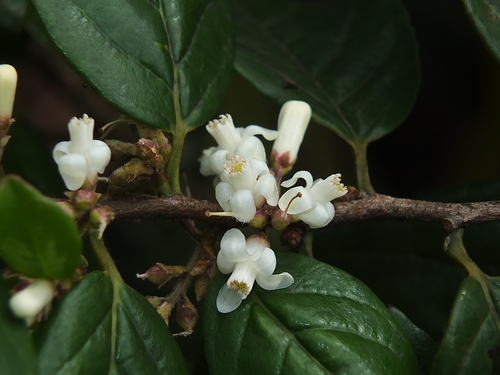
Symplocos lucida
(Thunb.) Siebold & Zucc.
SymplocaceaeSeeds/Nuts
iNaturalist · cc-by-nc
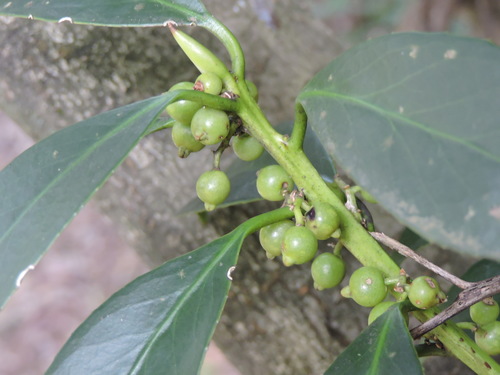
(c) Alexey P. Seregin, some rights reserved (CC BY-NC), uploaded by Alexey P. Seregin
(c) Alexey P. Seregin, some rights reserved (CC BY-NC), uploaded by Alexey P. Seregin
iNaturalist · cc-by-nc
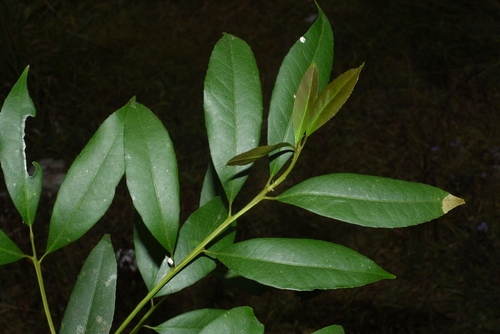
(c) ytt, some rights reserved (CC BY-NC), uploaded by ytt
(c) ytt, some rights reserved (CC BY-NC), uploaded by ytt
iNaturalist · cc-by-nc
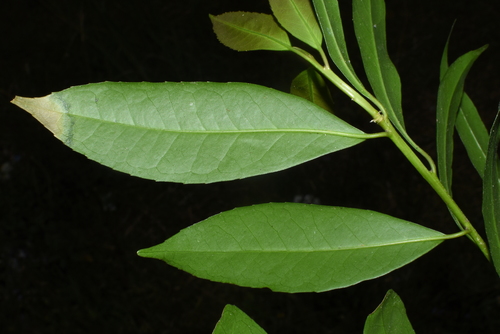
(c) ytt, some rights reserved (CC BY-NC), uploaded by ytt
(c) ytt, some rights reserved (CC BY-NC), uploaded by ytt
What to Eat
Edible parts: Seeds - oil
The seeds are pressed for oil.
Where to Find It
It is a temperate plant. In Sikkim it grows between 1,800-3,000 m above sea level.
Asia, China, Himalayas, India, Japan, Northeastern India, Sikkim,
Countries: United Arab Emirates, Afghanistan, Armenia, Azerbaijan, Bangladesh, Bahrain, Brunei, Bhutan, China, Georgia, Indonesia, Israel, India, Iraq, Iran, Jordan, Japan, Kyrgyzstan, Cambodia, North Korea, South Korea, Kuwait, Kazakhstan, Laos, Lebanon, Sri Lanka, Myanmar, Mongolia, Maldives, Malaysia, Nepal, Oman, Philippines, Pakistan, Qatar, Saudi Arabia, Singapore, Syria, Thailand, Tajikistan, Timor-Leste, Turkmenistan, Turkey, Taiwan, Uzbekistan, Vietnam, Yemen
How to Identify
A small tree. The small branches are yellowish green and slightly angled. The leaves are narrowly oval and 5-13 cm long by 2-5 cm wide. The base is wedge shaped and the edges roll in. The fruit is oval and 0.5-1.8 cm long by 0.4-1.3 cm wide. The seeds are U shaped.
Names & Synonyms
Kharanay
Symplocos theifolia Donand several others
References (2)
- Chettri, N. & Sharma, E., Non-timber Forest Produce: Utilization, Distribution and Status in the Khangchendzonga Biosphere Reserve, Sikkim, India. (As Symplocos theifolia)
- Sundriyal, M. & Sundriyal, R. C., 2004, Structure, Phenology, Fruit Yield, and Future Prospects of some Prominent Wild Edible Plant Species of the Sikkim Himalaya, India. Journal of Ethnobiology 24(1): 113-138 (As Symplocos theifolia)