Symplocos microcalyx
Hayata

GBIF

GBIF

GBIF
What to Eat
Edible parts: Leaves
The leaves are edible, though no further details are available.
Where to Find It
It is a subtropical plant. It grows near streams.
Asia, Japan, Taiwan,
How to Identify
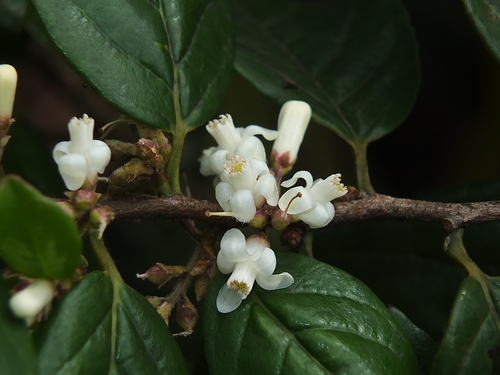
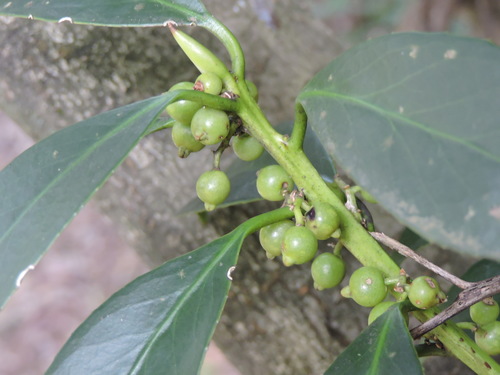
Evergreen shrub reaching 4 m tall with year-round foliage and flowers appearing April to May. Hermaphroditic but requires cross-pollination. Thrives in light sandy to heavy clay soils that are well-drained and moist. Prefers mildly acid to neutral pH. Requires full sun and cannot tolerate shade.
How to Grow
We have very little information on this species and do not know if it will be hardy in Britain, though judging by its native range it could succeed outdoors in many parts of this country. The following notes are based on the general needs of the genus. Succeeds in a sunny position in any well-drained fertile neutral to acid soil. Self-sterile, it needs cross-pollination with a different plant in the same species if seed and fruit are to be produced. Plants in this genus are notably resistant to honey fungus.
Propagation: Sow seed in a cold frame as soon as it is ripe. Stored seed requires stratification and is best sown in a cold frame in late winter; germination can take up to 12 months. Prick out seedlings into individual pots when large enough to handle and grow on in the cold frame through their first winter. Plant out in late spring or early summer. Cuttings of half-ripe wood, 7–10cm with a heel, can be taken in July or August and placed in individual pots in a cold frame; roots form in about 4 weeks with a good success rate.
Medicinal Uses
None known
Other Uses
No specific information is available for this species, but many plants in the Symplocos genus contain alum and can be used as mordants in dyeing.
Wikipedia
Evergreen shrub reaching 4 m tall with year-round foliage and flowers appearing April to May. Hermaphroditic but requires cross-pollination. Thrives in light sandy to heavy clay soils that are well-drained and moist. Prefers mildly acid to neutral pH. Requires full sun and cannot tolerate shade.
Notes
There are over 250 Symplocos species. The name is ambiguous.
Names & Synonyms
References (1)
- Plants for a Future database, The Field, Penpol, Lostwithiel, Cornwall, PL22 0NG, UK. http://www.scs.leeds.ac.uk/pfaf/