Carpobrotus dimidiatus
Haw.) L. Bolus
Natal sourfig

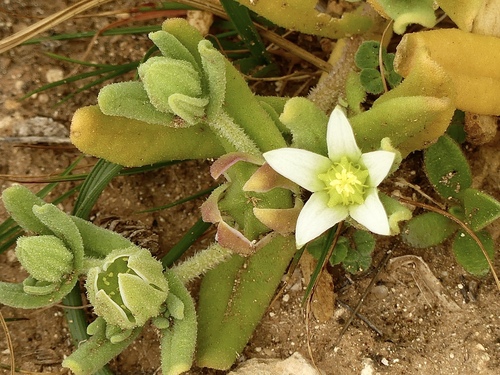
no rights reserved, uploaded by Peter Warren

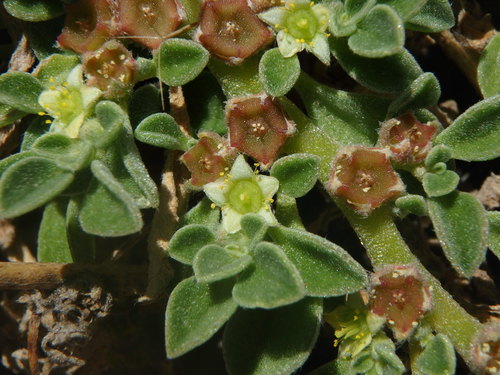
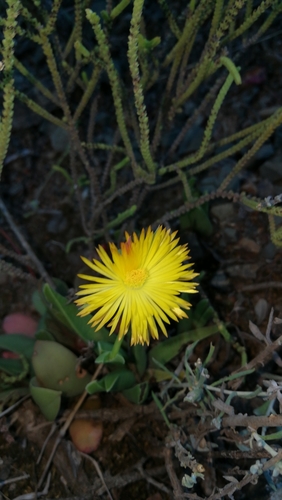
(c) Dave U, some rights reserved (CC BY-SA)
What to Eat
Edible parts: Fruit
Fruit - raw or cooked. A sourish flavour. It can be used to make jam. The fruit is fleshy, but astringent unless very ripe. The globular fruits are around 20mm in diameter. Leaves. Thick and fleshy. A salty flavour.
Where to Find It
It is a tropical plant. It grows on sand dunes.
Africa, Mozambique, South Africa*,
How to Identify
A succulent plant that keeps growing from year to year. The stems lie along the ground and are 2 m long. The leaves are long and thin and triangle shaped in cross section. The base of the flower is double ridged. The flowers are pink or light purple. The fruit are green and shaped like a top and there are many small seeds in the slimy pulp.
How to Grow
Carpobrotus dimidiatus is a plant of warm temperate to tropical coastal regions of southern east Africa. It is not very cold-hardy, but can tolerate short periods with temperatures falling to around -2°c. Requires a well-drained sandy soil in a sunny position. This species can thrive in most soils from sands to heavy clays. Established plants are very drought resistant. Very resistant to wind and salt spray. The fleshy plant is moderately fire-retardant. A vigorous prostrate plant, rooting as it spreads. The flowers only open in the afternoon.
Propagation: Seed - surface sow in containers. Lower night-time temperatures are beneficial. The seed usually germinates in 7 - 10 days at 23°c. When they are large enough to handle, prick the seedlings out into individual pots and grow them on until large enough to plant out. Cuttings at any time during the growing season. Allow the cutting to dry in the sun for a day or two then pot up in a very sandy mix. Very easy.
Medicinal Uses
The strained juice of the pounded leaf is used as a gargle for a sore throat and for treating thrush, digestive troubles, diarrhoea and dysentery. Cloths soaked in the leaf juice are used for dressing burns and sometimes an ointment is made by melting the juice. The leaf juice is applied to the skin to treat a range of skin problems. A syrup made from the fruit is laxative. The plant is regarded as a good source of catechol tannin, which is an effective astringent.
Other Uses
Species in this genus have a vigorous, prostrate growth habit, producing a dense carpet of foliage and making a very effective ground cover. They can be planted in maritime areas, especially in Mediterranean climates, in order to prevent soil erosion in sandy soils, dunes and on banks. The plant has very fleshy leaves and is moderately fire-resistant. It can be used in barrier plantings to prevent the spread of forest fires.
Wikipedia
Source ↗Carpobrotus dimidiatus (commonly known as Natal sourfig) is a succulent perennial of the family Aizoaceae, native to KwaZulu-Natal, South Africa.
Names & Synonyms
References (4)
- Ferns, Useful Tropical Plants.
- PlantZAfrica
- Wikipedia
- World Checklist of Useful Plant Species 2020. Royal Botanic Gardens, Kew