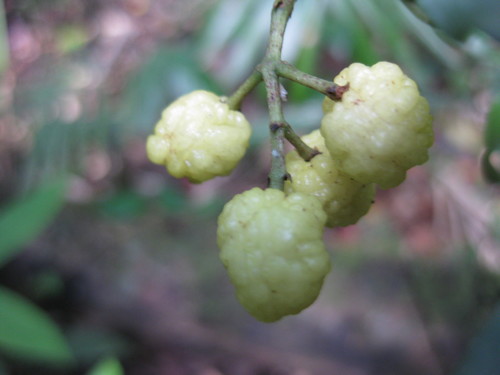
Citrus longispina
Wester
Winged lime, Blacktwig lime

Wikimedia Commons - P J Wester 1877-1931

Wikimedia Commons - P J Wester 1877-1931
What to Eat
Edible parts: Fruit
Fruit - raw. The pulp is very juicy, mildly acid, with a tinge of orange yellow, aromatic and pleasantly flavoured. It is sometimes used as a breakfast fruit and also to make drinks. The thin-skinned fruit is about 6cm in diameter. The fruit is a poor keeper.
Where to Find It
It is a temperate to subtropical plant
Asia, China, Japan, Philippines, SE Asia,
How to Identify
A small tree. It grows 2-3 m tall. It has dark brown to black twigs. The leaves are pale green. The fruit are in clusters on slender twigs that hang down. The fruit are pale yellow. T hey are round and up to 8 cm across.
How to Grow
A fairly productive plant. The plant produces numerous suckers.
Propagation: Seed - There are very few seeds in the fruit, these are of medium size, fairly plump, more or less reticulate, polyembryonic, but of poor germinating qualities.
Other Uses
The dense growth of the plant, combined with the numerous suckers and the formidable spines, would make this plant a good live fence.
Wikipedia
Source ↗Citrus longispina (winged lime, blacktwig lime, or megacarpa papeda) is an unusual sweet lime-like citrus that has been classed as a papeda. It is called Tai la mi san in Chinese, Taramisan in Japanese and Tanisan or Talamisan in the Philippines.
Notes
The scientific name is still ambiguous.
Names & Synonyms
Tai la mi san, Talamisan, Tanisan, Taramisan
References (3)
- Citrus variety. University of California
- Ferns, Useful Tropical Plants.
- Wikipedia