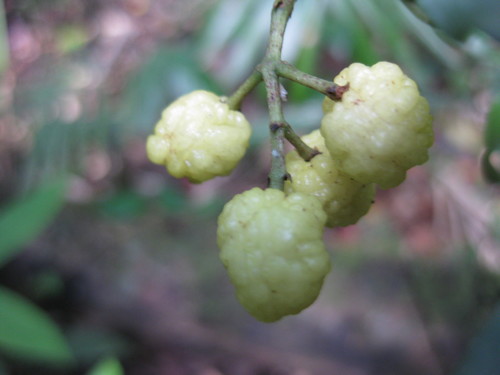
Naringi alata
(Wall. ex Wight & Arn.) J. L. Ellis
RutaceaeFruit

gbif · cc-by
Royal Botanic Gardens, Kew
Royal Botanic Gardens, Kew

gbif · cc-by
Royal Botanic Gardens, Kew
Royal Botanic Gardens, Kew

gbif · cc-by
Royal Botanic Gardens, Kew
Royal Botanic Gardens, Kew
What to Eat
Edible parts: Fruit
The fruit is edible.
Where to Find It
It is a tropical plant.
Asia, India,
Countries: United Arab Emirates, Afghanistan, Armenia, Azerbaijan, Bangladesh, Bahrain, Brunei, Bhutan, China, Georgia, Indonesia, Israel, India, Iraq, Iran, Jordan, Japan, Kyrgyzstan, Cambodia, North Korea, South Korea, Kuwait, Kazakhstan, Laos, Lebanon, Sri Lanka, Myanmar, Mongolia, Maldives, Malaysia, Nepal, Oman, Philippines, Pakistan, Qatar, Saudi Arabia, Singapore, Syria, Thailand, Tajikistan, Timor-Leste, Turkmenistan, Turkey, Taiwan, Uzbekistan, Vietnam, Yemen
How to Identify
A small tree. It grows 8 m tall. The small branches are spiny. The leaves have 3 leaflets.
Notes
The name is ambiguous.
Names & Synonyms
Budidapandlu
Limonia alata Wall. ex Wight & Arn.
References (1)
- Basha, S. K. M., Ethnobotanical Trees of Sri Lanka Malleswara Wildlife Sanctuary; Eastern Ghats, Andhra Pradesh.