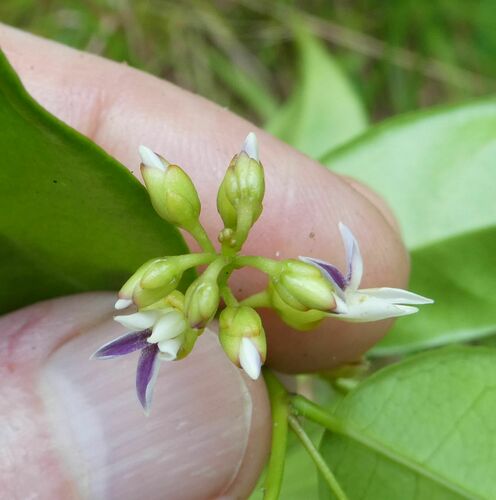
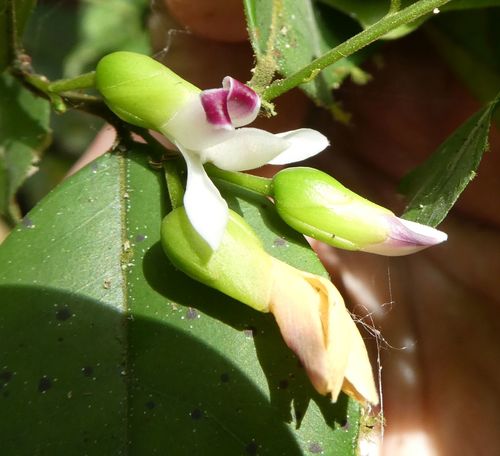
Muraltia spinosa
(L.) F. Foster & J. C.Manning
Tortoise berry
PolygalaceaeFruit

iNaturalist · cc-by-nc
(c) kateyhiggs, some rights reserved (CC BY-NC), uploaded by kateyhiggs
(c) kateyhiggs, some rights reserved (CC BY-NC), uploaded by kateyhiggs

iNaturalist · cc-by-nc
(c) natuurliefhebber, some rights reserved (CC BY-NC)
(c) natuurliefhebber, some rights reserved (CC BY-NC)
What to Eat
Edible parts: Fruit
The ripe fruit are eaten and also serve to quench thirst.
Where to Find It
It is a subtropical plant. It grows on sandy flats.
Africa, South Africa, Southern Africa,
Countries: Angola, Burkina Faso, Burundi, Benin, Botswana, Congo (DRC), Central African Republic, Congo (Republic), Cote d'Ivoire, Cameroon, Cape Verde, Djibouti, Algeria, Egypt, Eritrea, Ethiopia, Gabon, Ghana, Gambia, Guinea, Equatorial Guinea, Guinea-Bissau, Kenya, Comoros, Liberia, Lesotho, Libya, Morocco, Madagascar, Mali, Mauritania, Mauritius, Malawi, Mozambique, Namibia, Niger, Nigeria, Rwanda, Seychelles, Sudan, Sierra Leone, Senegal, Somalia, South Sudan, Sao Tome & Principe, Eswatini, Chad, Togo, Tunisia, Tanzania, Uganda, South Africa, Zambia, Zimbabwe
How to Identify
A rounded shrub with thorns. It grows 1 m tall. The side branches are short and thorny. The leaves are oblong and with short leaf stalks. The flowers occur singly in the axils of the leaves. They are purple, pink and white. The fruit are red or orange and fleshy.
Notes
The name is ambiguous.
Names & Synonyms
Bokbessie, Cargoe, Duinebessie, Mmaba, Skilpadbessie
Mundia spinosa (L.) DC.Nylandtia spinosa (L.) Dumort.
References (4)
- De Vynk, J. C., et al, 2016, Indigenous edible plant use by contemporary Khoe-San descendants of South Africa's Cape South Coast. South African Journal of Botany. 102 (2016) 60-69
- Ruiters-Welcome, A. K., 2019, Food plants of southern Africa. Ph.D. thesis. Univ. of Johannesburg p 91
- Welcome, A. K. & Van Wyk, B.-E., 2019, An inventory and analysis of the food plants of southern Africa. South African Journal of Botany 122 (2019) 136–179
- World Checklist of Useful Plant Species 2020. Royal Botanic Gardens, Kew