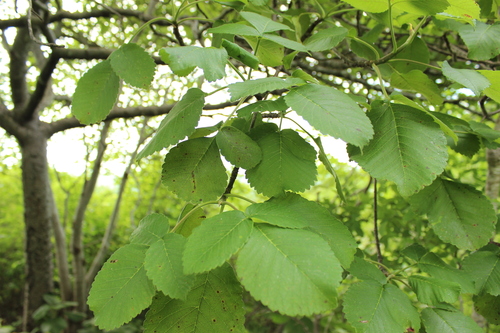
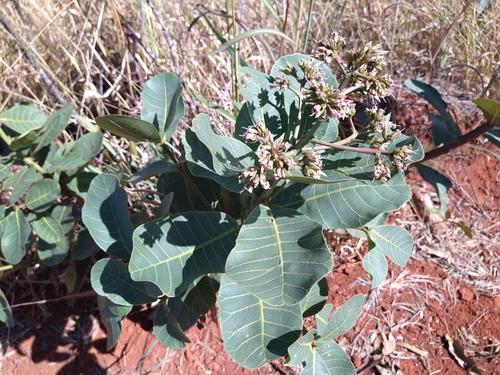
Searsia glauca
(Thunb.) Moffett
AnacardiaceaeFruit

iNaturalist · cc-by
(c) Matthew Fainman, some rights reserved (CC BY), uploaded by Matthew Fainman
(c) Matthew Fainman, some rights reserved (CC BY), uploaded by Matthew Fainman

iNaturalist · cc-by
(c) Matthew Fainman, some rights reserved (CC BY), uploaded by Matthew Fainman
(c) Matthew Fainman, some rights reserved (CC BY), uploaded by Matthew Fainman

iNaturalist · cc-by
(c) Matthew Fainman, some rights reserved (CC BY), uploaded by Matthew Fainman
(c) Matthew Fainman, some rights reserved (CC BY), uploaded by Matthew Fainman
What to Eat
Edible parts: Fruit
The ripe fruit are eaten raw.
Where to Find It
It is a subtropical plant.
Africa, South Africa, Southern Africa,
Countries: Angola, Burkina Faso, Burundi, Benin, Botswana, Congo (DRC), Central African Republic, Congo (Republic), Cote d'Ivoire, Cameroon, Cape Verde, Djibouti, Algeria, Egypt, Eritrea, Ethiopia, Gabon, Ghana, Gambia, Guinea, Equatorial Guinea, Guinea-Bissau, Kenya, Comoros, Liberia, Lesotho, Libya, Morocco, Madagascar, Mali, Mauritania, Mauritius, Malawi, Mozambique, Namibia, Niger, Nigeria, Rwanda, Seychelles, Sudan, Sierra Leone, Senegal, Somalia, South Sudan, Sao Tome & Principe, Eswatini, Chad, Togo, Tunisia, Tanzania, Uganda, South Africa, Zambia, Zimbabwe
How to Identify
A shrub. It grows 4 m high. The bark is grainy and grey brown. The leaves have 3 leaflets. They are 1 cm long. The flowers are small and greenish white. The fruit is reddish. They are 4-6 mm long by 3-4 mm wide.
Wikipedia
Source ↗Searsia glauca (or the blue kuni-rhus) is a small, compact tree or bush native to the Cape Provinces of South Africa. Although commonest near the coast, it is also found inland among fynbos vegetation. Searsia glauca has potential medicinal effects and antioxidant properties that can aid in the prevention of cell injury or death.
Names & Synonyms
Konkeltaaibos, Kraaikos, Spreeubos, Taaibos
Rhus glauca Thunb.
References (3)
- De Vynk, J. C., et al, 2016, Indigenous edible plant use by contemporary Khoe-San descendants of South Africa's Cape South Coast. South African Journal of Botany. 102 (2016) 60-69
- Ruiters-Welcome, A. K., 2019, Food plants of southern Africa. Ph.D. thesis. Univ. of Johannesburg p 15
- Welcome, A. K. & Van Wyk, B.-E., 2019, An inventory and analysis of the food plants of southern Africa. South African Journal of Botany 122 (2019) 136–179