Melocactus bahiensis
(Britton & Rose) Luetzelb.
CactaceaeFruit
iNaturalist · cc-by-nc
(c) Marcondes Oliveira, some rights reserved (CC BY-NC), uploaded by Marcondes Oliveira
(c) Marcondes Oliveira, some rights reserved (CC BY-NC), uploaded by Marcondes Oliveira

iNaturalist · cc-by-nc
(c) Ricardo da Silva Ribeiro, some rights reserved (CC BY-NC)
(c) Ricardo da Silva Ribeiro, some rights reserved (CC BY-NC)
iNaturalist · cc-by-nc
(c) Joey Santore, some rights reserved (CC BY-NC)
(c) Joey Santore, some rights reserved (CC BY-NC)
What to Eat
Edible parts: Fruit
The stems are used in making candy. We have no more information for this species, but in a similar species in Mexico, cubes of the plant's flesh are cooked in a concentrated sugary solution and turned into sweets - the cactus merely acts as a vehicle for the sugary flavour
Where to Find It
It is a tropical plant. It grows in open savannah.
Brazil, South America,
How to Identify
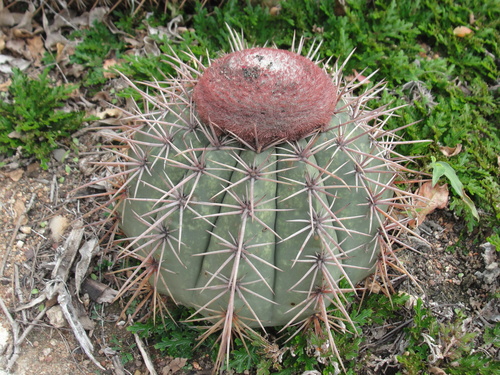
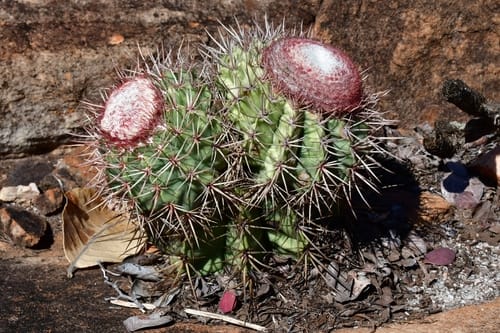
A cactus. It is a succulent herb. It is a small round plant. The stem is ribbed and the cap has woolly brown bristles. It grows 10-21 cm tall and 11-21 cm wide. There are 10-12 ribs.
Medicinal Uses
The plant is used medicinally. No more information
Wikipedia
Source ↗Melocactus bahiensis is a species of Melocactus found in Bahia, Brazil.
Names & Synonyms
Cabeca de Frade
Cactus bahiensis Britton & Rose
References (2)
- de Lucena, et al, 2013, Use and knowledge of Cactaceae in Northeastern Brazil. Journal of Ethnobiology and Ethnomedicine 2013, 9:62
- World Checklist of Useful Plant Species 2020. Royal Botanic Gardens, Kew