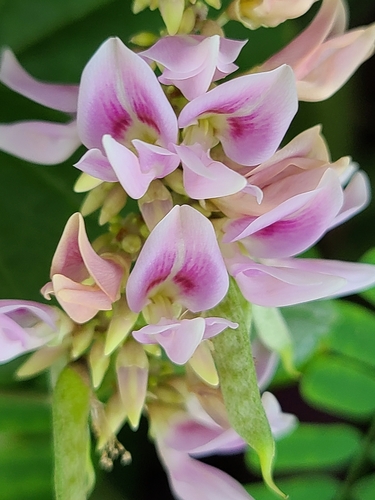
Chamaecrista nictitans subsp. patellaria
(Collad.) H. S. Irwin & Barneby

no rights reserved, uploaded by 葉子

(c) Douglas Goldman, some rights reserved (CC BY-SA), uploaded by Douglas Goldman

(c) David Cappaert, some rights reserved (CC BY-NC), uploaded by David Cappaert
What to Eat
Edible parts: Leaves - tea
Where to Find It
It is a tropical plant.
Asia, Brazil, China, South America,
How to Identify
A tropical herb in the Fabaceae family with leaves used for tea.
Medicinal Uses
Historically, the Cherokee tribe used C. nictitans along with Senna marilandica to treat spasm in infants. It also was used as a cathartic and a vermifuge. Chamaecrista nictitans is undesirable as a forage or hay but can be used for both in subtropical areas.
Wikipedia
Source ↗Chamaecrista nictitans, the sensitive cassia, sensitive partridge pea, small partridge pea or wild sensitive plant, is a herbaceous species of legume widely distributed through the temperate and tropical Americas. It is an annual plant capable of rapid plant movement—its leaflets fold together when touched. However, a population at Haleakala National Park on the island of Maui, Hawaii, was reported as not being sensitive to touch.
References (1)
- Luo, B., et al, 2019, Wild edible plants collected by Hani from terraced rice paddy agroecosystem in Honghe Prefecture, Yunnan, China. Journal of Ethnobiology and Ethnomedicine 15:56