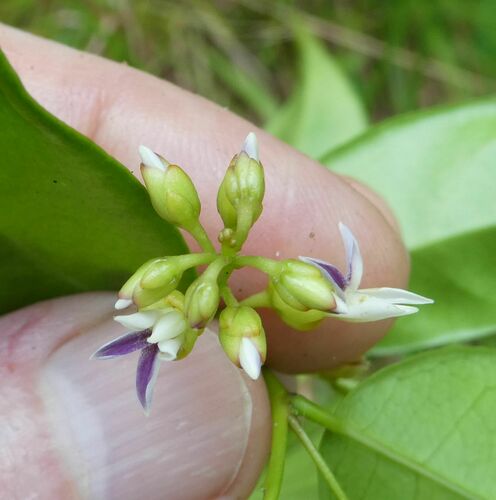
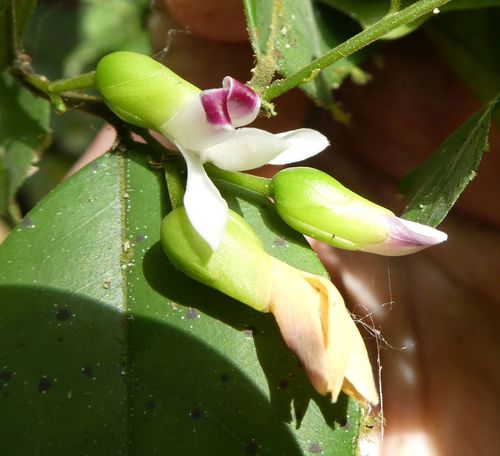
Polygala fallax
Hemsl.

iNaturalist · cc0
no rights reserved
no rights reserved
iNaturalist · cc-by-nc
(c) Alan Kwok (King Lun), Ada Tai (Ah Heung) / 阿達蘭 AdAlan, some rights reserved (CC BY-NC), uploaded by Alan Kwok (King Lun), Ada Tai (Ah Heung) / 阿達蘭 AdAlan
(c) Alan Kwok (King Lun), Ada Tai (Ah Heung) / 阿達蘭 AdAlan, some rights reserved (CC BY-NC), uploaded by Alan Kwok (King Lun), Ada Tai (Ah Heung) / 阿達蘭 AdAlan

iNaturalist · cc-by-nc
(c) jjjohnston, some rights reserved (CC BY-NC)
(c) jjjohnston, some rights reserved (CC BY-NC)
What to Eat
Edible parts: Flowers, Leaves
The flowers and young leaves are used as a potherb, usually in soup.
Where to Find It
It is a tropical plant. In Yunnan.
Asia, China,
Countries: United Arab Emirates, Afghanistan, Armenia, Azerbaijan, Bangladesh, Bahrain, Brunei, Bhutan, China, Georgia, Indonesia, Israel, India, Iraq, Iran, Jordan, Japan, Kyrgyzstan, Cambodia, North Korea, South Korea, Kuwait, Kazakhstan, Laos, Lebanon, Sri Lanka, Myanmar, Mongolia, Maldives, Malaysia, Nepal, Oman, Philippines, Pakistan, Qatar, Saudi Arabia, Singapore, Syria, Thailand, Tajikistan, Timor-Leste, Turkmenistan, Turkey, Taiwan, Uzbekistan, Vietnam, Yemen
How to Identify
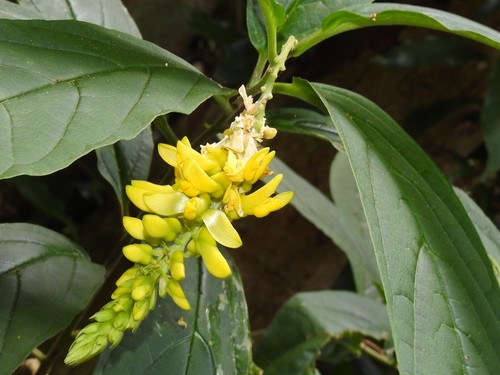
A shrub. It grows 1-3 m tall. The roots are stout and branched. The small branches are grey-green and flattened. They are hairy. The leaves are green and sword shaped. They are 8-17 cm long by 4-7 cm wide. They are hairy. The flower clusters are 10-15 cm long and can be in the axils of leaves or at the ends of branches. The flowers are yellow.
Names & Synonyms
Ha pa ha ma
Polygala aureocauda DunnPolygala forbesii Chodat
References (1)
- Luo, B., et al, 2019, Wild edible plants collected by Hani from terraced rice paddy agroecosystem in Honghe Prefecture, Yunnan, China. Journal of Ethnobiology and Ethnomedicine 15:56