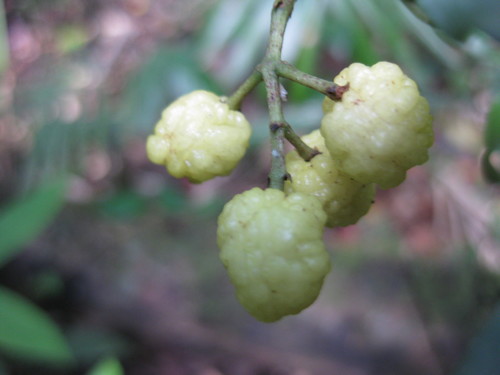
Zanthoxylum scandens
Blume

iNaturalist · cc-by-nc
(c) Han-Ting Liu, some rights reserved (CC BY-NC), uploaded by Han-Ting Liu
(c) Han-Ting Liu, some rights reserved (CC BY-NC), uploaded by Han-Ting Liu
iNaturalist · cc-by-nc
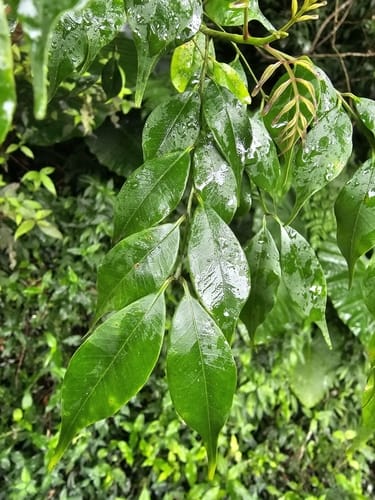
(c) 郭伯川, some rights reserved (CC BY-NC)
(c) 郭伯川, some rights reserved (CC BY-NC)
iNaturalist · cc-by-nc
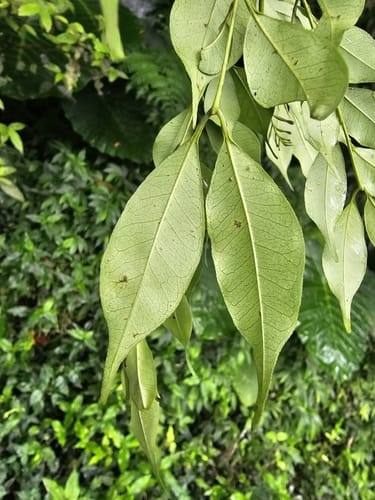
(c) 郭伯川, some rights reserved (CC BY-NC)
(c) 郭伯川, some rights reserved (CC BY-NC)
What to Eat
Edible parts: Fruit - spice
The fruit is used as a spice for flavouring.
Where to Find It
It is a tropical plant.
Asia, China,
Countries: United Arab Emirates, Afghanistan, Armenia, Azerbaijan, Bangladesh, Bahrain, Brunei, Bhutan, China, Georgia, Indonesia, Israel, India, Iraq, Iran, Jordan, Japan, Kyrgyzstan, Cambodia, North Korea, South Korea, Kuwait, Kazakhstan, Laos, Lebanon, Sri Lanka, Myanmar, Mongolia, Maldives, Malaysia, Nepal, Oman, Philippines, Pakistan, Qatar, Saudi Arabia, Singapore, Syria, Thailand, Tajikistan, Timor-Leste, Turkmenistan, Turkey, Taiwan, Uzbekistan, Vietnam, Yemen
How to Identify
A shrub or woody climber. It has prickles. The leaves have 5-25 leaflets. The leaflets are alternate or opposite. They are 4-10 cm long by 1.5-4 cm wide. The flowering shoots can be at the ends of branches or in the axils of leaves. The flowers have 4 parts. The petals are pale yellow to green. The fruit are follicles that are purplish red. They are 4.5-5.5 mm across. The seeds are 4-5 mm across.
Wikipedia
Source ↗Zanthoxylum scandens is a species of woody plant in the family Rutaceae.
Production
In Yunnan plants flower March to May and fruit July to August.
Names & Synonyms
O ne e bi ne si, Wei
Zanthoxylum chinensis (Merr.) C. ChungZanthoxylum cuspidatum Champ. ex Benth.Zanthoxylum cyrtorhachium (Hayata) C. C. HuangZanthoxylum laxifoliolatum (Hayata) C. C. HuangZanthoxylum leiorhachium (Hayata) C. C. Huang
References (2)
- Cao, Y., et al, 2020, Ethnobotanical study on wild edible plants used by three trans-boundary ethnic groups in Jiangcheng County, Pu’er, Southwest China. Journal of Ethnobiology and Ethnomedicine (2020) 16:66
- Luo, B., et al, 2019, Wild edible plants collected by Hani from terraced rice paddy agroecosystem in Honghe Prefecture, Yunnan, China. Journal of Ethnobiology and Ethnomedicine 15:56