Crateva adansonii
DC.
Temple plant
no rights reserved
no rights reserved, uploaded by 葉子

(c) nicolobellon, some rights reserved (CC BY-NC)
What to Eat
Edible parts: Leaves, Fruit, Seeds, Vegetable
The leaves are eaten fresh or used as flavoring. Young fruits and flowers are cooked and eaten. The seeds are occasionally eaten.
Where to Find It
It is a tropical plant. It grows on land subject to temporary flooding and on the banks of streams. It occurs in savannah country. It is very drought tolerant. It grows in the Sahel. In East Africa it grows between 600-1,400 m altitude. It can grow in arid places.
Africa, Asia, Australia, Bangladesh, Benin, Burkina Faso, Cambodia, Cameroon, Central Africa, Chad, China, Congo, Côte d'Ivoire, East Africa, Ethiopia, Fiji, Gambia, Ghana, Guinea, Guinée, Guinea-Bissau, India, Indochina, Indonesia, Ivory Coast, Kenya, Laos, Malaysia, Mali, Mauritius, Myanmar, Niger, Nigeria, Pacific, Pakistan, Papua New Guinea, PNG, Reunion, Rwanda, Sahel, SE Asia, Senegal, Solomon Islands, South Sudan, Sri Lanka, Sudan, Taiwan, Tanzania, Thailand, Togo, Uganda, Vanuatu, Vietnam, West Africa, Zambia,
How to Identify
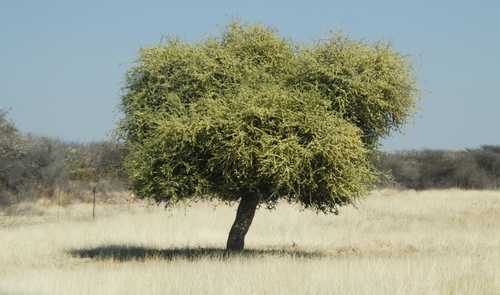
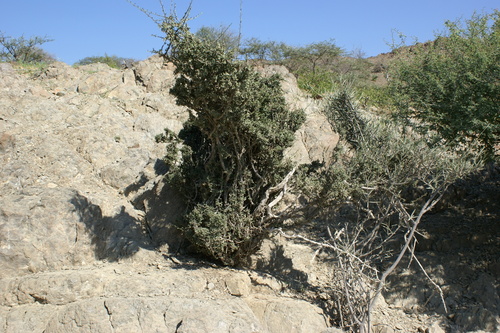
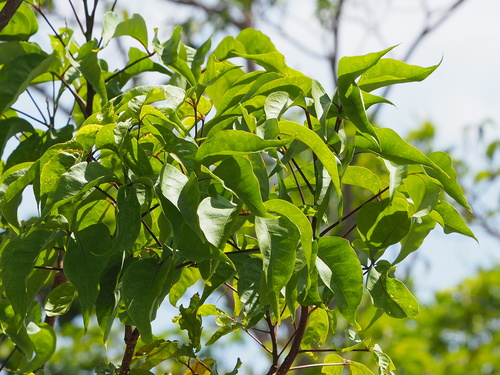
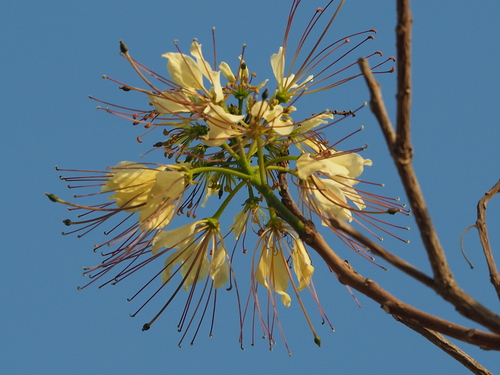
A shrub 1-4 m high. It can grow 20 m tall. It has a wide spreading crown. The trunk is stout and often twisted. The bark is pale brown. The leaves have 3 leaflets. These have blunt tips. The leaves are 5-10 cm long. The flowers are white and occur in dense masses. The papery white petals are all on one side of the flower. The fruit are green at first but become yellow when mature. The fruit are 2.5-5 cm across. The seeds are edible.
How to Grow
The plant can tolerate occasional short-lived light frosts. Succeeds in full sun or in partial shade. Requires a moist soil. Prefers a deep, sandy to loamy soil. Tolerant of seasonal inundation of the soil. The leaves have a disagreeable smell when crushed. The plant can survive bush fires, resprouting from the old wood.
Propagation: Seed. It is reported that the seed will not germinate in competition with grasses or shrubs. They must lie on bare moist soil and, for survival, must not be shaded.
Medicinal Uses
The leaves are applied to the head as a mild counter-irritant for easing headaches. A steam bath of the leaves over the face is used as a remedy for all troubles due to poor vision. The leaves are used in fumigations for treating jaundice and yellow fever, a treatment that is based, perhaps, on the Theory of Signatures due to the yellow colour of the wood. The bark is said to be rubefacient and tonic. It is widely used as a remedy for stomach-troubles. The bark removed from the base of the trunk has been used both internally and externally for treating sterility. It is used in combination with Flacourtia flavescens as a treatment for leprosy. It is used as a counter-irritant for treating headaches. Powdered and boiled in oil, it is used as an application for rheumatic condition. A bark paste is used as a poultice on swellings. The powdered leaves and bark are considered to be rubefacient and are used especially on cysts. The root is used as a febrifuge, being boiled with natron and eaten with guinea-corn pap. It is used in several treatments for syphilis. The dried, ground roots are used as an application to swollen parts of the body. The seeds have unspecified medicinal uses.
Other Uses
A yellow dye is obtained from the branches and leaves. The tree contains a gum. The wood is soft and yellow and strong-smelling when cut. It is of no practical use though it is reported in Togo to be usable like boxwood - presumably for small items of joinery. The wood is occasionally used for items such as saddles, cart wheels and frames. The wood is used for fuel and to make charcoal.
Wikipedia
Source ↗Crateva adansonii is a species of small tree in the family Capparaceae. It is widely distributed in Africa and Asia and may be called the "sacred barna" in India or bún trái đỏ (mắt núi) in Vietnam.
Notes
There are 9 Crateva species. They grow in the tropics.
Names & Synonyms
Bado, Bun adanson, Bun trai-do, Chelum punga, Eegun-orun, Eiyoroit, Kaech, Koleonik, Leyley, Nagarida, Po-de-bola, Ungududu
References (31)
- Abbiw, D.K., 1990, Useful Plants of Ghana. West African uses of wild and cultivated plants. Intermediate Technology Publications and the Royal Botanic Gardens, Kew. p 42
- Achigan-Dako, E, et al (Eds), 2009, Catalogue of Traditional Vegetables in Benin. International Foundation for Science.
- Assefa, A. & Abebe, T., 2010, Wild Edible Trees and Shrubs in the Semi-arid Lowlands of Southern Ethiopia. Journal of Science and Development 1 (1) 2010
- Awas, T., 1997, A Study on the Ecology and Ethnobotany of Non-cultivated Food Plants and Wild Relatives of Cultivated crops in Gambella Region, Southwestern Ethiopia. Addis Ababa University. p 46
- Barwick, M., 2004, Tropical and Subtropical Trees. A Worldwide Encyclopedic Guide. Thames and Hudson p 135
- Burkill, H. M., 1985, The useful plants of west tropical Africa, Vol. 1. Kew.
- Dansi, A., et al, 2008, Traditional leafy vegetables and their use in the Benin Republic. Genet Resour Crop Evol (2008) 55:1239–1256
- Dharani, N., 2002, Field Guide to common Trees & Shrubs of East Africa. Struik. p 73
- Flora of Pakistan. www.eFloras.org (As Crataeva cordifolia subsp. odora)
- Fowler, D. G., 2007, Zambian Plants: Their Vernacular Names and Uses. Kew. p 78
- Gallagher, D. E., 2010, Farming beyond the escarpment: Society, Environment, and Mobility in Precolonial Southeastern Burkina Faso. PhD University of Michigan.
- Gardner, S., et al, 2000, A Field Guide to Forest Trees of Northern Thailand, Kobfai Publishing Project. p 46
- Grubben, G. J. H. and Denton, O. A. (eds), 2004, Plant Resources of Tropical Africa 2. Vegetables. PROTA, Wageningen, Netherlands. p 560
- Hahn, K., et al, 2018, The Use of Wild Plants for Food: a National Scale Analysis for Burkina Faso (West Africa) Flora et Vegetatio Sudano-Sambesica 21, 25-33
- Jardin, C., 1970, List of Foods Used In Africa, FAO Nutrition Information Document Series No 2.p 71, 131
- Keay, R.W.J., 1989, Trees of Nigeria. Clarendon Press, Oxford. p 40
- Krishen P., 2006, Trees of Delhi, A Field Guide. DK Books. p 202 (subsp. odora)
- Le Houerou, H. N., (Ed.), 1980, Browse in Africa. The current state of knowledge. International Livestock Centre for Africa, Ethiopia. p 162
- Lulekal, E., et al, 2011, Wild edible plants in Ethiopia: a review on their potential to combat food insecurity. Afrika Focus - Vol. 24, No 2. pp 71-121
- Martin, F.W. & Ruberte, R.M., 1979, Edible Leaves of the Tropics. Antillian College Press, Mayaguez, Puerto Rico. p 181
- Maydell, H. von, 1990, Trees and shrubs of the Sahel: their characteristics and uses. Margraf. p 247
- Moksia, F., et al, 2019, Diversity and Socio-Economic Value of Wild Edible Plants in the Mounts Mandara Region, Cameroon. International Journal of Sciences. Vol. 8:10
- Muller, J. & Almedom, A. M., 2008, What is “Famine Food”? Distinguishing Between Traditional Vegetables and Special Foods for Times of Hunger/Scarcity (Boumba, Niger). Hum Ecol (2008) 36:599–607
- Mutie, F. M., et al, 2023, Important Medicinal and Food Taxa (Orders and Families) in Kenya, Based on Three Quantitative Approaches. Plants 2023, 12, 1145
- Pham-Hoang Ho, 1999, An Illustrated Flora of Vietnam. Nha Xuat Ban Tre. p 599
- Phon, P., 2000, Plants used in Cambodia. © Pauline Dy Phon, Phnom Penh, Cambodia. p 176
- Prodr. 1:243. 1824
- Royal Botanic Gardens, Kew (1999). Survey of Economic Plants for Arid and Semi-Arid Lands (SEPASAL) database. Published on the Internet; http://www.rbgkew.org.uk/ceb/sepasal/internet [Accessed 7th April 2011]
- Seidemann J., 2005, World Spice Plants. Economic Usage, Botany, Taxonomy. Springer. p 120
- Vivien, J., & Faure, J.J., 1996, Fruitiers Sauvages d'Afrique. Especes du Cameroun. CTA p 102
- World Checklist of Useful Plant Species 2020. Royal Botanic Gardens, Kew