Crateva religiosa
Forst.f.
Sacred garlic pear
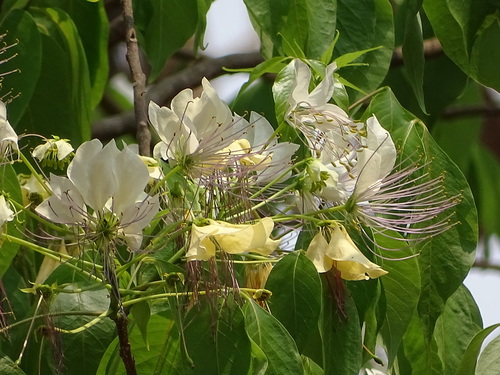
(c) Rujuta Vinod, some rights reserved (CC BY-NC), uploaded by Rujuta Vinod
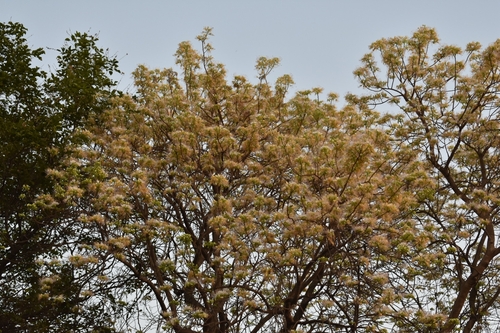
(c) சூழல் அறிவோம், some rights reserved (CC BY-NC)

no rights reserved, uploaded by 葉子
What to Eat
Edible parts: Seeds, Leaves, Flowers, Fruit
The fruit is edible, usually cooked. Tender leaves and buds are boiled and squeezed to reduce bitterness, then cooked as a vegetable or pickled. Flowers are pickled and eaten. Seeds are also edible.
Known Hazards
Where to Find It
A tropical plant. It is native to SE Asia and Australia. It prefers moist soils and an open sunny position. It is drought and frost tender. It can tolerate temporary flooding. Found in waste places near streams and in areas of shrubs, near the sea from northern Luzon to Masbate and Palawan and probably also in Mindanao and Sulu Archipelago in the Philippines. In Nepal it grows to about 1500 m altitude. It needs a temperature above 15°C.
Africa, American Samoa, Asia, Australia, Bangladesh, Bhutan, Burkina Faso, Cambodia, Caroline Islands, China, Chuuk, East Timor, Fiji, FSM, Gambia, Hawaii, Himalayas, India, Indochina, Indonesia, Japan, Kiribati, Laos, Malaysia, Micronesia, Myanmar, Nepal, Nigeria, Northeastern India, Pacific, Palau, Papua New Guinea, PNG, Philippines, Pohnpei, Polynesia, Samoa, SE Asia, Senegal, Solomon Islands, Sri Lanka, Thailand, Timor-Leste, Tonga, Truk, Vietnam, West Africa, Yap,
How to Identify
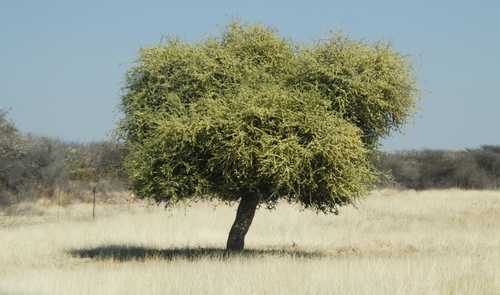
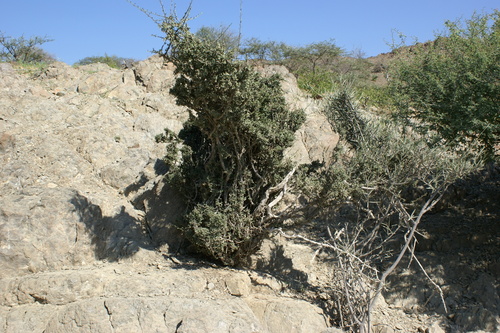
An evergreen or deciduous tree. It grows up to 7-15 m tall and 45 cm across the trunk. The tree spreads to 2-4 m across. The stem is erect and the bark is smooth, with branches low down. The leaves have long petioles, 2-9 cm long. The leaves are divided into 3 leaflets growing from the same point. The leaflets are pointed at the base and have a slender point at the tip. The two halves of the leaflets are unequal in size. The leaflets are 5-27 cm long by 3-10 cm wide. The leaves are light green. The flowers are white, then yellow, turning pale violet and they are large, up to 5-7 cm across. They are borne in large bunches 3-14 cm long. These are near the ends of branches. The fruit is rounded and about 6-15 cm long by 5-9 cm across. They are sausage shaped. The fruit is edible. There are many seeds, which are kidney shaped.
Nutrition Score: 45/100
| Part | Moisture | kJ | kcal | Protein | Vit A | Vit C | Iron | Zinc |
|---|---|---|---|---|---|---|---|---|
| Leaves raw | 76 | 293 | 70 | 5.9 | — | — | 8.4 | — |
How to Grow
Plants can be grown from seed. Seed need to be sown while fresh. Plants can be grown from cuttings or root suckers.
Propagation: Seed - best sown as soon as it is ripe. Cuttings of half ripe wood. Suckers.
Medicinal Uses
The tender leaves and buds are boiled and squeezed, traditionally used to lessen bitterness before cooking.
Other Uses
The pulp of the fruit, mixed with mortar, has been used to make cement. The fruit pulp is used as a mordant in dyeing. The wood is yellowish-white, turning light brown when old. It is smooth and close-grained. It works easily, and is used in local villages to make drums and artefacts.
Wikipedia
Source ↗Crateva religiosa, the sacred garlic pear or temple plant, is a species of flowering tree. It is a member of the capers family. The tree is sometimes called the spider tree because the showy flowers bear long, spidery stamens. It is native to much of tropical Asia and several South Pacific islands. It is grown elsewhere for fruit, especially in parts of Africa. The garlic pear tree is a perennial that can grow up to 15 m (49 ft). The nectar-filled flowers are attractive to a multitude of insects and birds. A pierid butterfly, Hebomoia glaucippe, is a frequent visitor to this plant. The chemical compound lupeol can be extracted from the bark of C. religiosa.
Production
A slow growing plant.
Other Information
Leaves are sold in local markets in Nepal.
Notes
There are 6 Crateva species. The tree is planted near graves and religious sites.
Names & Synonyms
Abeech, Abiyuch, Apuch, Apus, Balai-lamok, Bannya, Barna, Barun, Bidasi, Bun, Dala, Dangla hantu, Garlic pear, Gudai, Ingigido, Jaranan, Kadoppsung, Kemantu hitam, Kum nam, Lunuwarana, Naiko, Sipligan, Siplekan, Temple Plant, Three-leaved caper, Ungudidi, Ungududu, Varuna
References (47)
- BARC, 2016, State of Biodiversity for Food and Agriculture in Bangladesh. Bangladesh Agricultural Research Council. (As Crateva magna)
- Barwick, M., 2004, Tropical and Subtropical Trees. A Worldwide Encyclopedic Guide. Thames and Hudson p 135
- Barrau, J., 1976, Subsistence Agriculture in Polynesia and Micronesia. Bernice P. Bishop Museu, Bulletin 223 Honolulu Hawaii. Kraus reprint. p 19 (As Crateva speciosa)
- Belem, M., et al, 2017, Strategy of Conservation and Protection of Wild Edible Plants Diversity in Burkina Faso. ANADOLU 27 (2) 2017, 82- 90
- Bodkin, F., 1991, Encyclopedia Botanica. Cornstalk publishing, p 296
- Bojang, L., 1999, Non-wood Forest Products in The Gambia. EC-FAO Partnership Programme.
- Brown, D., 2002, The Royal Horticultural Society encyclopedia of Herbs and their uses. DK Books. p 182
- Burkill, I.H., 1966, A Dictionary of the Economic Products of the Malay Peninsula. Ministry of Agriculture and Cooperatives, Kuala Lumpur, Malaysia. Vol 1 (A-H) p 685 (As Crateva macrocarpa)
- Cooper, W. and Cooper, W., 2004, Fruits of the Australian Tropical Rainforest. Nokomis Editions, Victoria, Australia. p 111
- Cowie, I, 2006, A Survey of Flora and vegetation of the proposed Jaco-Tutuala-Lore National Park. Timor-Lests (East Timor) www.territorystories.nt/gov.au p 45
- Dangol, D. R. et al, 2017, Wild Edible Plants in Nepal. Proceedings of 2nd National Workshop on CUAOGR, 2017.
- Diss. pl. esc. 45. 1786
- Eiadthong, W., et al, 2010, Management of the Emerald Triangle Protected Forests Complex. Botanical Consultant Technical Report. p 48 (As Crateva magna)
- Elliot, W.R., & Jones, D.L., 1984, Encyclopedia of Australian Plants suitable for cultivation. Vol 3. Lothian. p 106
- Facciola, S., 1998, Cornucopia 2: a Source Book of Edible Plants. Kampong Publications, p 72
- Flora of Australia, Volume 8, Lecythidales to Batales, Australian Government Publishing Service, Canberra (1982) p 208
- Forest Inventory and Planning Institute, 1996, Vietnam Forest Trees. Agriculture Publishing House p 89
- Gardner, S., et al, 2000, A Field Guide to Forest Trees of Northern Thailand, Kobfai Publishing Project. p 45
- Gautam, R. S., et al, 2022, Ethnobotanical Review of Wild Edible Plants of Nepal. Journal of Natural History Museum Volume 32, 2021-22 p 109
- Harris, F. M. A. and Mohammed, S., 2003, Relying on Nature: Wild Foods in Northern Nigeria. Ambio Vol. 32 No. 1. p 25-30
- Hedrick, U.P., 1919, (Ed.), Sturtevant's edible plants of the world. p 226
- Hibbert, M., 2002, The Aussie Plant Finder 2002, Florilegium. p 76
- INFOODS:FAO/INFOODS Databases (As Crataeva speciosa)
- Jacobs, 1960, Capparidaceae, Flora Malesiana, Ser. 1 Vol. 6(1) p 65
- Jones D, L, 1986, Ornamental Rainforest Plants in Australia, Reed Books, p 209
- Joshi, N., et al, 2007, Traditional neglected vegetables of Nepal: Their sustainable utilization for meeting human needs. Tropentag 2007. Conference on International Agricultural Research for Development.
- Joshi, N. & Siwakoti, M., 2012, Wild Vegetables Used by Local Community of Makawanpur District and Their Contribution to Food Security and Income Generation. Nepal Journal of Science and Technology Vol. 13, No. 1 (2012) 59-66
- Kanehira, R., 1931, An enumaration of the woody plants collected in Micronesia, Japanese Mandate (in 1929 and 1930). The Botany Magazine. Vol. XLV, No. 53 p 281
- Khumgratok, S., Edible Plants in Cultural Forests of Northeastern Thailand. Mahasarakham University Thailand.
- Llamas, K.A., 2003, Tropical Flowering Plants. Timber Press. p 151
- Majumdar, K and Datta, N., 2009, Traditional wild edible fruits for the forest dwellers of Tripura, India. Pleione 3(2) 167-178
- Manandhar, N.P., 2002, Plants and People of Nepal. Timber Press. Portland, Oregon. p 174 (As Crateva unilocularis)
- Martin, F.W. & Ruberte, R.M., 1979, Edible Leaves of the Tropics. Antillian College Press, Mayaguez, Puerto Rico. p 181 (As Crateva macrocarpa)
- Massal, E. and Barrau, J., 1973, Food Plants of the South Sea Islands. SPC Technical Paper No 94. Noumea, New Caledonia. p 42 (As Crateva speciosa)
- Menninger, E.A., 1977, Edible Nuts of the World. Horticultural Books. Florida p 11
- Misra S. & Misra M., 2016, Ethnobotanical and Nutritional Evaluation of Some Edible Fruit Plants of Southern Odisha, India. International Journal of Advances in Agricultural Science and Technology, Vol.3 Issue.1, March- 2016, pg. 1-30
- Monsalud, M.R., Tongacan, A.L., Lopez, F.R., & Lagrimas, M.Q., 1966, Edible Wild Plants in Philippine Forests. Philippine Journal of Science. p 450
- MORTIMORE,
- Peekel, P.G., 1984, (Translation E.E.Henty), Flora of the Bismarck Archipelago for Naturalists, Division of Botany, Lae, PNG. p 198, 197
- Peters, C. R., O'Brien, E. M., and Drummond, R.B., 1992, Edible Wild plants of Sub-saharan Africa. Kew. p 78
- Pham-Hoang Ho, 1999, An Illustrated Flora of Vietnam. Nha Xuat Ban Tre. p 599
- Reis, S. V. and Lipp, F. L., 1982, New Plant Sources for Drugs and Foods from the New York Botanical Garden herbarium. Harvard. p 92 (As Crateva magna)
- Thaman, R. R., 1987, Plants of Kiribati: A listing and analysis of vernacular names. Atoll Research Bulletin No. 296 (As Crateva speciosa)
- Townsend, K., 1994, Across the Top. Gardening with Australian Plants in the tropics. Society for Growing Australian Plants, Townsville Branch Inc. p 141
- Whistler, W.A., 2004, Rainforest Trees of Samoa. Isle Botanica Honolulu, Hawaii. p 38
- World Checklist of Useful Plant Species 2020. Royal Botanic Gardens, Kew
- www.efloras.org Flora of China Volume 7