Agave parrasana
A. Berger
Cabbage head agave
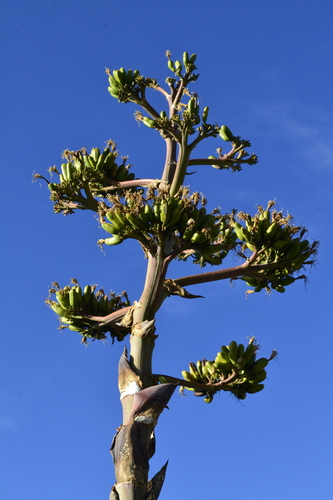
(c) Mixael Martinez, some rights reserved (CC BY-NC), uploaded by Mixael Martinez

(c) Oscar Angel Sánchez Flores, some rights reserved (CC BY-NC), uploaded by Oscar Angel Sánchez Flores
What to Eat
Edible parts: Stalks ?, Flowers ?
The stalks and flowers are eaten.
How to Identify
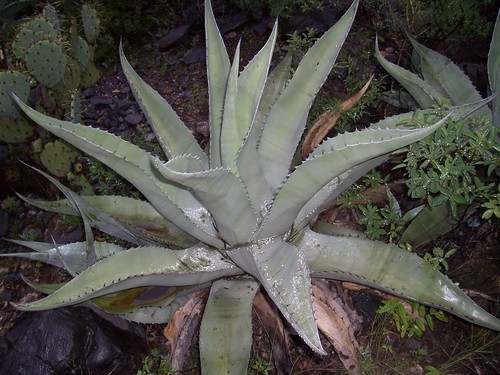
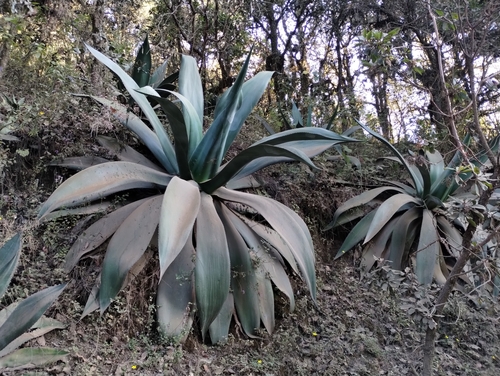
A subtropical agave in the Asparagaceae family, commonly called Cabbage head agave.
Wikipedia
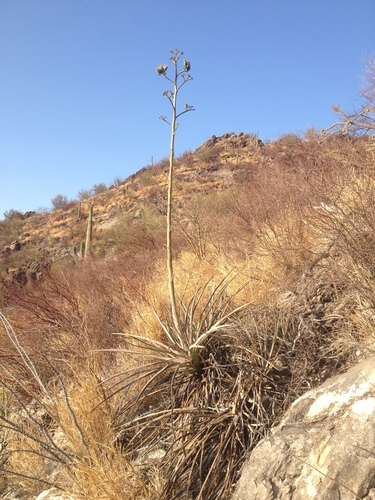
Source ↗Agave parrasana, the cabbage head agave or cabbage head century plant, is a flowering plant in the family Asparagaceae. A slow-growing evergreen succulent from North East Mexico, it produces a compact rosette of fleshy thorn-tipped grey-green leaves, 60 cm tall and wide. The leaves are blue green and the thorns are red. The whole plant may reach 100 centimeters tall and wide. Occasionally, mature plants produce a spectacular flower head up to 6m tall, opening red and turning yellow. This signals the death of the flowering rosette. However, offsets may form and continue growing. As it can tolerate temperatures of −12 °C (10 °F) or less, it is a popular plant to grow outdoors in a sheltered cactus garden or similar environment, and has gained the Royal Horticultural Society's Award of Garden Merit. In the US, it may be grown outdoors in USDA hardiness zones 7–10. It is susceptible to scale and chlorosis resulting from magnesium deficiency.
Names & Synonyms
References (1)
- World Checklist of Useful Plant Species 2020. Royal Botanic Gardens, Kew