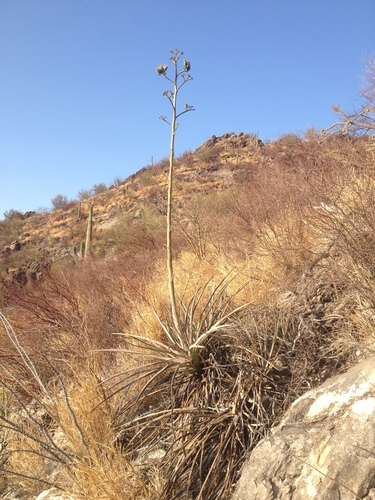
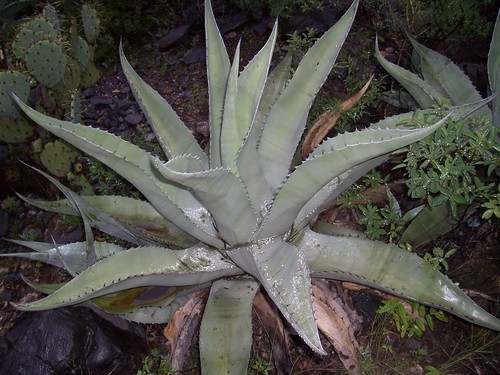
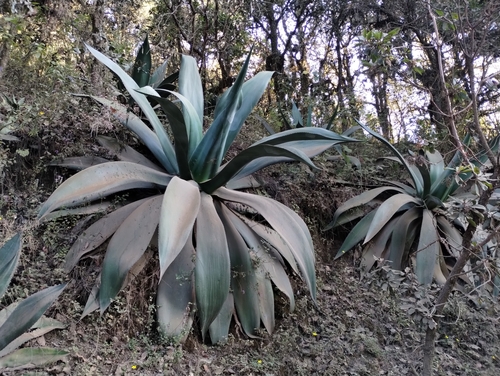
Agave polianthiflora
Gentry
AsparagaceaeFlowers

iNaturalist · cc-by-nc
(c) Eric Hough, some rights reserved (CC BY-NC), uploaded by Eric Hough
(c) Eric Hough, some rights reserved (CC BY-NC), uploaded by Eric Hough

iNaturalist · cc-by-nc
(c) Eric Hough, some rights reserved (CC BY-NC), uploaded by Eric Hough
(c) Eric Hough, some rights reserved (CC BY-NC), uploaded by Eric Hough
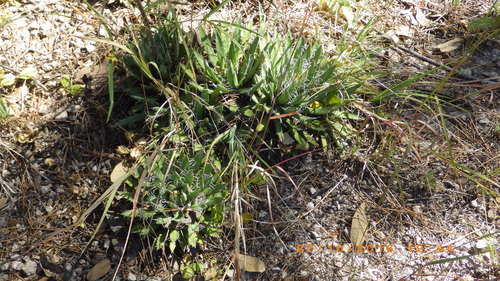
iNaturalist · cc-by-nc
(c) Oscar Martínez Galvan, some rights reserved (CC BY-NC)
(c) Oscar Martínez Galvan, some rights reserved (CC BY-NC)
What to Eat
Edible parts: Stalks ?, Flowers ?
The stalks and flowers are potentially edible.
Where to Find It
It is a temperate plant.
North America, USA,
Countries: Antigua & Barbuda, Barbados, Bahamas, Belize, Canada, Costa Rica, Cuba, Dominica, Dominican Republic, Grenada, Guatemala, Honduras, Haiti, Jamaica, St Kitts & Nevis, St Lucia, Mexico, Nicaragua, Panama, Puerto Rico, El Salvador, Trinidad & Tobago, United States, St Vincent
How to Identify
An agave in the Asparagaceae family, found in temperate climates.
Wikipedia
Source ↗Agave polianthiflora is a relatively small member of the genus Agave, in the subfamily Agavoideae, endemic to northern Mexico. The succulent is native to the States of Sinaloa, Chihuahua and Sonora. Because the species is widespread and appears to have a stable population, it is not considered by the IUCN to be threatened.
References (1)
- World Checklist of Useful Plant Species 2020. Royal Botanic Gardens, Kew