Conophytum truncatum
(Thunb.) N. E. Br.
AizoaceaeLeaves
iNaturalist · cc-by-sa
(c) kevin koen, some rights reserved (CC BY-SA), uploaded by kevin koen
(c) kevin koen, some rights reserved (CC BY-SA), uploaded by kevin koen
iNaturalist · cc-by-nc
(c) Sandra Falanga, some rights reserved (CC BY-NC), uploaded by Sandra Falanga
(c) Sandra Falanga, some rights reserved (CC BY-NC), uploaded by Sandra Falanga

iNaturalist · cc-by-nc
(c) David Martin, some rights reserved (CC BY-NC), uploaded by David Martin
(c) David Martin, some rights reserved (CC BY-NC), uploaded by David Martin
What to Eat
Edible parts: Leaves
The leaves are eaten as a snack.
Where to Find It
It is a subtropical plant. It grows on quartzite flats among pebbles and on sandstone ridges.
Africa, South Africa*, Southern Africa,
Countries: Angola, Burkina Faso, Burundi, Benin, Botswana, Congo (DRC), Central African Republic, Congo (Republic), Cote d'Ivoire, Cameroon, Cape Verde, Djibouti, Algeria, Egypt, Eritrea, Ethiopia, Gabon, Ghana, Gambia, Guinea, Equatorial Guinea, Guinea-Bissau, Kenya, Comoros, Liberia, Lesotho, Libya, Morocco, Madagascar, Mali, Mauritania, Mauritius, Malawi, Mozambique, Namibia, Niger, Nigeria, Rwanda, Seychelles, Sudan, Sierra Leone, Senegal, Somalia, South Sudan, Sao Tome & Principe, Eswatini, Chad, Togo, Tunisia, Tanzania, Uganda, South Africa, Zambia, Zimbabwe
How to Identify
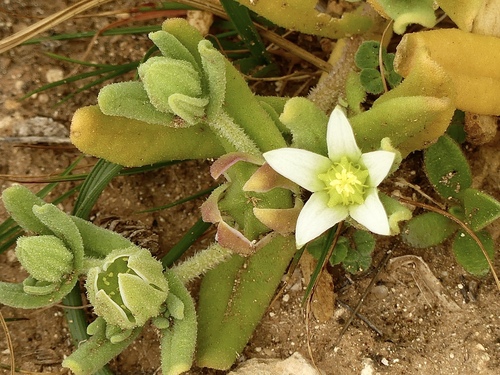
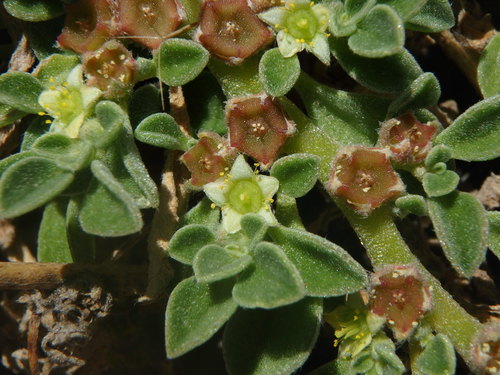
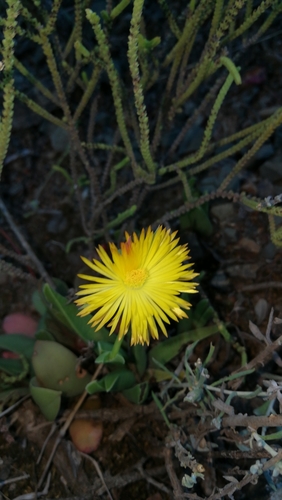
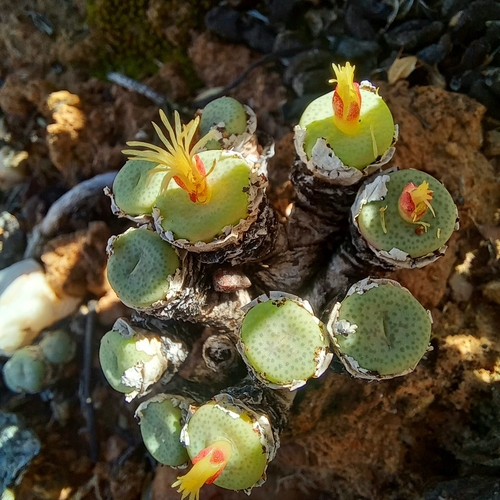
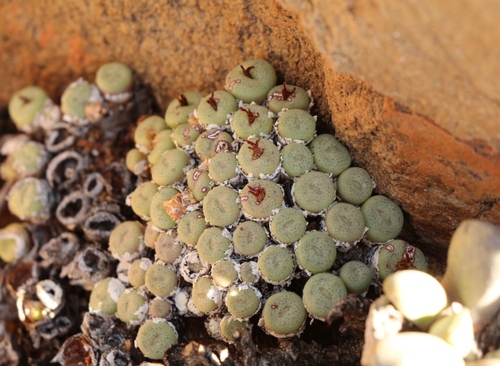
It grows in clusters 20 cm across. The pairs of leaves are succulent. They are 2.5 cm long by 2.5 cm wide. The flowers come out at night. They are white to pink and have a scent. The fruit have 4-7 sections.
Wikipedia
Source ↗Conophytum truncatum is a small South African species of succulent plant of the genus Conophytum.
Names & Synonyms
Conophytum brevitubum LavisConophytum truncatellum N. E. Br.and several others
References (2)
- Ruiters-Welcome, A. K., 2019, Food plants of southern Africa. Ph.D. thesis. Univ. of Johannesburg p 8
- Welcome, A. K. & Van Wyk, B.-E., 2019, An inventory and analysis of the food plants of southern Africa. South African Journal of Botany 122 (2019) 136–179