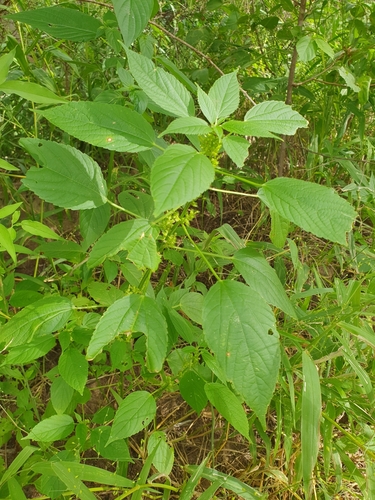
Croton pottsii
(Klotzsch) Mull.Arg.
Chaparral tea
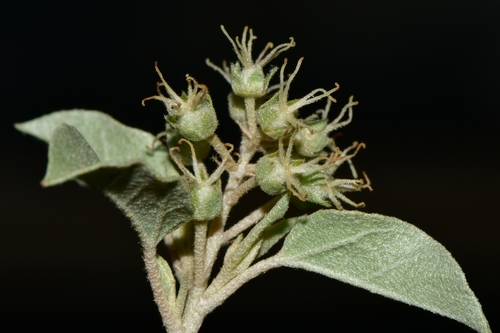
iNaturalist · cc-by-nc
(c) Joey Santore, some rights reserved (CC BY-NC), uploaded by Joey Santore
(c) Joey Santore, some rights reserved (CC BY-NC), uploaded by Joey Santore

iNaturalist · cc-by
(c) Eric Knight, some rights reserved (CC BY)
(c) Eric Knight, some rights reserved (CC BY)
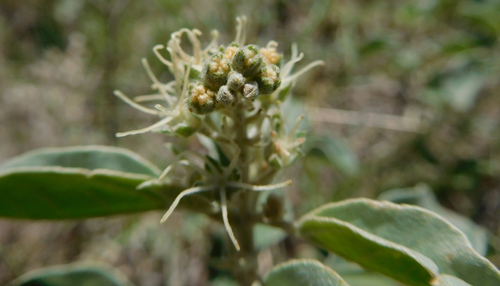
iNaturalist · cc-by-nc
(c) ellen hildebrandt, some rights reserved (CC BY-NC), uploaded by ellen hildebrandt
(c) ellen hildebrandt, some rights reserved (CC BY-NC), uploaded by ellen hildebrandt
What to Eat
Edible parts: Sap, Flowers
The flower tops are used to make a drink. The sap and flowers are edible.
Where to Find It
It is a temperate plant.
Mexico, North America, USA,
Countries: Antigua & Barbuda, Barbados, Bahamas, Belize, Canada, Costa Rica, Cuba, Dominica, Dominican Republic, Grenada, Guatemala, Honduras, Haiti, Jamaica, St Kitts & Nevis, St Lucia, Mexico, Nicaragua, Panama, Puerto Rico, El Salvador, Trinidad & Tobago, United States, St Vincent
How to Identify
A herb or small shrub in the Euphorbiaceae family, distributed in temperate regions.
Wikipedia
Source ↗Croton pottsii is a species of plant known by the common name leatherweed. It is native to the southwestern United States and northern Mexico.
Notes
There are about 750 Croton species.
Names & Synonyms
Encenilla
References (3)
- Beckstrom-Sternberg, Stephen M., and James A. Duke. "The Foodplant Database." http://probe.nalusda.gov:8300/cgi-bin/browse/foodplantdb.(ACEDB version 4.0 - data version July 1994) (As Croton corymbulosus)
- Hedrick, U.P., 1919, (Ed.), Sturtevant's edible plants of the world. p 229 (As Croton corymbulosus)
- Saunders, C.F., 1948, Edible and Useful Wild Plants. Dover. New York. p 159 (As Croton corymbulosus)