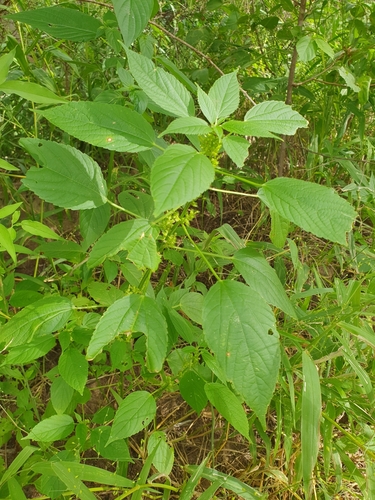
Croton lobatus
Linn.
EuphorbiaceaeLeaves
iNaturalist · cc-by-nc
(c) Joshua Doby, some rights reserved (CC BY-NC)
(c) Joshua Doby, some rights reserved (CC BY-NC)

iNaturalist · cc-by-nc
(c) Stephen Hodges, some rights reserved (CC BY-NC)
(c) Stephen Hodges, some rights reserved (CC BY-NC)
iNaturalist · cc-by-nc
(c) alexecrow, some rights reserved (CC BY-NC)
(c) alexecrow, some rights reserved (CC BY-NC)
What to Eat
Edible parts: Leaves
Cascarilla (C. eluteria) bark is used to flavour the liquors Campari and Vermouth.
Where to Find It
A tropical plant. It grows in savannah woodland and coastal sands.
Africa, Brazil, Central America, Costa Rica, Benin, Guinea, Guinée, Guinea-Bissau, Peru, Senegal, West Africa,
Countries: Angola, Burkina Faso, Burundi, Benin, Brazil, Botswana, Belize, Congo (DRC), Central African Republic, Congo (Republic), Cote d'Ivoire, Cameroon, Costa Rica, Cape Verde, Djibouti, Algeria, Egypt, Eritrea, Ethiopia, Gabon, Ghana, Gambia, Guinea, Equatorial Guinea, Guatemala, Guinea-Bissau, Honduras, Kenya, Comoros, Liberia, Lesotho, Libya, Morocco, Madagascar, Mali, Mauritania, Mauritius, Malawi, Mozambique, Namibia, Niger, Nigeria, Nicaragua, Panama, Peru, Rwanda, Seychelles, Sudan, Sierra Leone, Senegal, Somalia, South Sudan, Sao Tome & Principe, El Salvador, Eswatini, Chad, Togo, Tunisia, Tanzania, Uganda, South Africa, Zambia, Zimbabwe
How to Identify
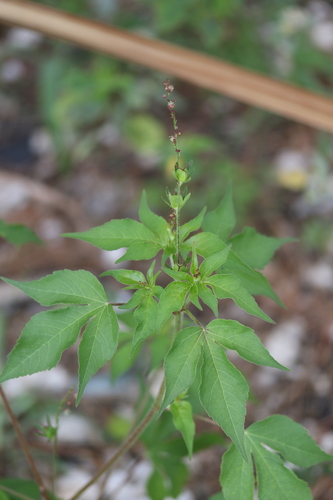
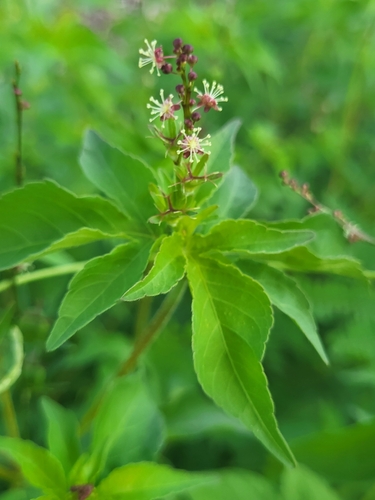
An annual herb. It grows 20-90 cm tall. The leaves are 3-9 cm long by 2-10 cm wide. They have 3-5 lobes. They have teeth along the edge.
Notes
There are about 750 Croton species.
Names & Synonyms
Borboronguel, Mjcuredjandjam
References (4)
- Achigan-Dako, E, et al (Eds), 2009, Catalogue of Traditional Vegetables in Benin. International Foundation for Science.
- Dansi, A., et al, 2008, Traditional leafy vegetables and their use in the Benin Republic. Genet Resour Crop Evol (2008) 55:1239–1256
- Sp. pl. 2:1005. 1753
- Zon, A.P.M. van der, Grubben, G.J.H., 1976, Les legumes-feuilles spontanes et cultives du Sud-Dahomey, Communication 65, Royal Tropical Institute, Amsterdam, p 57