Ipomoea dichroa
Choisy
ConvolvulaceaeLeaves
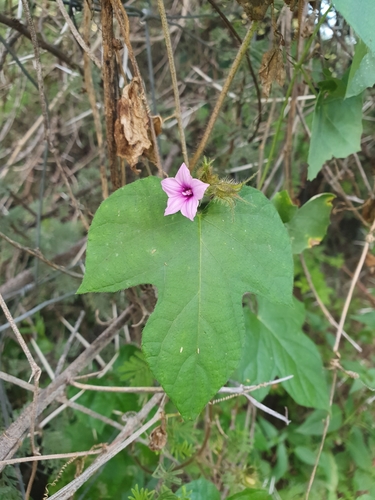
iNaturalist · cc-by-nc
(c) Dewald du Plessis, some rights reserved (CC BY-NC), uploaded by Dewald du Plessis
(c) Dewald du Plessis, some rights reserved (CC BY-NC), uploaded by Dewald du Plessis
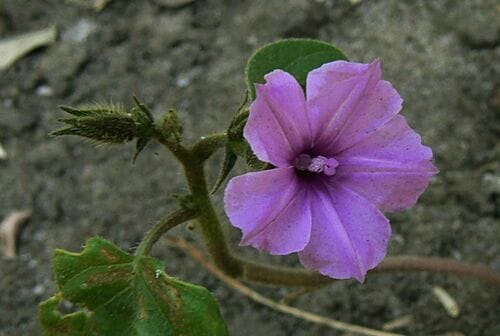
iNaturalist · cc-by-nc
(c) lougarou, some rights reserved (CC BY-NC)
(c) lougarou, some rights reserved (CC BY-NC)
What to Eat
Edible parts: Leaves
The leaves are eaten as a vegetable.
Where to Find It
It is a tropical plant.
Africa, Asia, Botswana, India, Namibia, South Africa, Southern Africa, Swaziland,
Countries: United Arab Emirates, Afghanistan, Armenia, Angola, Azerbaijan, Bangladesh, Burkina Faso, Bahrain, Burundi, Benin, Brunei, Bhutan, Botswana, Congo (DRC), Central African Republic, Congo (Republic), Cote d'Ivoire, Cameroon, China, Cape Verde, Djibouti, Algeria, Egypt, Eritrea, Ethiopia, Gabon, Georgia, Ghana, Gambia, Guinea, Equatorial Guinea, Guinea-Bissau, Indonesia, Israel, India, Iraq, Iran, Jordan, Japan, Kenya, Kyrgyzstan, Cambodia, Comoros, North Korea, South Korea, Kuwait, Kazakhstan, Laos, Lebanon, Sri Lanka, Liberia, Lesotho, Libya, Morocco, Madagascar, Mali, Myanmar, Mongolia, Mauritania, Mauritius, Maldives, Malawi, Malaysia, Mozambique, Namibia, Niger, Nigeria, Nepal, Oman, Philippines, Pakistan, Qatar, Rwanda, Saudi Arabia, Seychelles, Sudan, Singapore, Sierra Leone, Senegal, Somalia, South Sudan, Sao Tome & Principe, Syria, Eswatini, Chad, Togo, Thailand, Tajikistan, Timor-Leste, Turkmenistan, Tunisia, Turkey, Taiwan, Tanzania, Uganda, Uzbekistan, Vietnam, Yemen, South Africa, Zambia, Zimbabwe
How to Identify
A herb that lies along the ground. It can be twining. It can grow 2.5 m long. The leaves are oval to heart shaped and have 3 lobes. They are 18 cm long by 17 cm wide.
Notes
The name is ambiguous.
Names & Synonyms
Tshipokoto
References (3)
- Magwede, K., van Wyk, B.-E., & van Wyk, A. E., 2019, An inventory of Vhavenḓa useful plants. South African Journal of Botany 122 (2019) 57–89
- Ruiters-Welcome, A. K., 2019, Food plants of southern Africa. Ph.D. thesis. Univ. of Johannesburg p 46
- Welcome, A. K. & Van Wyk, B.-E., 2019, An inventory and analysis of the food plants of southern Africa. South African Journal of Botany 122 (2019) 136–179


