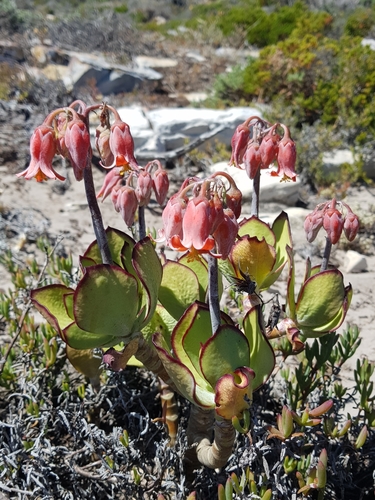
Crassula pellucida
L.
CrassulaceaeLeaves

iNaturalist · cc-by-nc
(c) Charl Strydom, some rights reserved (CC BY-NC), uploaded by Charl Strydom
(c) Charl Strydom, some rights reserved (CC BY-NC), uploaded by Charl Strydom
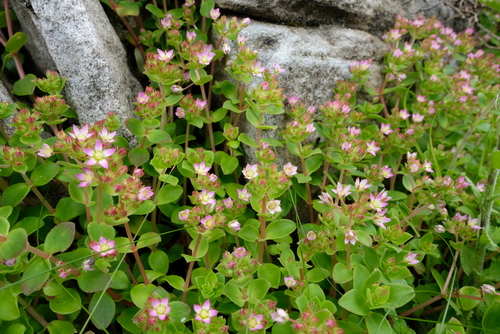
iNaturalist · cc-by-nc
(c) Nick Helme, some rights reserved (CC BY-NC), uploaded by Nick Helme
(c) Nick Helme, some rights reserved (CC BY-NC), uploaded by Nick Helme
What to Eat
Edible parts: Leaves
The leaves are eaten as a snack and for their moisture content.
Where to Find It
It is a tropical plant.
Africa, Ethiopia, South Africa, Southern Africa,
Countries: Angola, Burkina Faso, Burundi, Benin, Botswana, Congo (DRC), Central African Republic, Congo (Republic), Cote d'Ivoire, Cameroon, Cape Verde, Djibouti, Algeria, Egypt, Eritrea, Ethiopia, Gabon, Ghana, Gambia, Guinea, Equatorial Guinea, Guinea-Bissau, Kenya, Comoros, Liberia, Lesotho, Libya, Morocco, Madagascar, Mali, Mauritania, Mauritius, Malawi, Mozambique, Namibia, Niger, Nigeria, Rwanda, Seychelles, Sudan, Sierra Leone, Senegal, Somalia, South Sudan, Sao Tome & Principe, Eswatini, Chad, Togo, Tunisia, Tanzania, Uganda, South Africa, Zambia, Zimbabwe
How to Identify
A sprawling tropical herb in the Crassulaceae family with stems up to 60 cm long.
Wikipedia
Source ↗Crassula pellucida is a creeping, succulent ground-cover, or low-growing, spreading succulent shrub. It is native to eastern and southern Africa, ranging from Kenya and Angola to South Africa. It is highly variable, tolerates shade, and several forms are popular in cultivation.
Names & Synonyms
Crassula diffusa AitonGomara pellucida (L.) P. V. Heath
References (2)
- Ruiters-Welcome, A. K., 2019, Food plants of southern Africa. Ph.D. thesis. Univ. of Johannesburg p 47
- Welcome, A. K. & Van Wyk, B.-E., 2019, An inventory and analysis of the food plants of southern Africa. South African Journal of Botany 122 (2019) 136–179