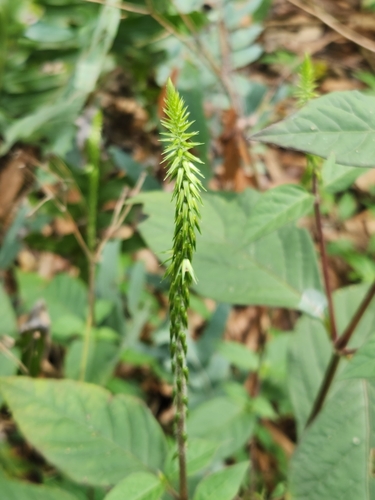
Kalidium foliatum
(Pall.) Moq.
AmaranthaceaeSeeds/Nuts

iNaturalist · cc-by-nc
(c) Pyak Andrei, some rights reserved (CC BY-NC), uploaded by Pyak Andrei
(c) Pyak Andrei, some rights reserved (CC BY-NC), uploaded by Pyak Andrei

iNaturalist · cc-by-nc
(c) Osmonali Bektemir, some rights reserved (CC BY-NC)
(c) Osmonali Bektemir, some rights reserved (CC BY-NC)
What to Eat
Edible parts: Seeds
The seeds are eaten.
Where to Find It
It is a temperate plant.
Asia, China, Mongolia,
Countries: United Arab Emirates, Afghanistan, Armenia, Azerbaijan, Bangladesh, Bahrain, Brunei, Bhutan, China, Georgia, Indonesia, Israel, India, Iraq, Iran, Jordan, Japan, Kyrgyzstan, Cambodia, North Korea, South Korea, Kuwait, Kazakhstan, Laos, Lebanon, Sri Lanka, Myanmar, Mongolia, Maldives, Malaysia, Nepal, Oman, Philippines, Pakistan, Qatar, Saudi Arabia, Singapore, Syria, Thailand, Tajikistan, Timor-Leste, Turkmenistan, Turkey, Taiwan, Uzbekistan, Vietnam, Yemen
How to Identify
A herb. It grows 20-50 cm tall. The stems can be erect or lying on the ground and are much branched. The leaves are grey-green and spreading or curved. They are 4-10 mm long by 2-3 mm wide. There are 3 flowers for each scale like bract.
Names & Synonyms
Halocnemum foliatum (Pall.) Spreng.Kalidium foliatum var. longifolium FenzlSalicornia foliata Pall.
References (4)
- https://en.wikipedia.org/wiki/List of wild edible plants in Mongolian cuisine
- World Checklist of Useful Plant Species 2020. Royal Botanic Gardens, Kew
- World Flora online
- Zhang, Y., et al, Yunatov’s Records of Wild Edible Plant Used by the Mongols in Mongolia During 1940- 1951: Ethnobotanical Arrangements and Discussions. Inner Mongolia Normal University. p 6