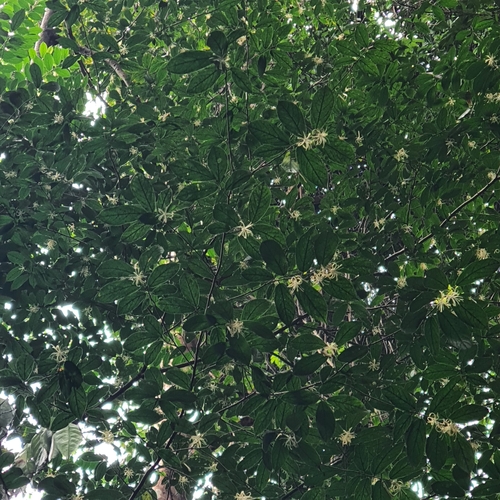
Cornus volkensii
Harms

(c) Tony KM, some rights reserved (CC BY)

(c) Tony KM, some rights reserved (CC BY)

(c) Tony KM, some rights reserved (CC BY)
What to Eat
Edible parts: Fruit
The fruit are eaten.
Where to Find It
It is a tropical plant. It grows in mountain forest between 1,800-3,000 m above sea level in Congo.
Africa, Central Africa, Congo DR, East Africa, Kenya, Malawi, Tanzania, Uganda, Zimbabwe,
How to Identify
A tree. It can grow 18 m tall. The leaves are light green and narrowly oval and taper to the tip. They are wedge shaped at the base.
How to Grow
A plant of moderate to higher elevations in the tropics, where it grows naturally at elevations from 1,200 - 3,000 metres. The tree can succeed in fairly moist, somewhat swampy soils. A dioecious species, both male and female forms need to be grown if fruit and seed are required.
Medicinal Uses
The leaves are applied as a poultice to boils.
Other Uses
The heartwood is yellowish white to pale reddish brown, occasionally with greyish streaks; it is indistinctly demarcated from the narrow band of sapwood. The grain is straight; texture medium, even. The wood is medium-weight; it is not durable and is susceptible to attacks by blue stain fungi, termites, Lyctus borers and marine borers. It saws and works well with both hand and machine tools; nailing, screwing and gluing properties are satisfactory. The wood is used for utensils and handles of implements. It is suitable for light construction, light flooring, joinery, interior trim, ship building, furniture, cabinet work, toys, novelties, boxes, crates, turnery, veneer and plywood. The wood is used for fuel. The tree can regenerate naturally in intensively grazed areas. It is planted in reforestation programmes and as roadside tree.
Wikipedia
Source ↗Cornus volkensii is a species of tree in the family Cornaceae native to montane forests of eastern Africa, from South Sudan and Kenya south to Zimbabwe and Mozambique.
Names & Synonyms
References (1)
- World Checklist of Useful Plant Species 2020. Royal Botanic Gardens, Kew