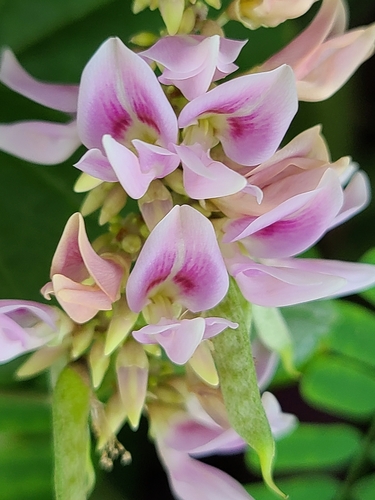
Acacia bidwillii
Benth.
Corkwood wattle
(c) Jon Luly, some rights reserved (CC BY-NC)

(c) Jon Luly, some rights reserved (CC BY-NC)

(c) Jon Luly, some rights reserved (CC BY-NC)
What to Eat
Edible parts: Root
The roots of young trees are peeled, cooked, and eaten.
Where to Find It
It is a tropical plant. It requires a sunny position. Mostly it grows in the tropics but can grow in cooled places. It is most common in Northern Australia where high temperatures are common and a summer rainfall of 50 to 150 mm occurs.
Australia*,
How to Identify
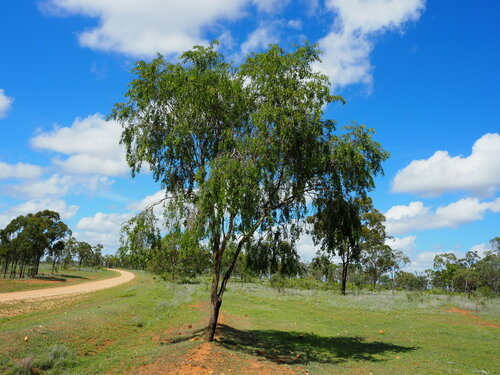
A shrub or small tree. It grows 5 m tall. There are prickles along the stem. The leaves are twice divided and there are 8-18 pairs of pinnae. There are up to 50 pairs of pinnules on each pinnae. The flowers are yellow. They are in large clusters at the ends of branches. The pods are flattened.
How to Grow
It is grown from seed. They need to be treated.
Production
Trees live for a long time.
Notes
There are about 1,350 Acacia species. Over 1,000 occur in Australia. Also as Mimosaceae.
Names & Synonyms
Waneu, Yadthor
References (17)
- Anon.,2003, Native Plants for the Fitzroy basin. Society for Growing Australian Plants Inc. (Rockhampton Branch)
- Biocyclopedia Edible Plant Species
- Bircher, A. G. & Bircher, W. H., 2000, Encyclopedia of Fruit Trees and Edible Flowering Plants in Egypt and the Subtropics. AUC Press. p 4
- Calvert, G., 2010, The Burdekin Delta Tree Guide. Lower Burdekin Landcare Association., Inc., Ayr p 151 (As Vachellia bidwellii)
- Cherikoff V. & Isaacs, J., The Bush Food Handbook. How to gather, grow, process and cook Australian Wild Foods. Ti Tree Press, Australia p 188, 198
- Cribb, A.B. & J.W., 1976, Wild Food in Australia, Fontana. p 137
- Doran, J.C., & Turnbull, J.W. (Eds), 1997, Australian Trees and Shrubs: species for land rehabilitation and farm plantings in the tropics. ACIAR Monograph No 24. p 346
- Elliot, W.R., & Jones, D.L., 1982, Encyclopedia of Australian Plants suitable for cultivation. Vol 2. Lothian. p 22, 23
- Hall, N. et al, 1972, The Use of Trees and Shrubs in the Dry Country of Australia, AGPS, Canberra. p 344
- Hedrick, U.P., 1919, (Ed.), Sturtevant's edible plants of the world. p 18
- Lazarides, M. & Hince, B., 1993, Handbook of Economic Plants of Australia, CSIRO. p 2
- Lim, T. K., 2015, Edible Medicinal and Non Medicinal Plants. Volume 9, Modified Stems, Roots, Bulbs. Springer p 2
- Linnaea 26:629. 1855
- Maiden, J. H., 1889, The Useful Native Plants of Australia (including Tasmania). The Technology Museum of NSW, Sydney. p 3
- Melzer, R. & Plumb, J., 2011, Plants of Capricornia. Belgamba, Rockhampton. p 184
- Townsend, K., 1999, Field Guide to Plants of the Dry Tropics. Society for Growing Australian Plants, Townsville Branch Inc. p 9
- Usher, G., 1974, A Dictionary of Plants Used by Man. Constable. p 11