Planchonella maclayana
(F. Muell.) Swenson

gbif · cc0
President and Fellows of Harvard College
President and Fellows of Harvard College

gbif · cc0
President and Fellows of Harvard College
President and Fellows of Harvard College

gbif · cc0
President and Fellows of Harvard College
President and Fellows of Harvard College
Where to Find It
It is a tropical plant. It grows from sea level to 1,500 m above sea level.
Asia, Indonesia, Malaysia, Pacific, Papua, Papua New Guinea, PNG, SE Asia, Solomon Islands,
Countries: United Arab Emirates, Afghanistan, Armenia, Australia, Azerbaijan, Bangladesh, Bahrain, Brunei, Bhutan, China, Fiji, Micronesia, Georgia, Indonesia, Israel, India, Iraq, Iran, Jordan, Japan, Kyrgyzstan, Cambodia, Kiribati, North Korea, South Korea, Kuwait, Kazakhstan, Laos, Lebanon, Sri Lanka, Marshall Islands, Myanmar, Mongolia, Maldives, Malaysia, Nepal, Nauru, New Zealand, Oman, Papua New Guinea, Philippines, Pakistan, Palau, Qatar, Saudi Arabia, Solomon Islands, Singapore, Syria, Thailand, Tajikistan, Timor-Leste, Turkmenistan, Tonga, Turkey, Tuvalu, Taiwan, Uzbekistan, Vietnam, Vanuatu, Samoa, Yemen
How to Identify
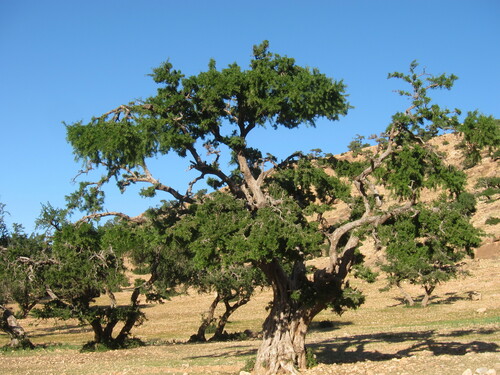
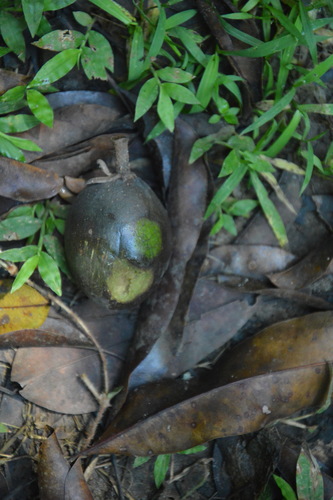
A tree. It grows 18 m tall. The trunk can be 25 cm across. The fruit are round and 1.3 cm across.
Wikipedia
Source ↗Planchonella maclayana is a tree in the family Sapotaceae. It grows up to 18 m (60 ft) tall with a trunk diameter of up to 25 cm (10 in). The fruits are roundish, up to 1.3 cm (1 in) long. It ranges from Borneo through Sulawesi, Maluku, and New Guinea to the Solomon Islands. Its habitat is forests from sea-level to 1,500 m (4,900 ft) elevation. The tree is named for Russian explorer and biologist Nicholas Miklouho-Maclay.
Names & Synonyms
Bassia dubia Gaertn.Bassia maclayana F. Muell.Bureavella maclayana (F. Muell.) PierreIllipe maclayana (F. Muell.) F. Muell.Lucuma maclayana (F. Muell.) H. J. LamLucuma navicularis H. J. LamPouteria maclayana (F. Muell.) BaehniPouteria navicularis (H. J. Lam) BaehniSideroxylon zippelianum Pierre ex Boerl.
References (1)
- World Checklist of Useful Plant Species 2020. Royal Botanic Gardens, Kew