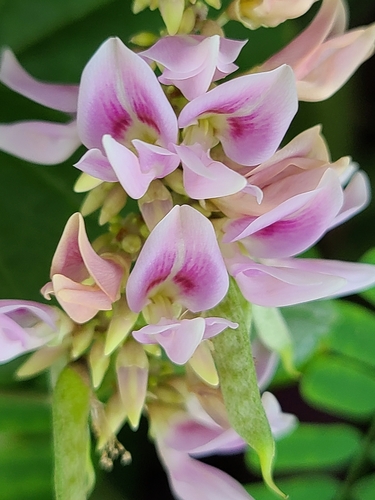
Berlinia auriculata
Benth.
Bois de Rose

Nicolas Texier

Nicolas Texier

Nicolas Texier
What to Eat
Edible parts: Leaves ?
We have no specific information for this species, but it is closely related to Berlinia confusa and is likely to be used in similar ways as detailed below:- Leaf - cooked. The leaves are used as a flavouring in foods.
Where to Find It
It is a tropical plant.
Africa, Benin, Cameroon, Central Africa, Central African Republic, CAR, Congo DR, Gabon, Liberia, Nigeria, Sierra Leone, West Africa,
How to Identify
A tree. It grows 10 m tall. It has a low spreading crown. The leaves are divided 2-3 times. The leaflets are narrowly oval. The flowers are white.
How to Grow
When sterile, this species has been misidentified as Berlinia congolensis and Berlinia confusa.
Medicinal Uses
We have no specific information for this species, but it is closely related to Berlinia confusa and is likely to be used in similar ways as detailed below:- The leaves are astringent and possibly abortifacient. A gum obtained from the plant is used to treat ear problems. The leaves contain a range of medicinally active compounds including alkaloids, glycosides, saponins, steroids and tannins. The leaves contain falvones. (This is probably a mis-spelling for flavones)
Other Uses
There are no documented human uses for this species, however other species in this genus are collected locally for building materials, as well as for food and medicines. This species is closely related to Berlinia confusa and is likely to be used in similar ways. The wood of the various species in this genus is very similar and so this species is likely to be used for purposes such as construction, furniture and flooring. Berlinia wood is, in general, similar to white oak (Quercus alba) in durability, density and usefulness. It is an attractive, decorative hardwood that can be used for fine, interior joinery.
Names & Synonyms
References (1)
- World Checklist of Useful Plant Species 2020. Royal Botanic Gardens, Kew