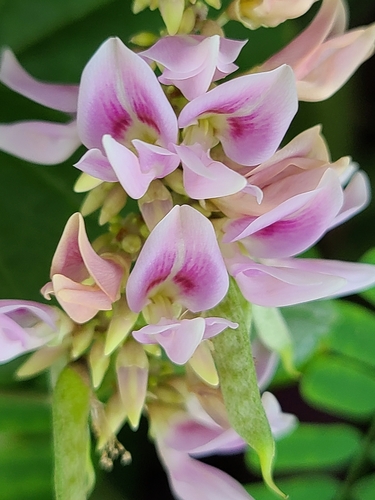
Cajanus kerstingii
Harms

iNaturalist · cc-by-nc-sa
(c) Marco Schmidt, some rights reserved (CC BY-NC-SA)
(c) Marco Schmidt, some rights reserved (CC BY-NC-SA)

iNaturalist · cc-by-nc-sa
(c) Marco Schmidt, some rights reserved (CC BY-NC-SA)
(c) Marco Schmidt, some rights reserved (CC BY-NC-SA)
What to Eat
Edible parts: Seeds, Leaves
Both the seeds and leaves are edible.
Where to Find It
It is a tropical plant. It grows in open savannah.
Africa, Benin, Burkina Faso, Ghana, Guinea, Guinée, Mali, Nigeria, Senegal, Togo, West Africa*,
Countries: Angola, Burkina Faso, Burundi, Benin, Botswana, Congo (DRC), Central African Republic, Congo (Republic), Cote d'Ivoire, Cameroon, Cape Verde, Djibouti, Algeria, Egypt, Eritrea, Ethiopia, Gabon, Ghana, Gambia, Guinea, Equatorial Guinea, Guinea-Bissau, Kenya, Comoros, Liberia, Lesotho, Libya, Morocco, Madagascar, Mali, Mauritania, Mauritius, Malawi, Mozambique, Namibia, Niger, Nigeria, Rwanda, Seychelles, Sudan, Sierra Leone, Senegal, Somalia, South Sudan, Sao Tome & Principe, Eswatini, Chad, Togo, Tunisia, Tanzania, Uganda, South Africa, Zambia, Zimbabwe
How to Identify
A shrub. It grows 1-2 m tall. The branches and leaves underneath have short white silky hairs.
How to Grow
It can be grown by seed.
Wikipedia
Source ↗Cajanus kerstingii is a widely ignored shrub found mostly in open savannah conditions across western Africa. It is closely related to the widely utilised Cajanus cajan, otherwise known as pigeon pea. Cajanus kerstingii can be consumed by humans as a cereal, pulse, fibre or forage. Unfortunately, very little data exists for this plant, but "one may reasonably expect it to be of value".
References (2)
- Kew Plants of the World Online
- World Checklist of Useful Plant Species 2020. Royal Botanic Gardens, Kew