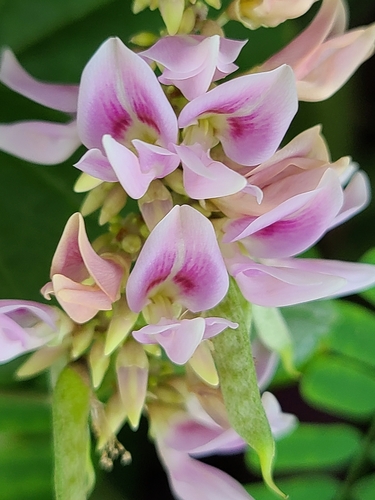
Delonix edulis
(H. Perrier) Babineau & Bruneau

(c) Solofo Eric Rakotoarisoa, some rights reserved (CC BY-NC), uploaded by Solofo Eric Rakotoarisoa
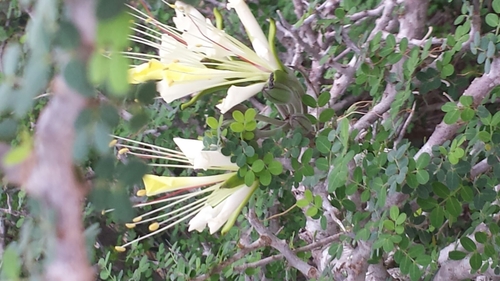
(c) mamy_andriamahay, some rights reserved (CC BY-NC), uploaded by mamy_andriamahay
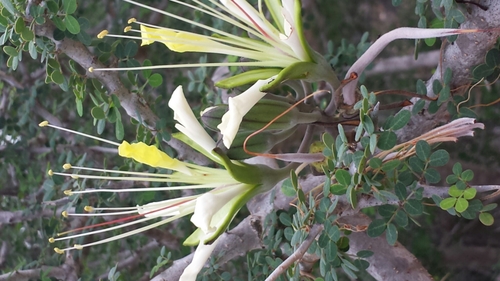
(c) mamy_andriamahay, some rights reserved (CC BY-NC)
What to Eat
Edible parts: Fruit, Seeds
The fruit and seeds are eaten; the bitter outer coat is removed from the seeds before consumption.
Where to Find It
It is a tropical plant. It grows in semi-arid regions up to 500 m above sea level. It is often on limestone escarpments.
Africa, Madagascar*,
How to Identify
A shrub or small tree. It grows 6 m tall. The leaves are alternate and are compound. They have 1-4 pairs of leaflets. The leaflets are oval to round and 4-6 mm long. The pod hangs down and is 20-30 cm long by 2 cm wide. It is dented between the seed. The seeds are oval to kidney shaped and 2.5 cm long by 1.5 cm wide.
Wikipedia
Source ↗Delonix edulis (Malagasy:Tara) is a species of edible wild plant native to southwest Madagascar. The plant grows in semi-arid tropical zones with annual rainfall less than 400 mm, from sea level up to 100 meters elevation. The plant is classified in subfamily Caesalpinioideae of family Fabaceae. The scientific synonym Lemuropisum edule means edible lemur's pea. The species is currently under investigation as a potential nut crop in Western Australia.
Notes
It is an endangered species.
Names & Synonyms
Tara
References (4)
- Babineau M. & A. Bruneau (2017). Phylogenetic and biogeographical history of the Afro-Madagascan genera Delonix, Colvillea and Lemuropisum (Fabaceae: Caesalpinioideae). Bot. J. Linn. Soc. 184(1): 72
- Kew Plants of the World Online
- PROTA (As Lemuriopsis)
- World Checklist of Useful Plant Species 2020. Royal Botanic Gardens, Kew