Falcataria falcata
(L.) Greuter & R. Rankin
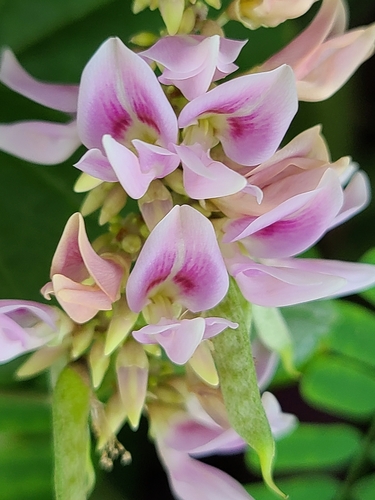
no rights reserved, uploaded by 葉子
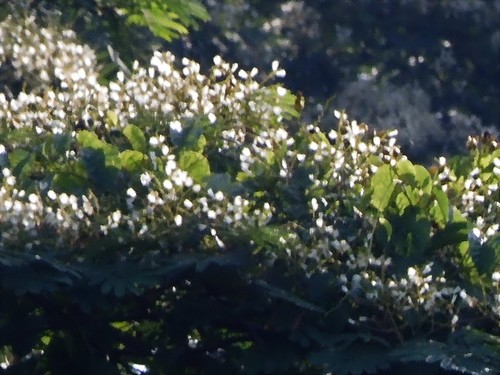
(c) Steven Chong, some rights reserved (CC BY-NC)
Where to Find It
It is a tropical plant. It grows up to 1,200 m above sea level.
Africa, Andaman Islands, Angola, Asia, Bangladesh, Cameroon, Central America, China, Cook Island, Fiji, Guinea-Bissau, Hawaii, Honduras, India, Indonesia, Jamaica, Kenya, Madagascar, Mozambique, New Caledonia, Nigeria, Niue, Pacific, Papua New Guinea*, PNG, SE Asia, Seychelles, Solomon Islands, Sri Lanka, Uganda, Venezuela, Wallis & Futuna, West Indies, Zimbabwe,
How to Identify
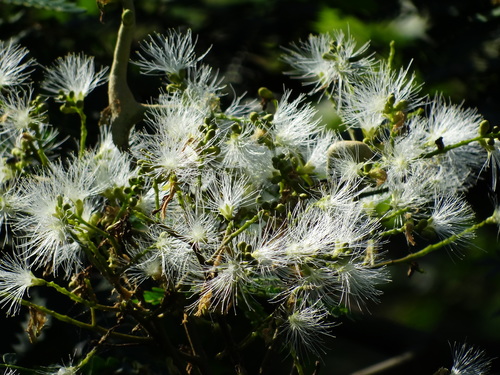
A tree. It grows 24-30 m tall and the trunk is 80 cm across. The leaves are twice divided. They are 23-30 cm long. The leaflets are curved. The flowers are creamy white. The pods are barrow, flat and 10-13 cm long by 2 cm wide.
Wikipedia
Source ↗Falcataria falcata (syns. Albizia falcata, Falcataria moluccana and Paraserianthes falcataria), commonly known as the Moluccan albizia, is a species of fast-growing tree in the family Fabaceae. It is native to the Maluku Islands, New Guinea, the Bismarck Archipelago, and the Solomon Islands. It is cultivated for timber throughout South Asian and Southeast Asian countries. This tree is considered to be invasive in Hawaii, American Samoa and several other island nations in the Pacific and Indian Oceans. It reaches about 30 m (100 ft) tall in nature, and has a massive trunk and an open crown. It is most famous for its remarkable rate of growth. It has been recorded growing 16 m (52 ft) in three years, 33 m (108 ft) in nine years and 45 m (148 ft) in seventeen years.
Production
It grows quickly.
Names & Synonyms
References (1)
- World Checklist of Useful Plant Species 2020. Royal Botanic Gardens, Kew