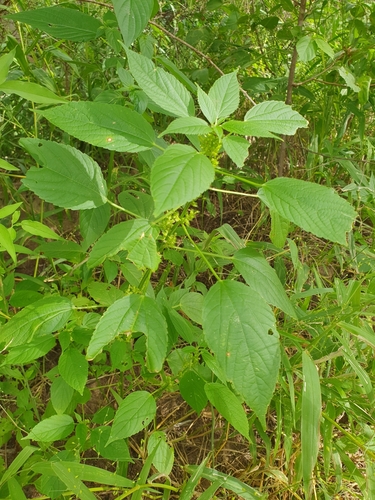
Sclerocroton integerrimus
Hochst.
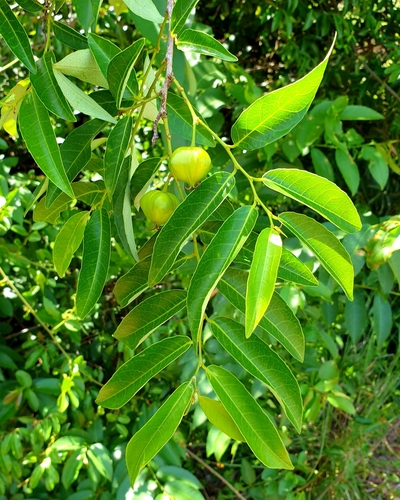
(c) frasergear, some rights reserved (CC BY-NC), uploaded by frasergear
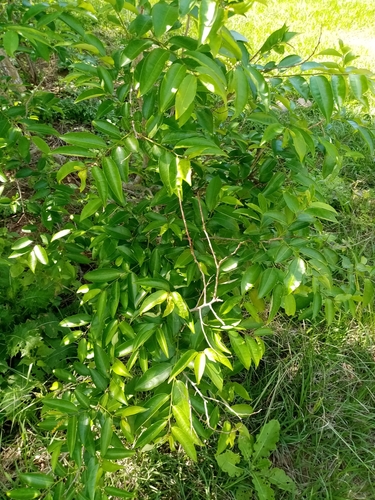
(c) aphiledla, some rights reserved (CC BY-NC), uploaded by aphiledla
What to Eat
Edible parts: Fruit
The fruit is eaten as a snack.
Where to Find It
It is a subtropical plant.
Africa, South Africa, Southern Africa,
How to Identify
A small tree. It grows 4.5-7.5 m tall. The branches hang down. The leaves are 14 cm long by 6 cm wide. They have teeth along the edge. The fruit can be 2.5 cm long. They have 3 lobes.
Medicinal Uses
The leaves are used in traditional medicine as a mouth wash and to treat toothache. The fruit have been used to make black ink and for tanning, and the wood has been used to make furniture and for hut building. The fruit are eaten by livestock.
Other Uses
The fruits were formerly used to make a black ink and are used for tanning. The wood is heavy, hard and durable and is used to make attractive furniture.
Wikipedia
Source ↗Sclerocroton integerrimus, the duiker berry, is a tree in the family Euphorbiaceae. It is from Southern Africa.
Names & Synonyms
References (2)
- Ruiters-Welcome, A. K., 2019, Food plants of southern Africa. Ph.D. thesis. Univ. of Johannesburg p 55
- Welcome, A. K. & Van Wyk, B.-E., 2019, An inventory and analysis of the food plants of southern Africa. South African Journal of Botany 122 (2019) 136–179