Cnesmone javanica
Blume
iNaturalist · cc-by-nc
(c) Smritirekha Bortamuly, some rights reserved (CC BY-NC), uploaded by Smritirekha Bortamuly
(c) Smritirekha Bortamuly, some rights reserved (CC BY-NC), uploaded by Smritirekha Bortamuly

gbif · cc0
President and Fellows of Harvard College
President and Fellows of Harvard College

gbif · cc0
President and Fellows of Harvard College
President and Fellows of Harvard College
What to Eat
Edible parts: Leaves
The leaves are edible.
Known Hazards
Where to Find It
It is a tropical plant.
Asia, China, Indonesia, SE Asia,
Countries: United Arab Emirates, Afghanistan, Armenia, Azerbaijan, Bangladesh, Bahrain, Brunei, Bhutan, China, Georgia, Indonesia, Israel, India, Iraq, Iran, Jordan, Japan, Kyrgyzstan, Cambodia, North Korea, South Korea, Kuwait, Kazakhstan, Laos, Lebanon, Sri Lanka, Myanmar, Mongolia, Maldives, Malaysia, Nepal, Oman, Philippines, Pakistan, Qatar, Saudi Arabia, Singapore, Syria, Thailand, Tajikistan, Timor-Leste, Turkmenistan, Turkey, Taiwan, Uzbekistan, Vietnam, Yemen
How to Identify
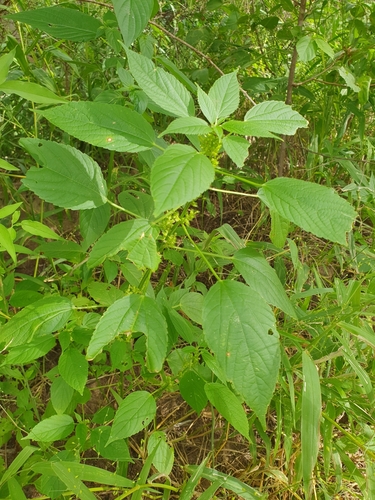
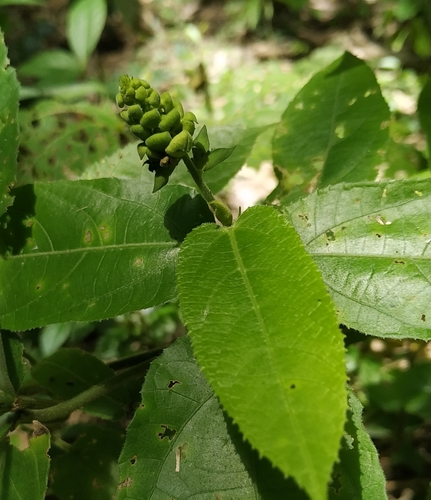
A small shrub. The stems are climbing or twining. They can be 5-7 m long. It has yellow stinging hairs. The leaves are narrowly oval and 8-15 cm long by 4-9 cm wide.
Names & Synonyms
Lampinak
Cenesmon tonkinense Gagnep.Cnesmone tonkinensis (Gagnep.) CroizatTragia hastata Reinw. ex Hassk.Tragia macrophylla Wall.Tragia rugosa Wall.
References (1)
- Irawan, D., et al, 2006, Ethnobotanical study and nutrient potency of local traditional vegetables in Central Kalimantan. Tropics Vol. 15(4)